
Starting a business is exciting, but one of the most important decisions every entrepreneur must make is choosing the right business structure in India. Your decision impacts everything, from taxation, compliance, fundraising, ownership, liability, to even how investors perceive your startup.
Yet, many first-time founders either rush into a structure or follow what their friends did only to regret it later when compliance increases, investors step in, or their business model changes.
In this guide, we break down everything you need to know about Choosing the Right Business Structure in India, using simple language, real-world examples, and founder-friendly insights.
Why Choosing the Right Business Structure in India Matters
Your business structure determines:
- How much tax you pay
- How much liability protection you get
- How easy fundraising becomes
- Whether investors will trust you
- The compliance burden you must handle
- Your ability to scale or expand globally
Think of it like building a house:
If the foundation is wrong, you will eventually have to break, rebuild, and repay — costing time, energy, and money.
Overview of Business Structures in India
Here are the four main business structures most entrepreneurs choose:
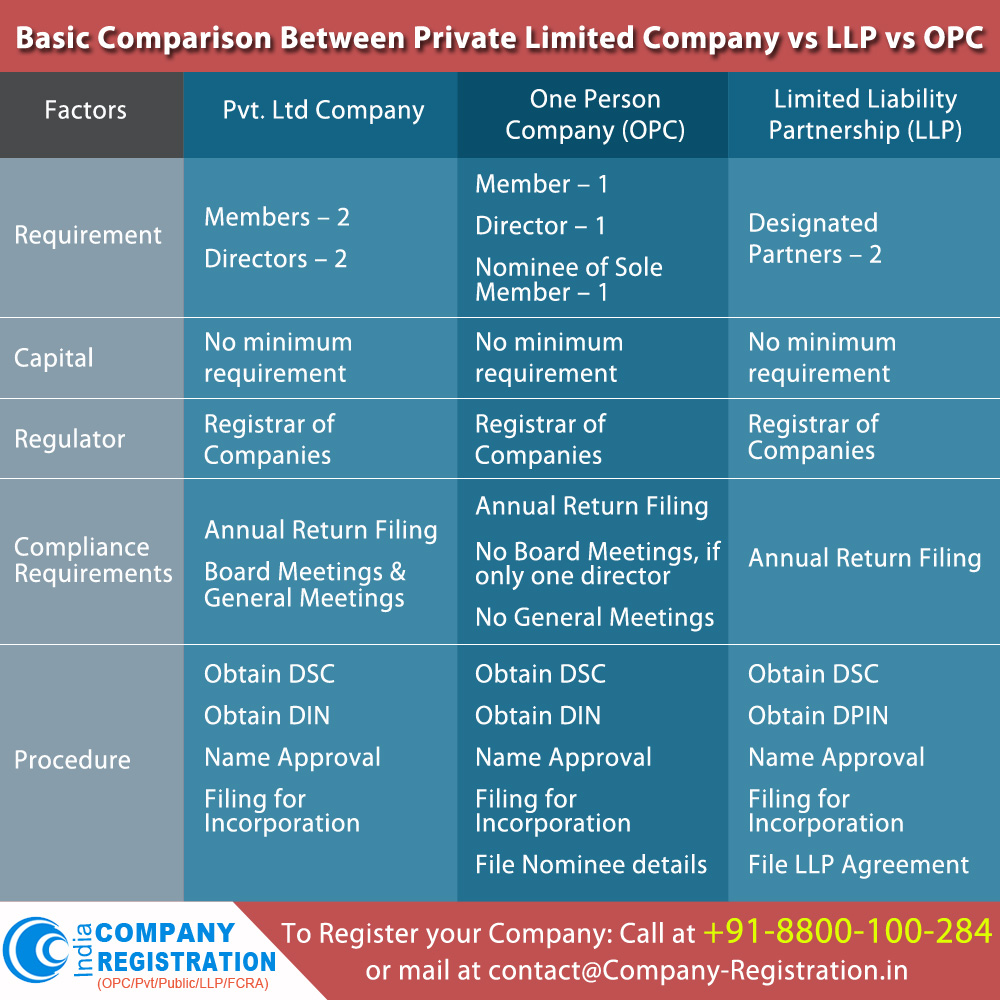
- Sole Proprietorship – best for freelancers & small traders
- Partnership Firm – shared ownership but unlimited liability
- LLP (Limited Liability Partnership) – low compliance + limited liability
- Private Limited Company – investor-friendly & scalable
- One Person Company (OPC) – for solo founders wanting limited liability
Each has its advantages and limitations. Let’s explore them one by one so you can confidently choose the perfect structure for your business goals.
Sole Proprietorship – Simple but Risky
Best for: Small shops, freelancers, small service providers
Focus Keyword Used: Choosing the Right Business Structure India
A Sole Proprietorship is the easiest business structure to start in India. It requires no formal registration, minimal compliance, and full control lies with the owner.
✔ Advantages
- Easy to start & close
- Very low compliance
- Complete control & profits
- Suitable for small local businesses
✘ Disadvantages
- Unlimited personal liability
- Cannot raise venture capital
- Difficult to scale
- No legal separation between owner & business
Real Example:
Freelancers, tutors, shop owners, or home bakers often operate as sole proprietors because the model is simple and tax documentation is minimal.
Partnership Firm – But With Unlimited Liability
Best for: Small businesses with 2+ founders
A partnership firm allows two or more people to run a business together. It is easy to form but comes with significant risk.
✔ Advantages
- Easy formation through a Partnership Deed
- No mandatory audits
- Less compliance
✘ Disadvantages
- Partners have unlimited liability
- High risk in case of debt or legal issues
- Not preferred by investors
- Internal disputes may affect stability
Many traditional family businesses still operate as partnerships, but modern founders avoid it because of liability and scalability limitations.
LLP (Limited Liability Partnership) – Low Risk, Low Compliance
Best for: Consultants, agencies, small professional firms
LLP gives the flexibility of a partnership plus the limited liability of a company. It is a popular structure for CA firms, agencies, and B2B service providers.
✔ Advantages
- Partners’ personal assets are protected
- Low compliance cost
- No dividend distribution tax
- Suitable for service-based businesses
✘ Disadvantages
- Not ideal for startups seeking funding
- Investors prefer Private Limited Companies
- Fewer tax benefits than Private Limited
A Founder’s Insight:
If you’re starting a digital marketing agency, IT consultancy, or professional firm, LLP is a great starting point.
Private Limited Company – The #1 Choice for Startups
Best for: Scalable businesses, investor-funded startups
When discussing Choosing the Right Business Structure in India, one structure consistently stands out: Private Limited Company (Pvt Ltd).
It is the most trusted, professional, and investor-friendly business structure.
✔ Advantages
- Limited liability
- Easy to raise funds from investors
- ESOPs for employees
- Global credibility
- Mandatory in many industries (Fintech, EdTech, SaaS growth)
✘ Disadvantages
- Higher compliance
- Mandatory audits
- More registration formalities
Still, if you are building a startup that may grow, hire, or raise funds, this is the structure that sets the right foundation.
One Person Company (OPC) – For Solo Founders
Best for: Entrepreneurs who want full control + limited liability
An OPC allows a single founder to run a company with the benefits of a Private Limited Company.
✔ Advantages
- Limited liability
- Single founder control
- Stronger legal identity
✘ Disadvantages
- Cannot raise VC funding easily
- Mandatory conversion after certain thresholds
OPC is great for solo consultants, small service providers, or businesses early in their journey.
How to Choose the Right Business Structure in India
Here is a practical decision guide to help you choose confidently:
1. Do you want low compliance?
→ Choose Sole Proprietorship or LLP
2. Do you want liability protection?
→ Choose LLP or Private Limited
3. Do you plan to raise funds?
→ Private Limited Company is the only investor-preferred model
4. Are you starting alone?
→ Choose OPC or Sole Proprietorship
5. Are you building a scalable startup?
→ Private Limited Company (best long-term)
Comparison Table: Business Structures in India
| Business Structure | Liability | Compliance | Fundraising | Best For |
|---|---|---|---|---|
| Sole Proprietorship | Unlimited | Low | No | Freelancers, small shops |
| Partnership Firm | Unlimited | Low | No | Small traditional businesses |
| LLP | Limited | Medium | Low | Agencies, consultants |
| Private Limited | Limited | High | Yes | Startups, scalable businesses |
| OPC | Limited | Medium | Low | Solo founders |
Conclusion – Your Business Structure Shapes Your Future
Choosing the Right Business Structure in India is not just a legal step, it’s a strategic business decision. The structure you choose today influences your:
- Growth potential
- Tax burden
- Funding opportunities
- Legal security
For most high-growth founders, a Private Limited Company is the safest long-term choice.
For consultants or small service firms, LLP offers the right balance.
And for early solo entrepreneurs, OPC or Sole Proprietorship keeps things simple.
If you want, I can now write Series 1 – Article 2:
“Types of Business Structures in India: Which One Is Right for You?”
FAQs
1. What is the best business structure for startups in India?
A Private Limited Company is the most preferred structure because it offers limited liability, easy fundraising, and high credibility.
2. Can I start a business in India as a single founder?
Yes, you can start either a Sole Proprietorship or a One Person Company (OPC) depending on your goals.
3. Which structure has the lowest compliance?
A Sole Proprietorship has the lowest compliance, followed by a Partnership Firm.
4. What structure is best for consultants and agencies?
An LLP is ideal because it offers liability protection and simpler compliance.
5. What structure is required for raising investment?
Investors invest only in Private Limited Companies in India.
Ministry of Corporate Affairs (MCA): https://www.mca.gov.in
Read all articles :- Company Registration in India – Complete Article Series Topics

Thanks , will do
Can you please share more article related to company formation. I think more to come from your end