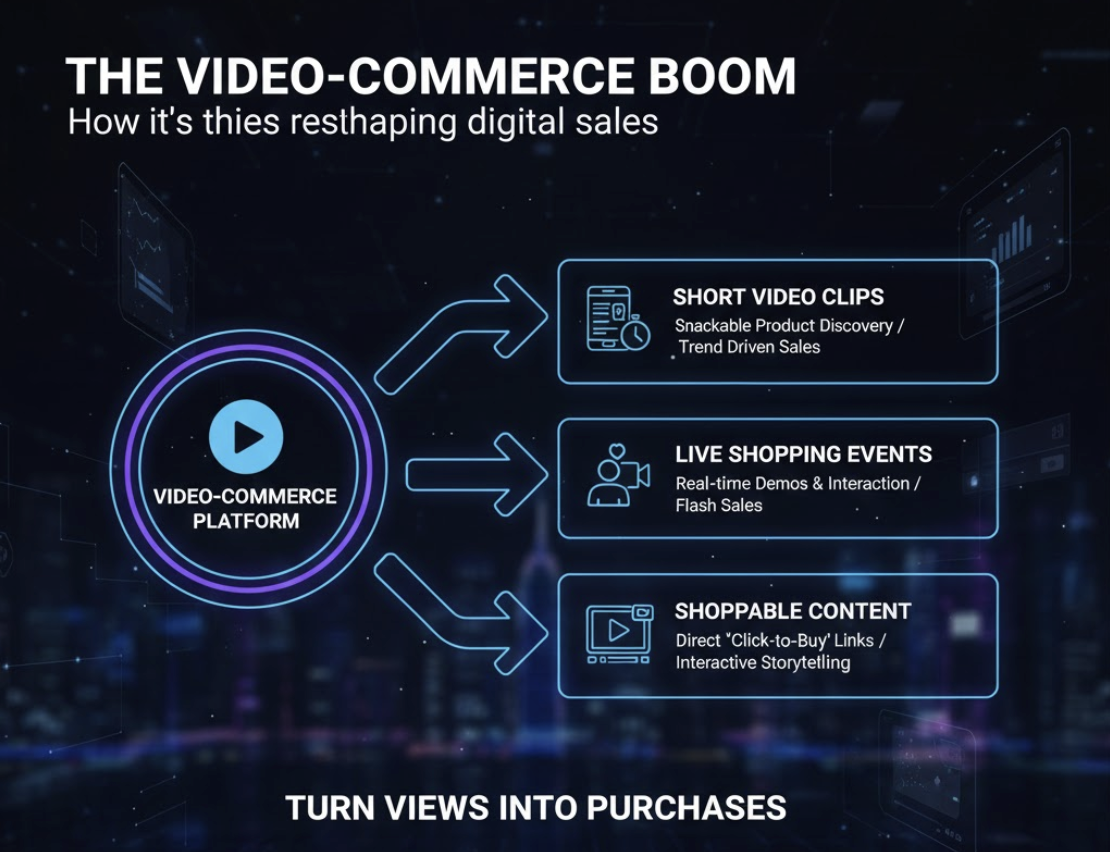
The Video-Commerce Boom in Digital Marketing is not a future trend. It is already reshaping how people discover products, evaluate brands, and complete purchases. Earlier, video was mainly about awareness and engagement. Today, it is becoming a direct path to checkout.
People scroll, watch, tap, and buy. Often in the same minute.
At the same time, social platforms are changing their priorities. Video is no longer treated only as content. Instead, it is treated as infrastructure for transactions. This shift explains why brands that once measured success through views and likes are now tracking add-to-cart events and completed orders.
In this article, we will break down how the video-commerce boom is unfolding, why it matters for founders and marketers, and how to build video strategies that drive real revenue, not just attention.
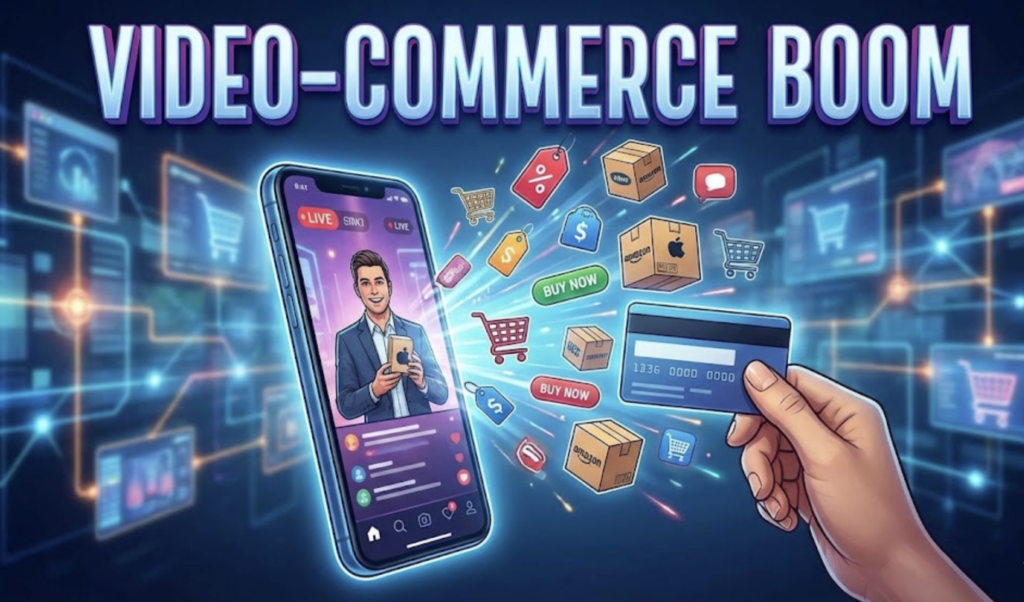
Understanding the Video-Commerce Boom in Simple Terms
The video-commerce boom refers to the convergence of video content and ecommerce. In simple words, it means people can now buy while watching.
Instead of watching a product video and then searching for a link, users can:
- Tap on a product overlay
- Add items to cart inside the video
- Checkout without leaving the platform
Because of this, the distance between inspiration and purchase has almost disappeared.
Why This Shift Is Accelerating So Fast
Several forces are working together.
First, attention spans are shorter. Short-form video fits naturally into daily habits.
Second, platforms want to keep users inside their ecosystems.
Third, brands want measurable returns, not just reach.
As a result, video is evolving from storytelling to transaction enablement.
How the Video-Commerce Boom Is Changing Social Platforms
Social platforms once optimized video for engagement. However, the video-commerce boom is pushing them to optimize for conversion.
From Engagement Metrics to Transaction Metrics
Earlier success metrics included:
- Views
- Likes
- Shares
Now, platforms and brands care more about:
- Click-through on product tags
- Add-to-cart actions
- In-stream checkouts
This change is fundamental. It alters how content is designed, distributed, and measured.
Platforms Leading the Video-Commerce Boom
Short video, live streams, and in-feed shopping are now common across major platforms. As a result, commerce is blending into entertainment.
Short-Form Video and the Video-Commerce Boom
Short-form video is one of the biggest drivers of the video-commerce boom.
Why Short Videos Convert Better
Short videos work because they are:
- Easy to consume
- Emotion-driven
- Designed for impulse decisions
Moreover, short videos often feel less like ads and more like recommendations.
Practical Brand Example
A beauty brand posts a 20-second product demo. The video includes a product tag. Within seconds, viewers can buy the product. There is no redirection, no waiting, and no friction.
That is the video-commerce boom in action.
Live Shopping and the Video-Commerce Boom
Live shopping brings urgency, trust, and interaction into video commerce.
Why Live Video Works for Commerce
Live video combines:
- Real-time demonstrations
- Instant Q&A
- Social proof through comments
Because of this, live shopping feels closer to an in-store experience.
How Founders Can Use Live Shopping Effectively
For founders, live shopping is not about perfection. Instead, it is about authenticity.
Simple setups work best:
- A host explaining the product
- Limited-time offers
- Clear purchase buttons
Even small brands can compete when they focus on clarity and trust.
Generative AI and the Video-Commerce Boom
The video-commerce boom is also powered by automation.
According to an IAB study, 86 percent of advertisers are already using or planning to use generative AI for video ad production. In addition, projections suggest that AI-created video ads could represent around 40 percent of all video ads by 2026.
Interactive Advertising Bureau research highlights how quickly this shift is happening.
Why Generative AI Fits Video Commerce
Generative AI helps brands:
- Produce videos faster
- Personalize creatives at scale
- Reduce production costs
As a result, video becomes more affordable and more testable.
However, automation alone is not enough. Strategy still matters.
Turning Video Into a Direct Path to Purchase
The video-commerce boom forces brands to rethink video design.
Key Elements of Commerce-Ready Video
To convert viewers into buyers, videos must include:
- Interactive product overlays
- Clear pricing visibility
- One-tap add-to-cart options
- Seamless checkout integration
Without these, video remains entertainment, not commerce.
Integration With Ecommerce Platforms
Strong integration with ecommerce systems ensures:
- Real-time inventory updates
- Accurate pricing
- Smooth order processing
This reduces friction and builds trust.
Measurement in the Video-Commerce Boom Era
One of the biggest mindset shifts in the video-commerce boom is measurement.
Why Vanity Metrics Are No Longer Enough
Views and likes show reach. However, they do not show revenue.
Because of this, brands must connect video performance to:
- Product clicks
- Cart additions
- Completed purchases
Only then can video be treated as a sales channel.
Full-Funnel Measurement Framework
| Funnel Stage | Video Metric | Business Metric |
|---|---|---|
| Awareness | Views, watch time | Brand recall |
| Consideration | Product taps | Add-to-cart |
| Conversion | Checkout clicks | Orders |
| Retention | Repeat views | Repeat purchases |
This approach aligns video strategy with business outcomes.
Common Mistakes Brands Make in the Video-Commerce Boom
Despite the opportunity, many brands struggle.
Mistake 1: Treating Video Only as Branding
Brand storytelling is important. However, ignoring commerce features wastes potential revenue.
Mistake 2: Overproducing Instead of Testing
Highly polished videos are not always better. Simple, authentic videos often convert more.
Mistake 3: Ignoring Post-Video Data
If brands do not analyze what happens after the video, they miss optimization insights.
Regulatory and Trust Considerations in Video Commerce
As video commerce grows, transparency becomes critical.
Clear pricing, honest product claims, and proper disclosures build trust. Linking to official guidelines and policies, such as those published by the Ministry of Corporate Affairs (https://www.mca.gov.in), also strengthens brand credibility, especially for Indian businesses.
Founder’s Perspective: Why the Video-Commerce Boom Is an Opportunity
For founders, the video-commerce boom levels the playing field.
You no longer need massive ad budgets. Instead, you need:
- Clear messaging
- Strong product-market fit
- Smart video execution
Small teams can compete with large brands by moving faster and testing more ideas.
Read Article on Startup Guides India
The Strategic Takeaway From the Video-Commerce Boom
The video-commerce boom is not about creating more videos. It is about creating better, smarter videos that drive action.
Brands that succeed will:
- Design videos with purchase triggers
- Measure actions, not just attention
- Treat video as a revenue channel
Those that delay will struggle to catch up.
Conclusion: How to Win as the Video-Commerce Boom Accelerates
The Video-Commerce Boom in Digital Marketing is redefining how products are sold online. Video is no longer a supporting channel. It is becoming a primary sales engine.
To stay competitive:
- Shift mindset from engagement to conversion
- Build interactive, shoppable video assets
- Connect video performance to full-funnel metrics
In the next article of this series, we will explore how AI-driven personalization is transforming ecommerce experiences, with practical examples and implementation tips.
FAQs: The Video-Commerce Boom in Digital Marketing
1. What is the video-commerce boom?
The video-commerce boom refers to the integration of video content with direct purchasing features, allowing users to shop while watching.
2. Why is short-form video important in the video-commerce boom?
Short-form video drives quick decisions, fits mobile behavior, and enables impulse purchases with minimal friction.
3. How does live shopping support the video-commerce boom?
Live shopping builds trust, urgency, and interaction, making video feel closer to an in-store experience.
4. How should brands measure success in video commerce?
Brands should track add-to-cart actions, checkouts, and revenue, not just views or likes.
5. Is generative AI important for video commerce?
Yes. Generative AI helps brands create scalable, personalized video ads faster and at lower cost.