Most candidates think interviews are won or lost inside the room. However, the truth is different. Interviews are often lost before the interview day even begins. Small oversights, poor preparation, or casual assumptions quietly damage your chances. That’s why understanding common mistakes to avoid before interview day is critical.
While skills and experience matter, preparation habits matter just as much. Therefore, if you fix these mistakes early, you instantly improve your confidence, clarity, and performance. In this article, we’ll break down the most frequent pre-interview errors—and more importantly, how to avoid them.
Mistake 1: Not Researching the Company Properly before Interview
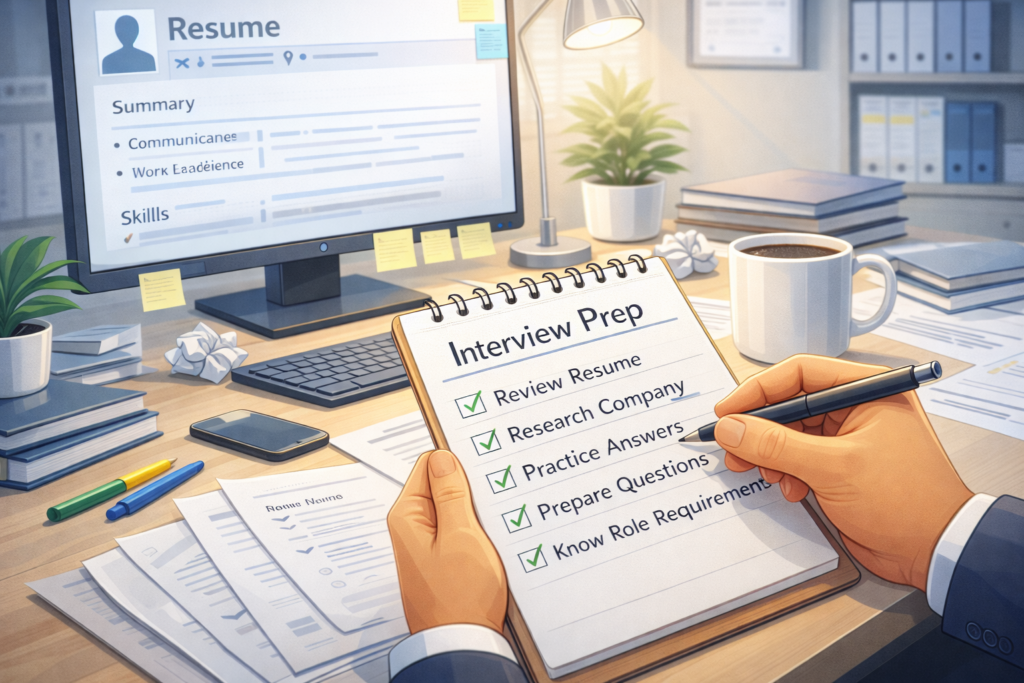
Many candidates say they “checked the website.” Unfortunately, that’s rarely enough.
Instead of surface-level reading, you should understand:
- What the company actually does
- Who their customers are
- Recent updates or achievements
- How your role fits into their goals
Without this knowledge, your answers sound generic. As a result, interviewers quickly lose interest.
LinkedIn Career Advice emphasizes that company research directly impacts interview success.
Mistake 2: Ignoring the Job Description After Applying
Once candidates apply, they often forget the job description completely. That’s a serious mistake.
Since interview questions are built from job descriptions, ignoring it leads to misaligned answers. Therefore, revisit it before every interview.
Focus on:
- Core responsibilities
- Required skills
- Repeated keywords
- Soft skill signals
Mistake 3: Memorizing Answers Instead of Understanding Concepts
Preparation is essential. However, memorization hurts more than it helps.
When answers sound rehearsed:
- You appear rigid
- You struggle with follow-up questions
- You panic if the question changes slightly
Instead, prepare key points, not scripts. This approach allows flexibility and confidence.
Harvard Business Review highlights that adaptability during interviews signals stronger problem-solving ability.
External reference: Harvard Business Review – Interview Skills
Mistake 4: Not Preparing Real Examples for Interview
Generic answers rarely impress interviewers. Meanwhile, specific examples build trust.
Weak Answer:
“I’m good at teamwork.”
Strong Answer:
“I worked with a cross-functional team of five to deliver a project two weeks early.”
Therefore, always prepare examples related to:
- Problem-solving
- Teamwork
- Leadership
- Conflict handling
- Results achieved
Mistake 5: Overlooking Logistics and Timing
This mistake feels small. However, it creates a big negative impression.
Common issues include:
- Logging in late for virtual interviews
- Not testing audio or camera
- Forgetting interview location
- Arriving rushed or stressed
As a result, your confidence drops before the interview even starts.
Always:
- Confirm time zones
- Test devices
- Plan to arrive 10–15 minutes early
Mistake 6: Dressing Casually or Inappropriately for an Interview
First impressions matter. Although companies say “dress comfortably,” they still expect professionalism.
Under-dressing suggests lack of seriousness. Over-dressing can signal poor judgment. Therefore, research company culture beforehand.
Glassdoor recommends dressing one level more formal than daily office wear.
External reference: Glassdoor Interview Tips
Mistake 7: Skipping Mock Interview
Many candidates avoid mock interviews because they feel awkward. However, skipping them is a costly error.
Mock interviews help you:
- Identify weak answers
- Improve clarity
- Reduce anxiety
- Build confidence
Even one mock session can significantly improve performance.
Read all the articles on Career Guidance
Mistake 8: Not Preparing Questions for the Interviewer
Saying “I don’t have any questions” is a missed opportunity.
Good questions show:
- Curiosity
- Long-term thinking
- Engagement
Prepare 2–3 thoughtful questions about:
- Team structure
- Success metrics
- Growth opportunities
This makes conversations more balanced and memorable.
Mistake 9: Ignoring Your Online Presence
Recruiters often check LinkedIn before interviews. Therefore, inconsistencies hurt credibility.
Before interview day:
- Update your LinkedIn profile
- Align titles with your resume
- Remove unprofessional public posts
Consistency builds trust. Inconsistency raises doubts.
Mistake 10: Not Preparing Mentally and Physically for Interview
Interview preparation isn’t only about content. Your state of mind matters.
Common mental mistakes include:
- Overthinking outcomes
- Comparing yourself to others
- Skipping rest
Instead:
- Sleep well
- Eat light
- Do breathing exercises
- Visualize success
Calm candidates communicate better.
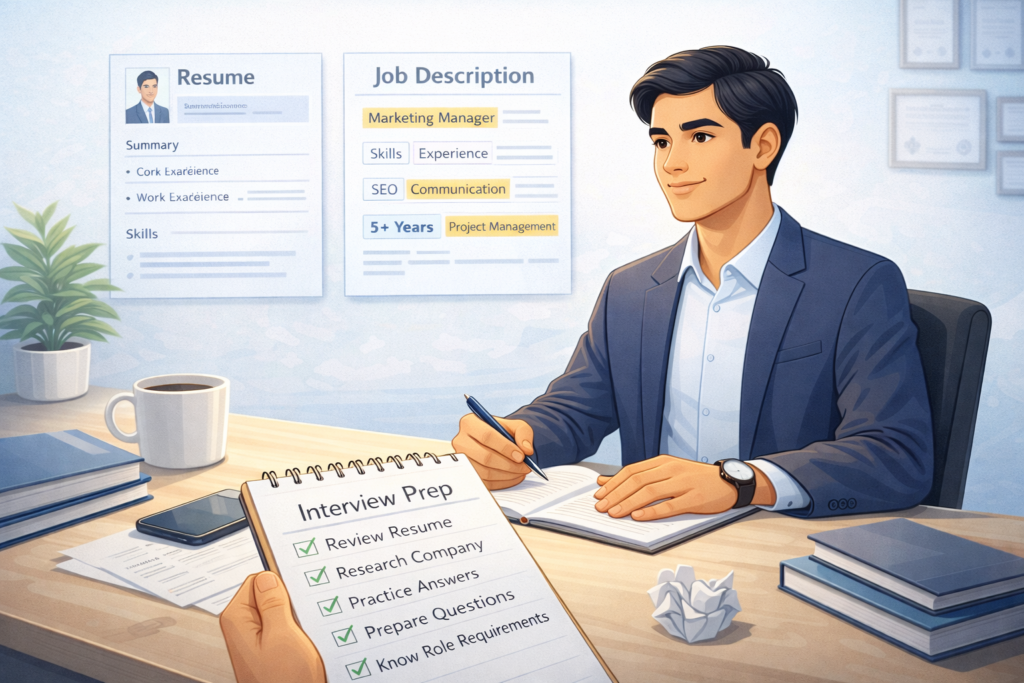
The Day-Before Interview Checklist (Quick Review)
Use this checklist 24 hours before the interview:
- Re-read job description
- Review company research
- Prepare examples
- Test devices or route
- Choose interview outfit
- Prepare questions
- Get proper rest
This checklist reduces last minute panic.
Why Avoiding These Mistakes Gives You an Edge in Interview
Most candidates focus only on answers. However, interview success depends on preparation discipline.
When you avoid these common mistakes:
- You feel calmer
- Your answers flow better
- You appear confident
- Interviewers trust you faster
Small changes create big differences.
Conclusion: Interview is Won Before They Begin
Interviews don’t start when the interviewer joins the call. They start with your preparation habits days before. By avoiding common mistakes to avoid before interview day, you eliminate unnecessary risks and give yourself the best possible chance to succeed.
While skills get you shortlisted, preparation gets you selected. Treat interview readiness as a system—not a last-minute task.
FAQs – Interview
1. How early should I start Interview preparation?
Ideally, 3 – 5 days before the interview for structured preparation.
2. Is it okay to reuse answers from previous Interview?
Yes, but adapt them to the specific role and company.
3. How many mock Interview should I do?
At least one. Two or three are ideal for confidence.
4. Can small mistakes really affect Interview results?
Yes. Small mistakes often signal poor attention to detail.
5. What’s the biggest pre-Interview mistake?
Lack of preparation and assuming experience alone is enough.