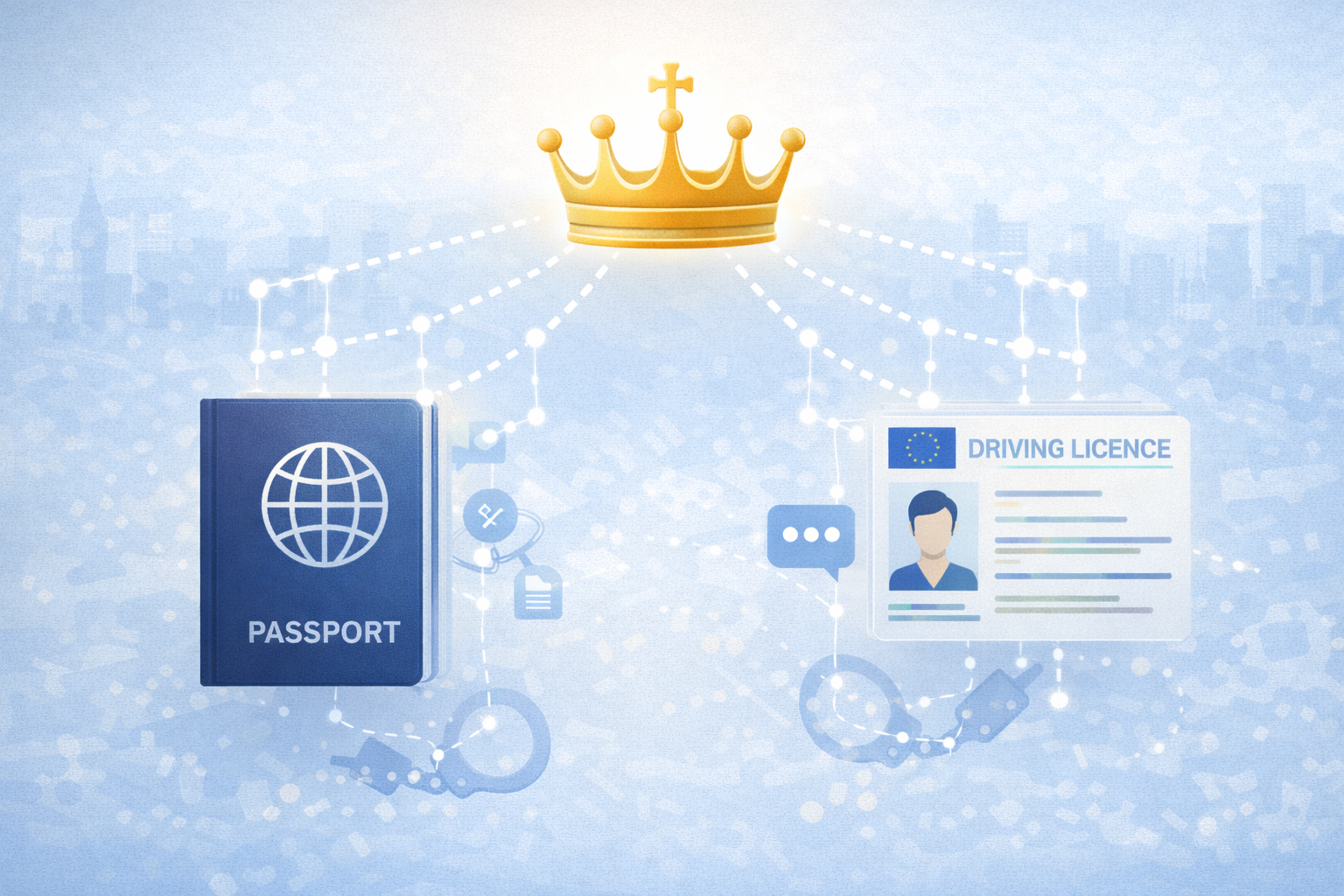
Most of us grow up believing that everyone needs a passport to travel internationally and a driving license to get behind the wheel. It feels universal, non-negotiable, and absolute. But here’s an unknown fact that instantly challenges that belief: The British Queen didn’t need a passport or a driving license.
This wasn’t a loophole.
It wasn’t an oversight.
And it definitely wasn’t favoritism in the modern sense.
Instead, it was a deeply rooted constitutional principle, quietly embedded into how authority, identity, and governance function in the United Kingdom.
This article unpacks why the British Queen didn’t need a passport or driving license, how the system works behind the scenes, and what this surprising fact teaches us about invisible power and silent authority.
The British Queen Passport and Driving License Rule Explained
To understand the British Queen passport and driving license exception, we need to look at how these documents are issued in the first place.
Why the British Queen Didn’t Need a Passport
A British passport is not just an identity document.
It is issued in the name of the monarch.
Every UK passport contains a formal request that reads, in essence:
“His/Her Britannic Majesty requests and requires…“
This means something extraordinary:
👉 The Queen could not logically issue a passport to herself.
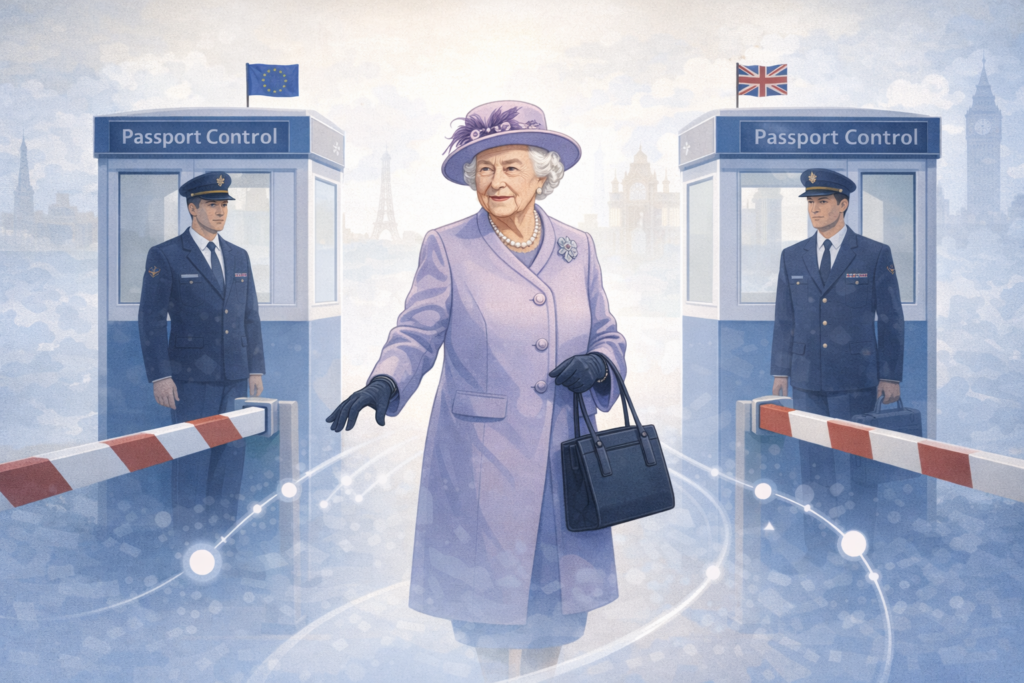
Since all passports are issued by the Crown, and the Queen was the Crown, she was exempt.
So when the British Queen traveled:
- No passport checks
- No immigration stamps
- No visa applications
Her identity was constitutionally self-evident.
This is why the British Queen passport rule was not a privilege, it was a structural necessity.
Why the British Queen Didn’t Need a Driving License
The same principle applies to the British Queen driving license rule.
In the UK:
- Driving licenses are issued in the name of the Crown
- Traffic laws are enforced by the Crown
Since the Queen represented the legal authority behind these systems, she did not need a license.
That said, this didn’t mean lawlessness.
The Queen:
- Learned to drive during World War II
- Was trained as a mechanic and driver
- Drove vehicles on private estates
- Followed road safety norms
She simply didn’t need a physical license card.
This is a perfect example of quiet intelligence in governance authority so embedded that it doesn’t need visible proof.
The Invisible Power Behind the British Queen Passport Rule
The real story here is not about royalty.
It’s about invisible systems.
The British Queen passport and driving license exception shows us how:
- Power doesn’t always announce itself
- Authority doesn’t need constant validation
- Some systems work best when they are silent
The Queen didn’t bypass rules.
She embodied the source of the rules.
This is the same principle behind many modern systems:
- Financial institutions
- Digital identity frameworks
- Backend AI decision engines
When something works perfectly, you stop noticing it.
Common Myths About the British Queen Passport and Driving License
Let’s clear up a few misconceptions.
❌ Myth 1: The Queen Was Above the Law
Reality: The Queen operated within constitutional boundaries, not outside them.
❌ Myth 2: She Could Drive Anywhere Without Rules
Reality: She followed safety norms and primarily drove on private property.
❌ Myth 3: This Rule Applies to All Royals
Reality:
- Only the monarch was exempt
- Other royals, including princes and princesses, must carry passports and licenses
This makes the British Queen passport exception uniquely tied to the role not the family.
What This Unknown Fact Teaches Us About Modern Power
This single fact reveals something profound:
True power rarely needs visible enforcement.
In today’s world, we see similar patterns:
- AI systems that personalize experiences silently
- Algorithms that decide outcomes without screens or alerts
- Trust built through consistency, not explanation
Just like the British Queen didn’t show documents, the strongest systems don’t show their workings.
They simply function.
A Quiet Parallel: From Royal Authority to Intelligent Systems
This is why this unknown fact resonates so strongly today.
The British Queen passport and driving license rule mirrors how:
- Customer experience platforms work behind the scenes
- AI quietly optimizes journeys
- Systems reduce friction without asking for attention
Power that screams feels fragile.
Power that whispers feels permanent.
Important Notes You Should Know
- This rule applied only while the Queen was reigning
- It was rooted in British constitutional law
- It was symbolic, not indulgent
- It demonstrated system-level authority
These nuances are often missed when the fact is shared casually online.
Why These Unknown Facts Matter Today
Unknown facts like this are more than trivia.
They:
- Challenge assumptions
- Reveal hidden systems
- Improve critical thinking
- Encourage deeper curiosity
And most importantly, they remind us that not everything powerful is visible.
Conclusion: The Power You Don’t See Is the Power That Lasts
The British Queen didn’t need a passport or a driving license not because she was above the system, but because she was the system.
This unknown fact teaches us something timeless:
The most effective authority doesn’t demand proof.
It creates trust so deeply that proof becomes unnecessary.
As we move into a world driven by quiet intelligence, automation, and invisible decision making, this centuries-old rule feels surprisingly modern.
And this is just the beginning.
👉 Read all articles in Unknown Facts series
FAQs: British Queen Passport and Driving License
1. Why didn’t the British Queen need a passport?
Because all UK passports are issued in the name of the monarch, making it unnecessary for the Queen to carry one herself.
2. Did the British Queen really drive without a license?
Yes. Driving licenses are issued by the Crown, so the Queen did not require one.
3. Do other members of the royal family need passports?
Yes. All other royals must carry passports and driving licenses.
4. Is this rule still valid today?
It applied during the Queen’s reign. The principle remains tied to the reigning monarch.
5. Was this a legal loophole or a royal privilege?
Neither. It was a constitutional structure embedded into how authority works in the UK.