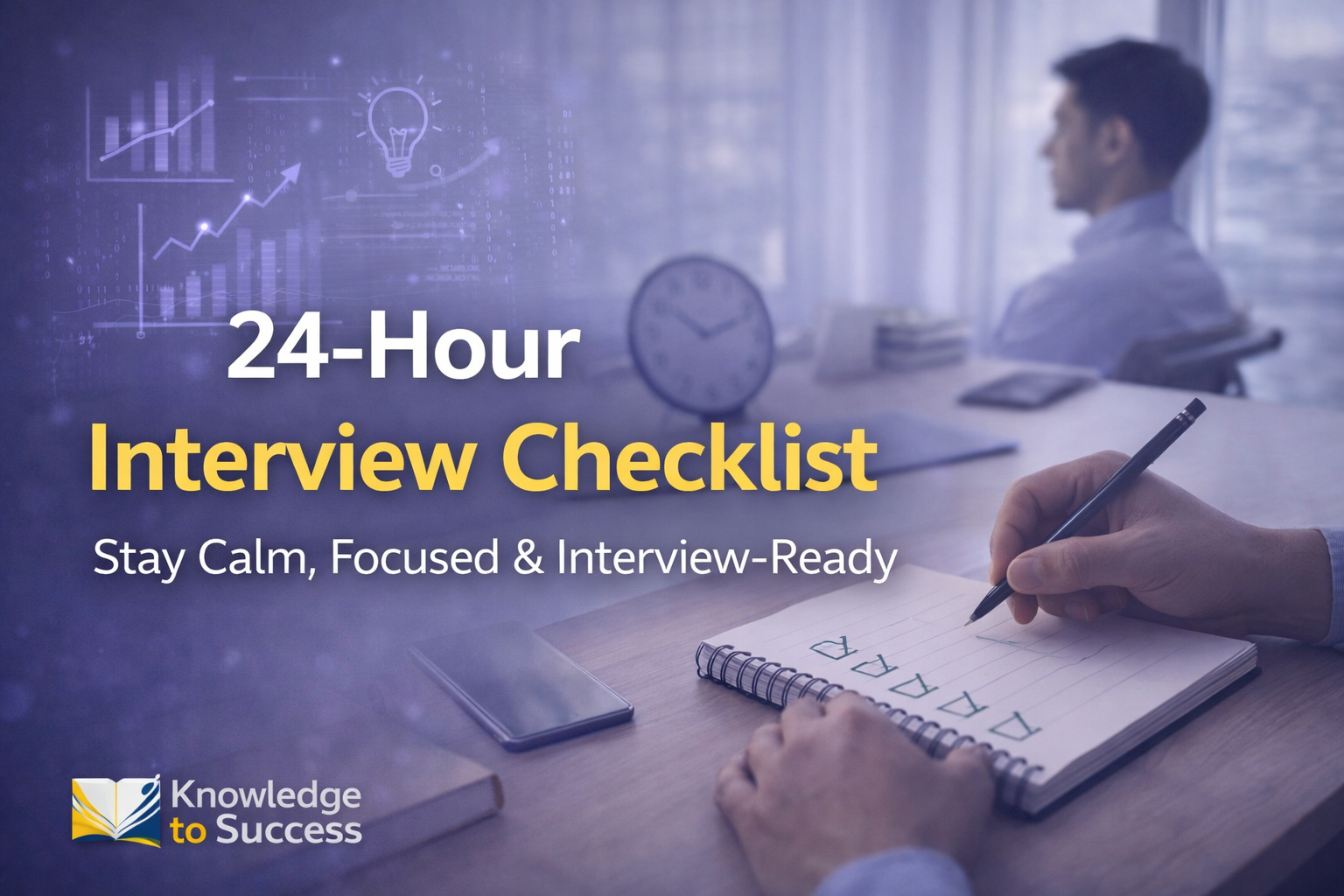
Most candidates believe interviews are decided by experience and answers. However, interviews are often influenced by what happens just one day before. Missing small details in the final 24 hours can quietly ruin performance. That’s why following an interview checklist 24 hours before interview day matters more than people admit.
At this stage, cramming new information rarely helps. Instead, clarity, calm, and readiness decide outcomes. In this guide, you’’’ll learn exactly what to do and what to avoid the day before your interview so you walk in focused and confident.
Why the Last 24 Hours Matter So Much

The final day before an interview shapes:
- Your mental state
- Your confidence
- Your clarity of answers
- Your energy levels
According to research shared by the American Psychological Association, stress peaks just before performance events. Therefore, preparation during this window should reduce stress not add to it.
That’s exactly what this checklist helps you do.
Step 1: Stop Heavy Preparation for interviews (Yes, Really)
Many candidates make the same mistake. They overload themselves with new material.
Instead of learning new things:
- Review what you already know
- Strengthen clarity, not quantity
- Avoid deep dives into new topics
Confidence drops when your brain feels overwhelmed. Therefore, keep preparation light and focused.
Step 2: Revisit the Job Description One Last Time before interviews
This is not a full analysis. It’s a quick alignment check.
Focus On:
- Core responsibilities
- Key skills mentioned repeatedly
- Soft skill expectations
Ask yourself:
“Which of my examples best match this role?”
This keeps your answers relevant.
Step 3: Review Your Key Stories (Not Scripts)
You don’t need perfect answers. You need clear stories.
Revisit These Stories:
- Introduction (“Tell me about yourself”)
- One success story
- One challenge or failure
- One teamwork example
- One problem-solving example
Read through bullet points only. Avoid memorizing sentences.
Step 4: Prepare Your Questions for the Interviewer
Strong candidates always ask questions. Weak candidates skip this step.
Prepare 2–3 questions about:
- Team goals
- Success metrics
- Role expectations
- Growth opportunities
These questions show intent and maturity.
Step 5: Finalize Interviews Logistics
Logistics mistakes create unnecessary stress.
Confirm the Following:
- Interview time and time zone
- Interview location or meeting link
- Interviewer names (if available)
- Required documents
If it’s virtual, test:
- Internet connection
- Camera
- Microphone
- Lighting
Glassdoor notes that technical issues during interviews negatively impact first impressions.
Step 6: Decide Your Interviews Outfit (Early)
Never decide your outfit on interview day.
Do This the Day Before:
- Finalize clothes
- Iron everything
- Check shoes
- Keep accessories minimal
Clothing decisions take mental energy. Removing this decision reduces stress.
Read below article for more details
What to Wear to Interview to Look Confident and Professional
Step 7: Prepare Your Mind, Not Just Your Material
Mental preparation is often ignored. However, it matters deeply.
Simple Mental Reset
- Avoid negative content
- Limit social media
- Get light exercise
- Breathe slowly for a few minutes
Remind yourself:
“I am prepared enough.”
That reminder alone improves calmness.
Step 8: Get Proper Rest before interviews (Non-Negotiable)
Sleep directly affects:
- Memory recall
- Emotional control
- Focus
No last-minute revision is worth sacrificing rest. Aim for 7–8 hours of sleep.
This is not optional preparation. It’s performance preparation.
Step 9: Morning-Of Mini Checklist (5 Minutes)
On interview day morning:
- Eat light
- Review key points once
- Do slow breathing
- Arrive or log in early
Avoid rushing. Calm starts early.
Common Last-Minute Mistakes to Avoid
Even strong candidates lose points by:
- Over-preparing late at night
- Comparing themselves to others
- Skipping sleep
- Ignoring logistics
- Changing outfits last minute
Avoiding mistakes is often more powerful than doing extra work.
Why This Checklist Improves Interviews Performance
This checklist works because it:
- Reduces uncertainty
- Preserves mental energy
- Builds calm confidence
- Prevents avoidable errors
Interviewers can sense when candidates are centered. That calm presence matters.
Conclusion: Interviews Are Won Before the Day Begins
Interviews are not just about what you say. They are about how prepared you feel when you say it. Following an interview checklist 24 hours before interview day removes chaos and replaces it with clarity.
You don’t need to do more.
You need to do the right things at the right time.
That’s what separates strong candidates from selected ones.
FAQs
1. Should I study new topics the day before an interviews?
No. Focus on clarity and revision, not new learning.
2. How many hours before an interviews should I stop preparing?
Ideally, stop heavy preparation 12–14 hours before.
3. Is reviewing notes on interview morning okay?
Yes, but keep it brief and light.
4. What’s the biggest mistake candidates make the day before?
Over-preparing and sacrificing rest.
5. Does this checklist work for experienced professionals?
Yes. In fact, it matters more as expectations increase.