Almost every interview starts with the same question. Yet, it’s also the question most candidates answer poorly. “Tell me about yourself” sounds simple. However, it quietly decides how the rest of it goes. Learning how to answer tell me about yourself with confidence is one of the biggest advantages you can build.
Interviewers ask this question to set the tone. They want clarity, not your life story. They want relevance, not rambling. Therefore, the way you respond shapes their expectations before any technical or behavioral question appears.
In this guide, you’ll learn the exact structure interviewers expect, what to include, what to skip, and how to sound confident from the very first minute.
Why Interviewers Ask “Tell Me About Yourself”
This question is not small talk. It serves multiple purposes.
Interviewers use it to:
- Assess communication skills
- Judge confidence and clarity
- Understand your career direction
- See how well you prioritize information
According to guidance summarized by the Harvard Business Review, first answers strongly influence how they evaluate later responses. Therefore, this question sets the frame for everything that follows.
What Interviewers Are NOT Asking For
Before learning the right structure, it helps to remove confusion.
They are not asking for:
- Your personal background
- Your entire resume history
- Your education from childhood
- Every role you’ve ever had
When candidates misunderstand this, answers become long, unfocused, and weak.
The Best Structure: Present – Past – Future (Simple & Powerful)
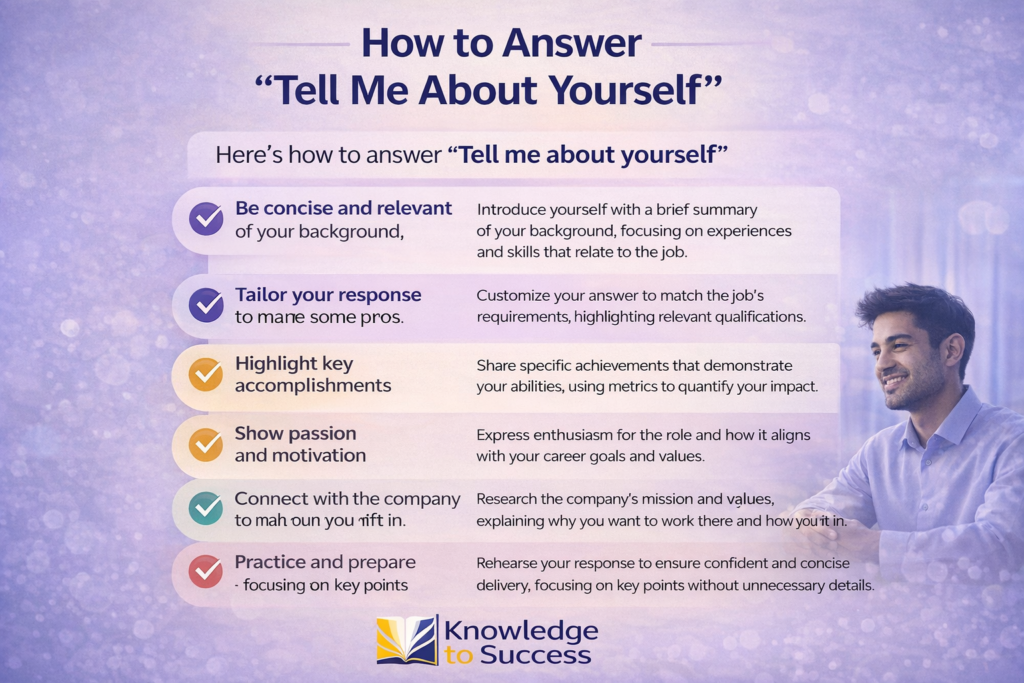
The most reliable way to answer this question is a 3-part structure.
1️⃣ Present: What You Do Now
Start with your current role or professional identity.
Example: ” I’m currently a product analyst working on customer insights and reporting.”
2️⃣ Past: How You Got Here
Briefly mention relevant experience or milestones.
Example: “Over the last three years, I’ve worked closely with cross-functional teams and improved reporting accuracy by 25%. “
3️⃣ Future: Why You’re Here
End with your motivation for this role.
Example: “Now, I’m looking to apply these skills in a role that focuses more on business decision making, which is why this opportunity stood out.”
This structure keeps answers clear and focused.
How Long Should Your Answer Be?
This is where many candidates fail.
Ideal Length
- 60–90 seconds
- 3-5 short sentences
- No rushing, no rambling
If interviewers want more details, they will ask follow-up questions.
Example Answers (Fresher vs Experienced)
Example for Freshers
I’m a recent graduate in computer science with strong interest in backend development. During my internships, I worked on API development and database optimization. I enjoy solving logical problems and collaborating with teams. Now, I’m looking for a role where I can learn fast and contribute to real world systems.
Example for Experienced Professionals
I’m currently a marketing manager focusing on digital campaigns and performance analytics. Over the last five years, I’ve led multiple campaigns that improved lead conversion rates. Recently, I’ve been focusing more on data-driven decision making. That’s why this role aligns well with my next career step.
Common Mistakes That Kill This Answer
Even strong candidates make these mistakes:
- Talking for 3 – 4 minutes
- Repeating resume bullet points
- Sounding memorized
- Starting with personal details
- Ending without linking to the role
Avoiding these mistakes instantly improves impact.
How to Sound Confident While Answering
Confidence doesn’t come from fancy words. It comes from clarity and calm delivery.
Confidence Tips for interview
- Pause before you start
- Sit upright
- Speak at a steady pace
- Avoid filler words
- Smile lightly while speaking
These small signals matter.
What to Do If You’re Nervous or Blank Out in interview
It happens. Even prepared candidates freeze sometimes.
If that happens:
- Take a short pause
- Start with your current role
- Continue with one key experience
- Finish with why you’re here
Interviewers appreciate calm recovery more than perfection.
Tailoring the Answer for Different Roles
One answer does not fit all interviews.
Before Each Interview
- Adjust skills mentioned
- Align examples with the role
- Match the company tone
Use insights from Decoding Job Descriptions to tailor your opening effectively.
Virtual Interview Version: Small Adjustments
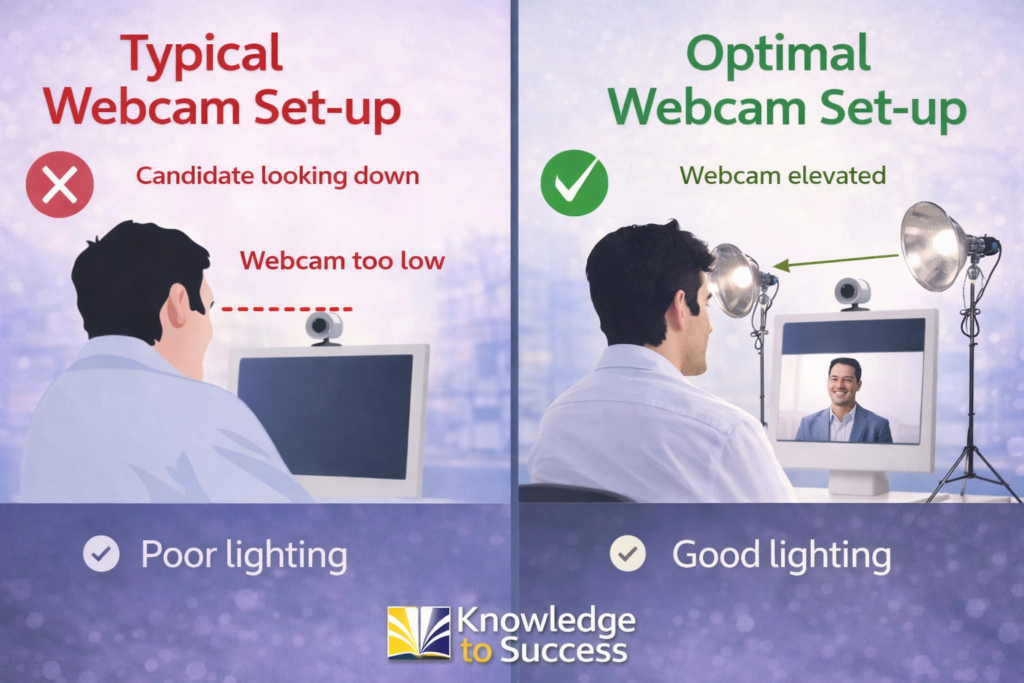
For video calls:
- Look at the camera, not the screen
- Sit slightly forward
- Speak a little slower
Virtual settings amplify nervousness. Slow pacing helps.
Why This Question Shapes the Entire Interview
Interviewers subconsciously decide:
- Your confidence level
- Your communication ability
- Your relevance for the role
based on this first answer.
When you answer well:
- Follow-up questions become easier
- Interviewers stay engaged
- The conversation flows naturally
That’s why this question deserves deliberate practice.
Conclusion: Start Strong, Finish Stronger in interview
You don’t get a second chance at the first question. “Tell me about yourself” is not a warm-up. It’s the opening move. When you master how to answer tell me about yourself, you control the tone of the entire interview.
- Keep it clear.
- Keep it relevant.
- Keep it calm.
Strong starts create strong finishes.
FAQs
1. Should I memorize my answer?
No. Memorize structure, not sentences.
2. Can I mention personal details?
Only if they directly relate to the role.
3. What if I’m switching careers?
Focus on transferable skills and motivation.
4. Is it okay to pause before answering in interview?
Yes. Pausing shows composure.
5. Does this answer really matter that much in interview?
Yes. It sets the interviewer’s expectations early.