We throw away milk after a week. Bread molds in days. Even canned food has an expiration date. But honey never expires.
In fact, archaeologists have discovered jars of honey in ancient Egyptian tombs that were over 3,000 years old, and still edible.
This isn’t folklore. It’s chemistry.
Once you understand why honey never expires, you’ll see why it’s one of nature’s most remarkable substances.
Why Honey Never Expires: The Chemistry Behind It
The reason honey never expires comes down to three powerful properties:
- Low Moisture Content
- High Acidity
- Natural Hydrogen Peroxide Production
Let’s break this down.
Low Moisture: Why Honey Never Expires Easily
Bacteria and microorganisms need water to grow.
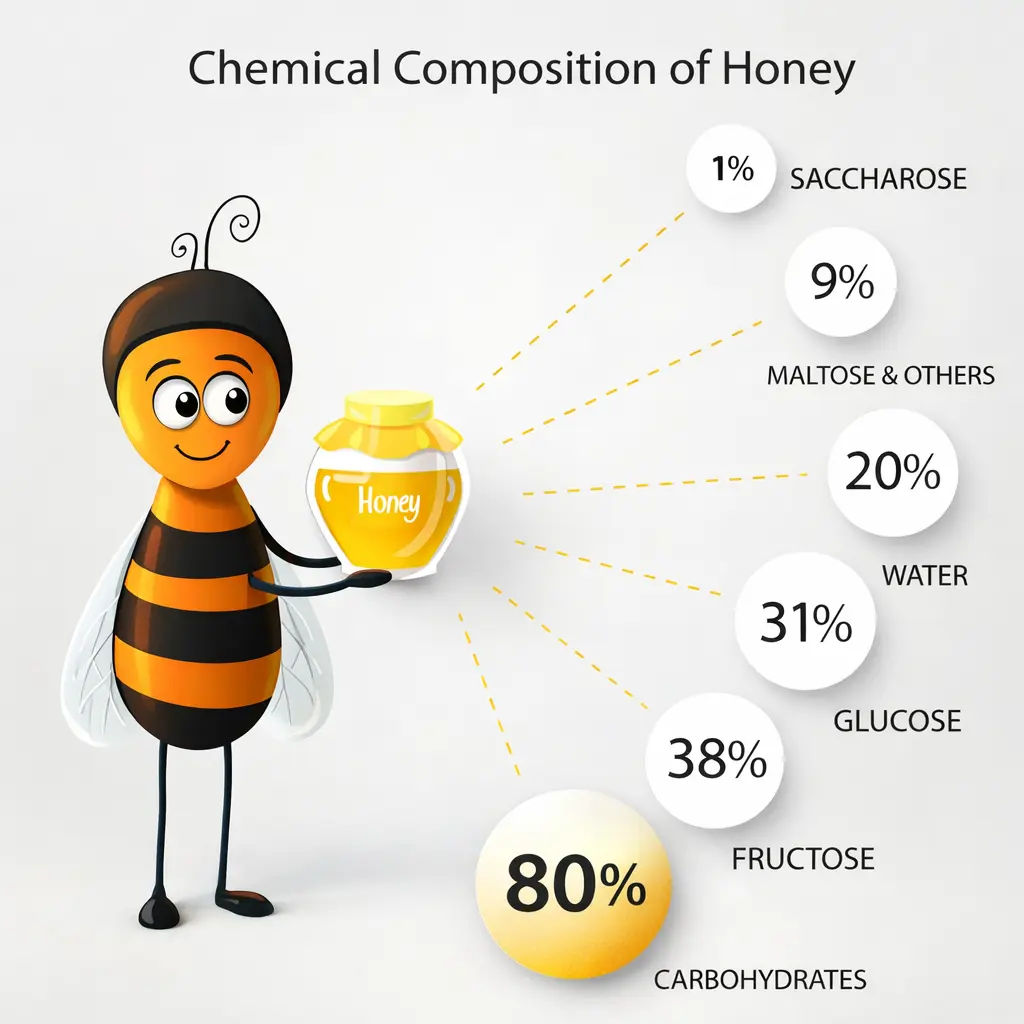
Honey contains very little water, usually less than 18%.
Without moisture:
- Bacteria cannot survive
- Mold cannot grow
- Spoilage is nearly impossible
This alone explains part of why honey never expires.
Natural Acidity: Why Honey Never Expires in Harsh Conditions
Honey has a naturally low pH (around 3-4.5).
That makes it acidic.
Most bacteria prefer neutral environments.
Honey creates conditions that are simply too hostile for microbes.
It’s like a self-protecting food.
Hydrogen Peroxide: Why Honey Never Expires Naturally
Bees add an enzyme called glucose oxidase to honey.
When honey comes into contact with small amounts of moisture, this enzyme produces hydrogen peroxide.
Hydrogen peroxide:
- Kills bacteria
- Prevents infection
- Acts as a natural preservative
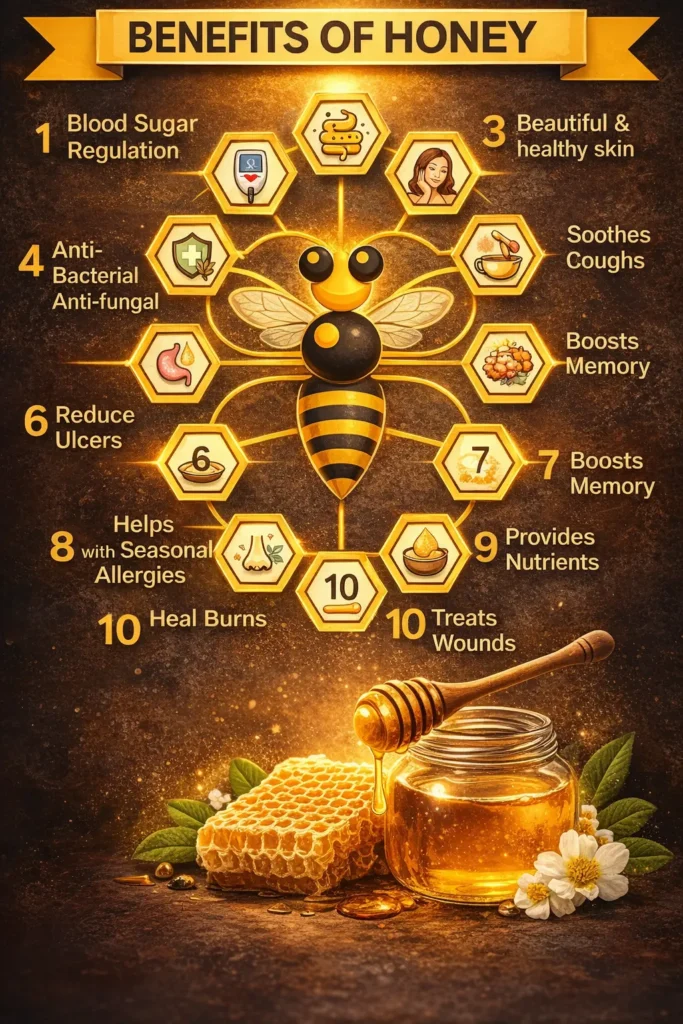
That’s why honey was historically used to treat wounds.
Ancient Proof That Honey Never Expires
Archaeologists have found sealed jars of honey in:
- Egyptian tombs
- Ancient burial sites
- Clay containers thousands of years old
When properly stored and sealed, the honey was still safe to eat.
That’s powerful evidence.
Few foods in human history can make that claim.
Why Honey Crystallizes (And Why It Doesn’t Mean It Expired)
Sometimes people think honey has “gone bad” when it becomes thick or grainy.
This is called crystallization.
It happens because:
- Glucose separates from water
- Natural sugars solidify
Crystallized honey is completely safe.
Simply warming it gently restores its liquid form.
Crystallization does not mean honey expires.
Does Honey Ever Expire?
Technically, pure honey does not expire.
However:
- If contaminated with water
- If stored improperly
- If mixed with additives
It can ferment. But pure, sealed honey? It can last indefinitely.
Why Honey Never Expires: A Perfect Survival Design
Bees didn’t design honey for humans.
They designed it as:
- Long-term food storage
- Winter survival fuel
- A stable energy source
For bees, honey had to last. And evolution made it nearly indestructible. Humans simply benefited from that design.
Common Myths About Honey Never Expires
❌ Honey has an expiration date
Manufacturers add dates for packaging standards, not spoilage.
❌ Crystallized honey is bad
It’s completely natural.
❌ Honey lasts long because of sugar alone
It’s the combination of low moisture, acidity, and enzymes.
Why This Unknown Fact Matters
Honey shows us something fascinating:
Nature sometimes solves problems better than modern science.
- Before refrigeration…
- Before preservatives…
- Before packaging…
There was honey.
And honey never expires.
Read more articles on Unknown Facts
For scientific details on honey’s properties
Conclusion: The Food That Time Can’t Defeat
Honey is more than sweet.
It is:
- Chemistry
- Biology
- Evolution
- Preservation
While almost every other natural food decays, honey stands still against time.
And that makes it one of the most extraordinary foods on Earth.