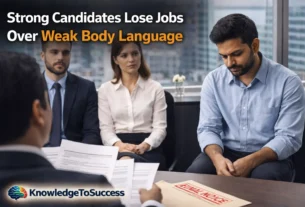
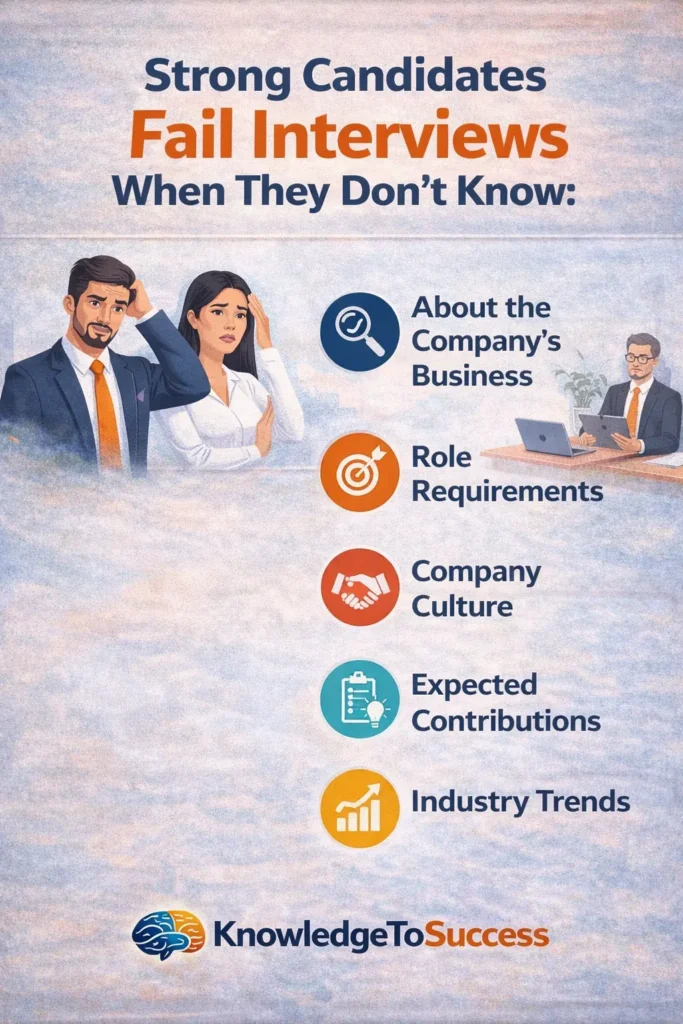
It happens to almost everyone. You prepare well. You review your experience. Yet, suddenly, the interviewer asks something you didn’t expect. Your mind goes blank. In that moment, many strong candidates fail interview when they don’t know how to respond calmly.
Not knowing an answer does not automatically cost you the job. However, panic often does. The way you handle uncertainty reveals more about your professionalism than the answer itself.
In this guide, you’ll learn exactly what to do if you don’t know the answer in an interview and how to turn that moment into a strength instead of a weakness.
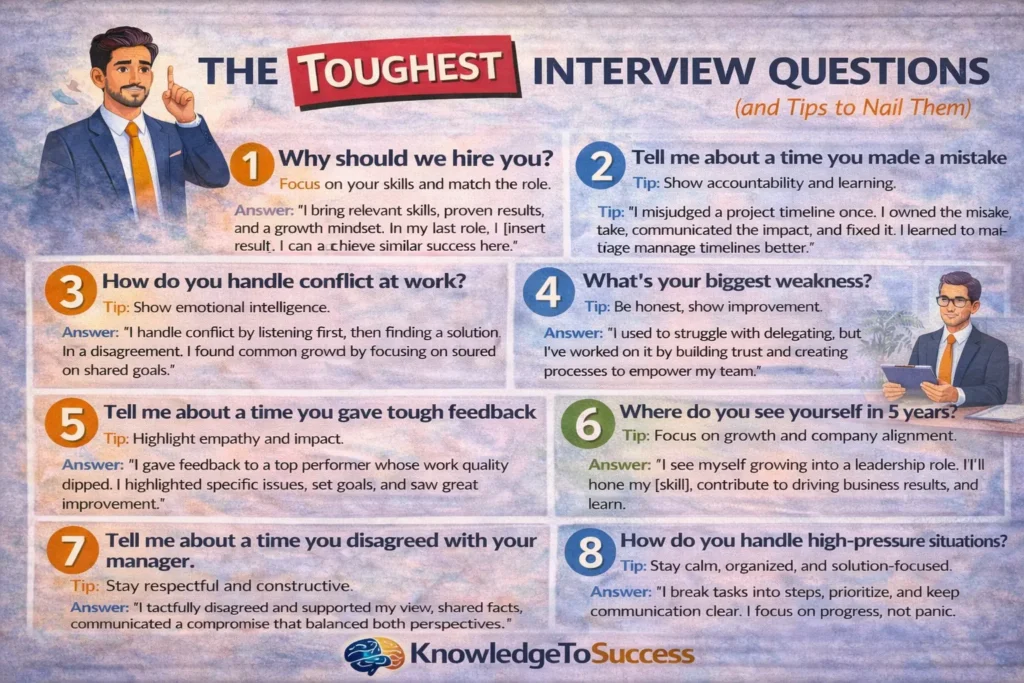
Why Interviewers Ask Questions You May Not Know
Interviewers don’t always expect perfect answers.
Often, they want to test:
- Problem-solving ability
- Emotional control
- Logical thinking
- Communication clarity
- Honesty
According to insights shared by the Harvard Business Review, interviewers frequently evaluate how candidates think under pressure, not just what they know.
Therefore, your reaction matters more than your memory.
What NOT to Do in Interview When You Don’t Know the Answer
Before discussing the right approach, let’s eliminate harmful reactions.
Avoid:
- Guessing randomly
- Speaking rapidly without clarity
- Pretending to know
- Shutting down completely
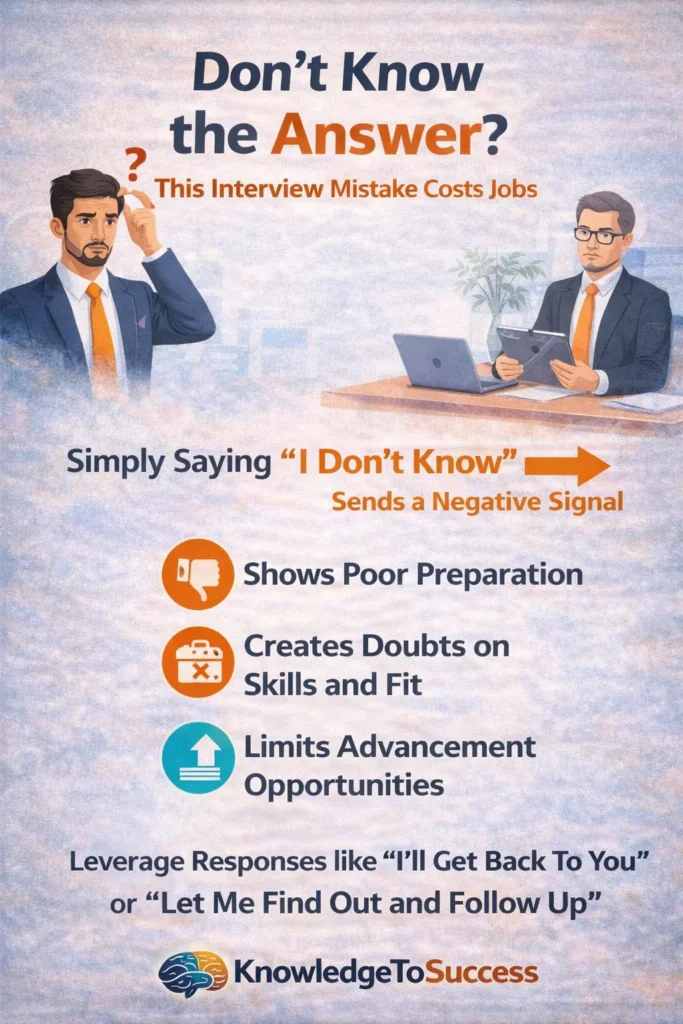
- Saying “I don’t know” and stopping
These responses signal panic or lack of accountability.
Step 1: Pause Before Responding
Silence feels uncomfortable. However, it’s powerful. Take a brief pause. Breathe once. Think clearly.
A 3–5 second pause shows composure, not weakness. Interviewers prefer thoughtful pauses over rushed confusion.
Step 2: Acknowledge the Question Calmly
Instead of panicking, respond with control.
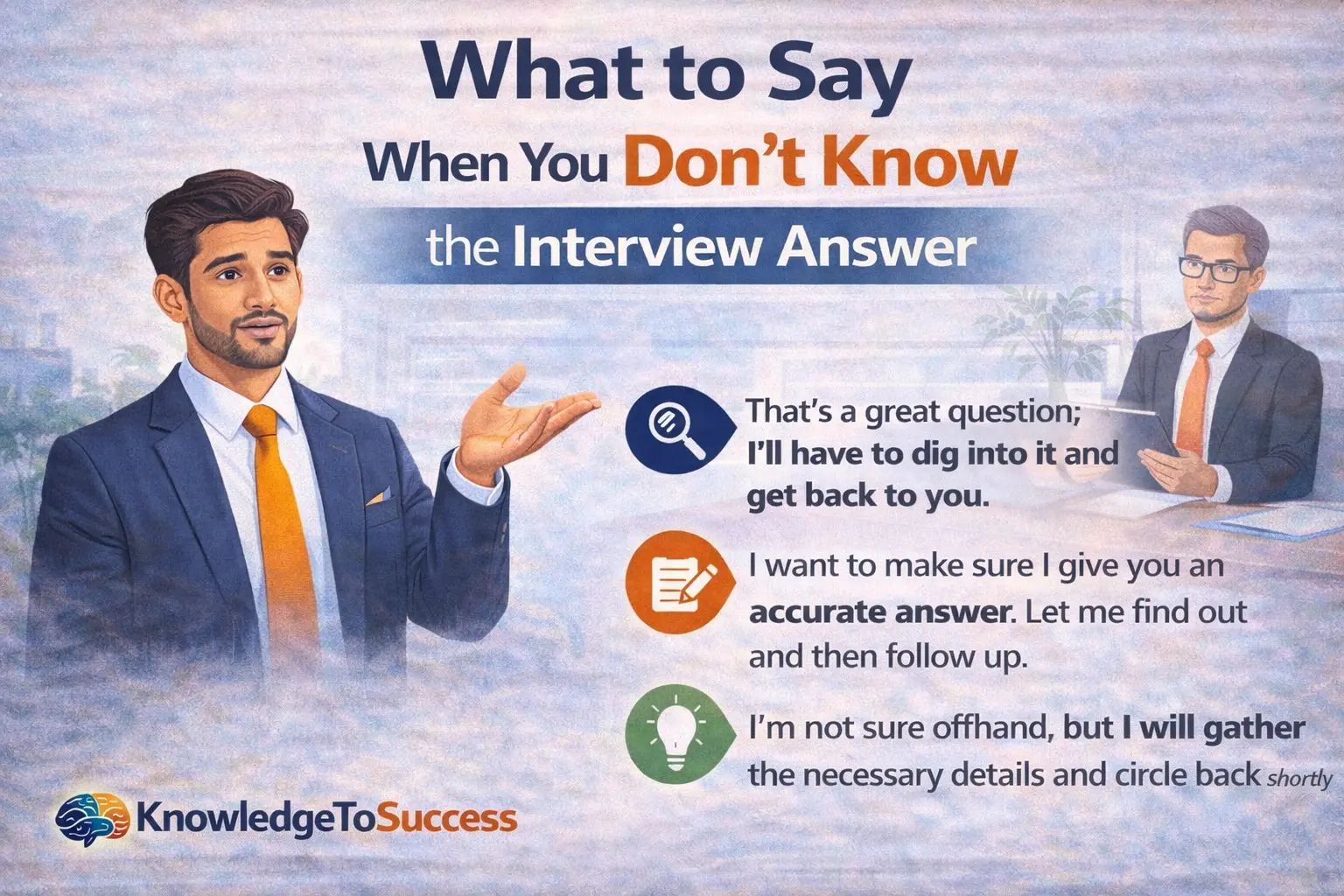
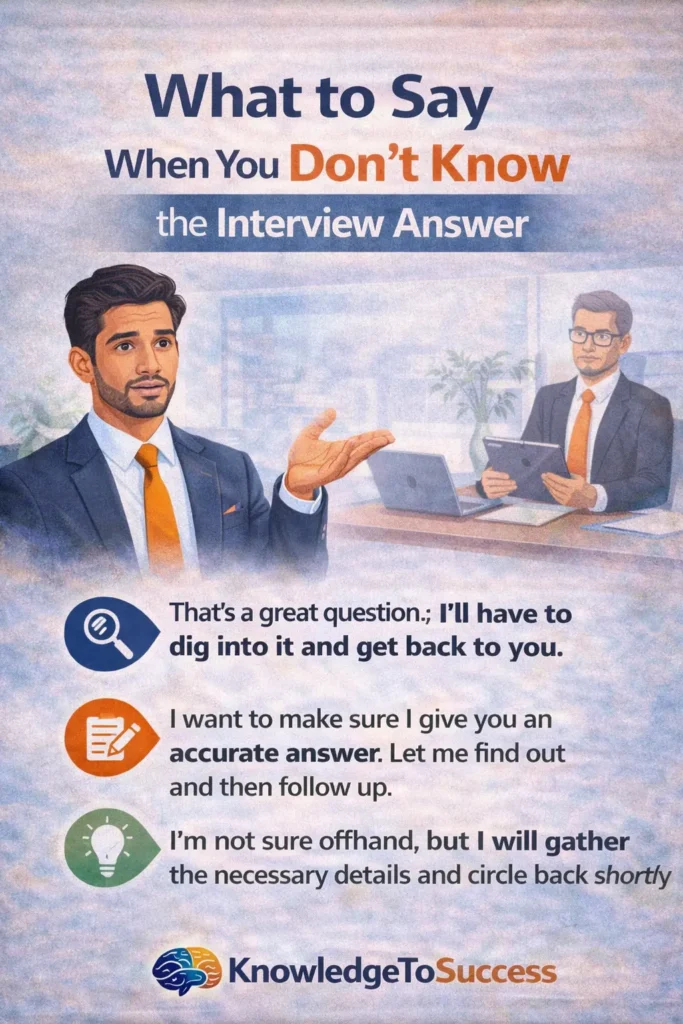
Example phrases:
- That’s an interesting question.
- Let me think through that.
- I haven’t faced that exact scenario, but…
This buys time while showing professionalism.
Read more articles on Career Guidance
Step 3: Share What You Do Know
Even if you don’t know the exact answer, you may know something related.
Strategy:
- Break the question into parts
- Address related knowledge
- Explain your thought process
For example:
While I haven’t worked with that exact tool, I’ve used similar platforms, and here’s how I would approach learning it…
This shows adaptability and reasoning.
Step 4: Think Out Loud (Structured Thinking)
Interviewers appreciate structured thinking.
Instead of silence, walk them through your reasoning.
Example:
If I were facing that situation, I would first analyze the problem, then gather data, and finally test possible solutions.
Even without perfect knowledge, structured thinking builds credibility.
Step 5: Be Honest When Necessary
Sometimes, honesty is the best answer.
You can say:
I don’t have direct experience with that yet, but I’m actively learning about it.
Honesty combined with growth mindset feels mature.
According to Glassdoor, interviewers value transparency over overconfidence.
Step 6: Turn It Into a Learning Opportunity
Strong candidates shift from limitation to initiative.
Example:
I haven’t faced that situation directly. However, I would approach it by…
This shows adaptability and confidence.
When the Interview Question Is Technical
For technical roles, uncertainty feels riskier.
Better Response Structure:
- Clarify the question
- Share what you understand
- Admit uncertainty clearly
- Explain how you would solve or research it
Interviewers value structured logic over memorized answers.
When the Interview Question Is Behavioral
If you can’t recall an exact example:
- Use a similar situation
- Explain the closest scenario
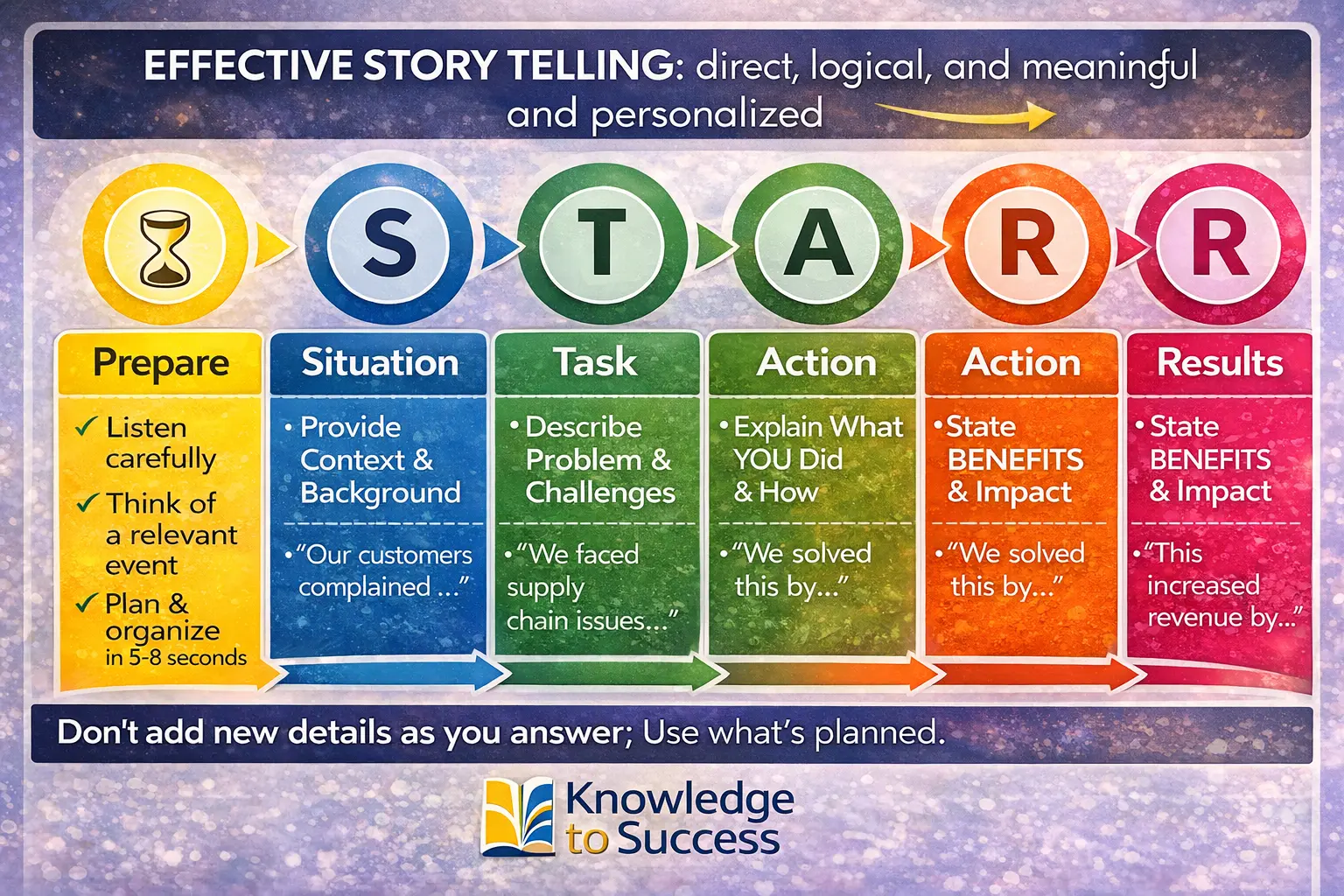
- Maintain structure (Situation – Action – Result)
Avoid saying, I don’t have any example.
Body Language Matters During Uncertainty in Interview
When unsure, your body language becomes louder.
Avoid:
- Rapid blinking
- Nervous laughter
- Fidgeting
- Defensive posture
Instead:
- Sit upright
- Maintain steady eye contact
- Speak slowly
Calm presence builds trust.
Why This Moment Can Actually Strengthen You
Handling uncertainty well shows:
- Emotional intelligence
- Problem-solving mindset
- Adaptability
- Professional maturity
Ironically, difficult questions often create opportunities to impress.
A Simple Response Formula You Can Remember
If you freeze, use this mental structure:
Pause → Acknowledge → Think → Respond → Conclude
Example:
“That’s a thoughtful question. I haven’t worked with that exact scenario, but based on my experience, I would…”
Keep it simple. Keep it structured.
Common Mistakes Strong Candidates Make
Even capable professionals lose credibility by:
- Over-explaining to cover gaps
- Becoming defensive
- Speaking too quickly
- Avoiding eye contact
Calm beats perfection.
A 5-Minute Practice Routine for Tough Interview Questions
To prepare:
- Ask a friend unexpected questions
- Practice thinking aloud
- Record yourself answering
- Focus on calm delivery
The more you practice uncertainty, the less it scares you.
Conclusion: Not Knowing Isn’t the Problem – Panicking Is
Every candidate faces unknown questions. However, strong candidates fail interviews when they don’t know how to handle uncertainty with composure.
Interviewers don’t expect encyclopedias. They expect professionals who can think, adapt, and respond calmly.
You don’t need every answer.
You need control over how you respond.
FAQs
1. Is it okay to say “I don’t know” in an interview?
Yes, if followed by a thoughtful explanation or learning mindset.
2. Should I guess if unsure?
No. Structured reasoning is better than guessing.
3. How long can I pause before answering?
3–5 seconds is completely acceptable.
4. Will not knowing one answer cost the job in Interview?
Rarely. Panic and poor handling are bigger risks.
5. How can I prepare for unknown Interview questions?
Practice thinking aloud and mock interview simulations.