Hiring feels like progress. More people means more work gets done. More work means faster growth. But in startups, early hiring can quietly destroy momentum. Many founders hire too fast, hire the wrong roles, or build teams before systems are ready. Understanding Early Hiring Mistakes That Kill Startup Growth helps founders build teams at the right time, not just faster.
The result?
- Increased burn
- Confusion in roles
- Slow execution
- Broken culture
Why Early Hiring Is Risky for Startups
Hiring is not just adding people.
It changes:
- Cost structure
- Culture
- Decision-making
- Execution speed
In early stages, every hire has a huge impact.
A wrong hire can slow down your entire startup.
Early Hiring Mistakes That Kill Startup Growth
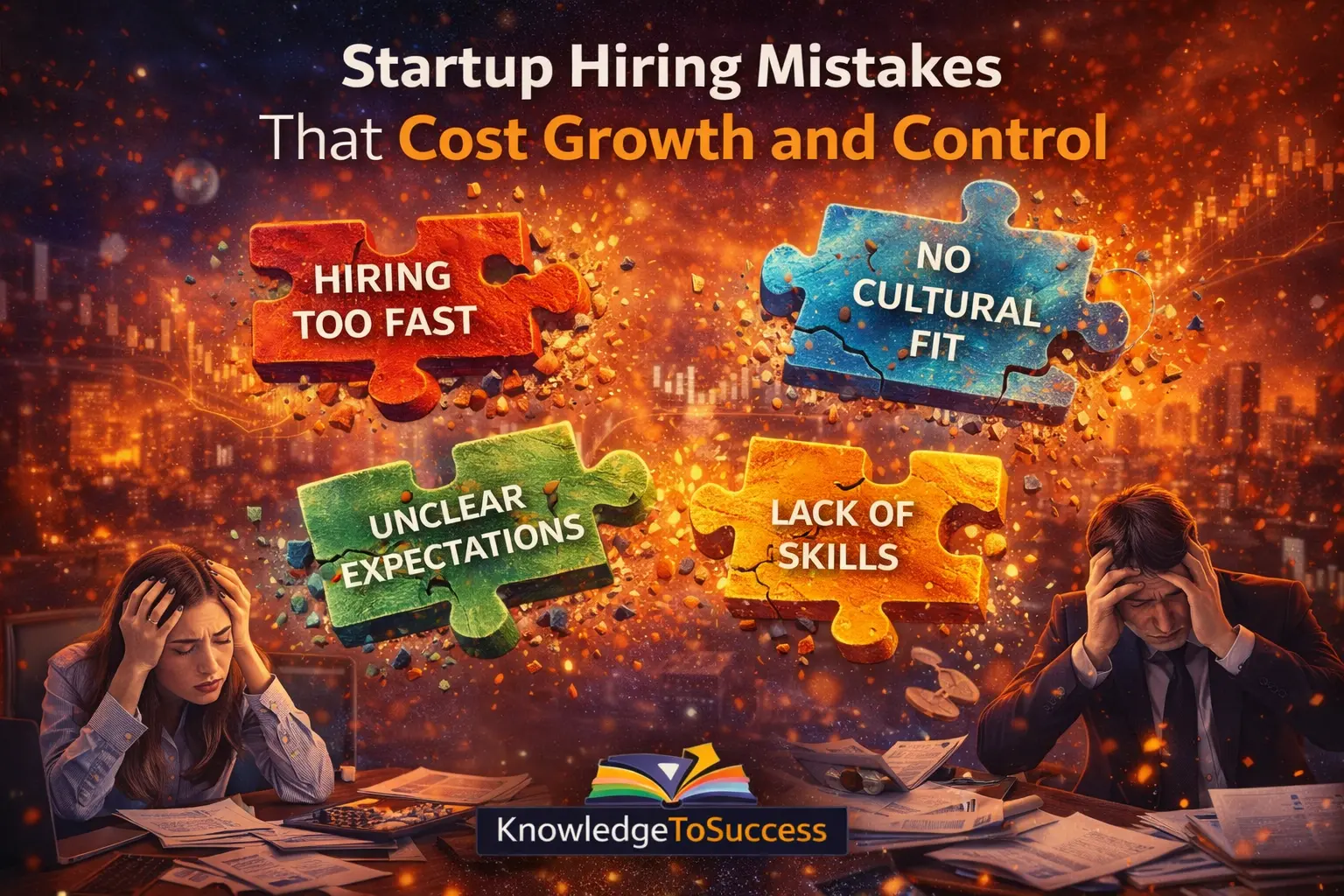
1. Hiring Too Early Without Clear Need
Many founders hire because they feel busy.
But “being busy” is not a hiring signal.
Hire only when:
- Work is repeatable
- Demand is consistent
- Tasks cannot be automated
2. Hiring for Roles Instead of Problems
Founders often hire titles:
- Marketing Manager
- Sales Head
- Operations Lead
Instead of solving problems.
Startups should hire to solve:
👉 specific bottlenecks
3. Ignoring Culture Fit
Skills can be taught.
Mindset cannot.
Early hires define:
- Work culture
- Team dynamics
- Execution style
A wrong cultural fit damages long-term growth.
4. Hiring Expensive Talent Too Soon
High salaries increase burn rate.
Early-stage startups should focus on:
- Versatile people
- Problem solvers
- Ownership mindset
Not just big-company experience.
5. Lack of Role Clarity
If employees don’t know:
- What to do
- What success looks like
- Who they report to
Execution slows down.
Clarity is critical.
Read More Article on Startup Guides India.
6. Overbuilding Teams Before Product-Market Fit
Hiring large teams before validation leads to:
- Wasted resources
- Frequent pivots
- Team frustration
Build team size based on stability.
7. Hiring for Speed, Not Quality
Fast hiring often results in:
- Poor performance
- Re-hiring costs
- Cultural damage
Hiring slower but better is smarter.
8. No Hiring Strategy or Plan
Many startups hire reactively.
Instead, define:
- Hiring roadmap
- Budget
- Priority roles
Strategy prevents chaos.
Signs You Should Start Hiring
Hiring should solve problems not create them.
You are ready to hire when:
- Work is consistently repeating
- Revenue is stable
- Founders are overloaded with core tasks
- Clear role definition exists
Hiring vs Scaling: Key Difference
| Hiring | Scaling |
|---|---|
| Adding people | Expanding operations |
| Increases cost | Improves efficiency |
| Tactical decision | Strategic decision |
Hiring is part of scaling, but not equal to it.
Common Founder Hiring Mistakes
- Hiring based on resume, not capability
- Overpaying early employees
- Ignoring onboarding
- Not setting expectations
- Hiring friends without structure
These mistakes compound quickly.
Practical Hiring Framework for Startups
Follow this simple model:
Step 1: Identify the Bottleneck
What is slowing growth?
Step 2: Define the Role Clearly
What exactly should this person do?
Step 3: Hire for Ownership
Look for problem-solvers, not task-doers.
Step 4: Start Small
Test before expanding team.
Step 5: Measure Performance
Track output, not effort.
Founder Insight
Great startups don’t hire fast.
They hire right.
Early hires are not employees. They are culture builders.
How Hiring Impacts Funding
Investors evaluate:
- Team quality
- Hiring discipline
- Burn rate
- Execution ability
According to Harvard Business Review, early team decisions significantly influence startup success.
Final Verdict: Hiring Is Not Growth – It’s Leverage
Hiring does not guarantee growth.
The right hiring enables growth.
The wrong hiring destroys it.
Understanding Early Hiring Mistakes That Kill Startup Growth helps founders:
- Stay lean
- Build strong teams
- Scale sustainably
The goal is not to hire more.
The goal is to hire better.
FAQs
1. What are early hiring mistakes that kill startup growth?
Hiring too early, wrong roles, poor culture fit, and lack of clarity.
2. When should startups start hiring?
After achieving consistent workload and clarity in roles.
3. Is hiring early always bad?
No, but premature hiring increases risk.
4. How many people should a startup hire early?
Only essential roles needed for growth.
5. Does hiring impact startup funding?
Yes, investors evaluate team quality and hiring decisions.