Most startups begin with founder control. That is normal.
In the early stage, founders do everything:
- Product decisions
- Sales calls
- Hiring
- Marketing
- Operations
However, what helps in stage one often hurts in stage two.
Many startups slow down not because of market problems, but because the founder never evolved into a CEO.
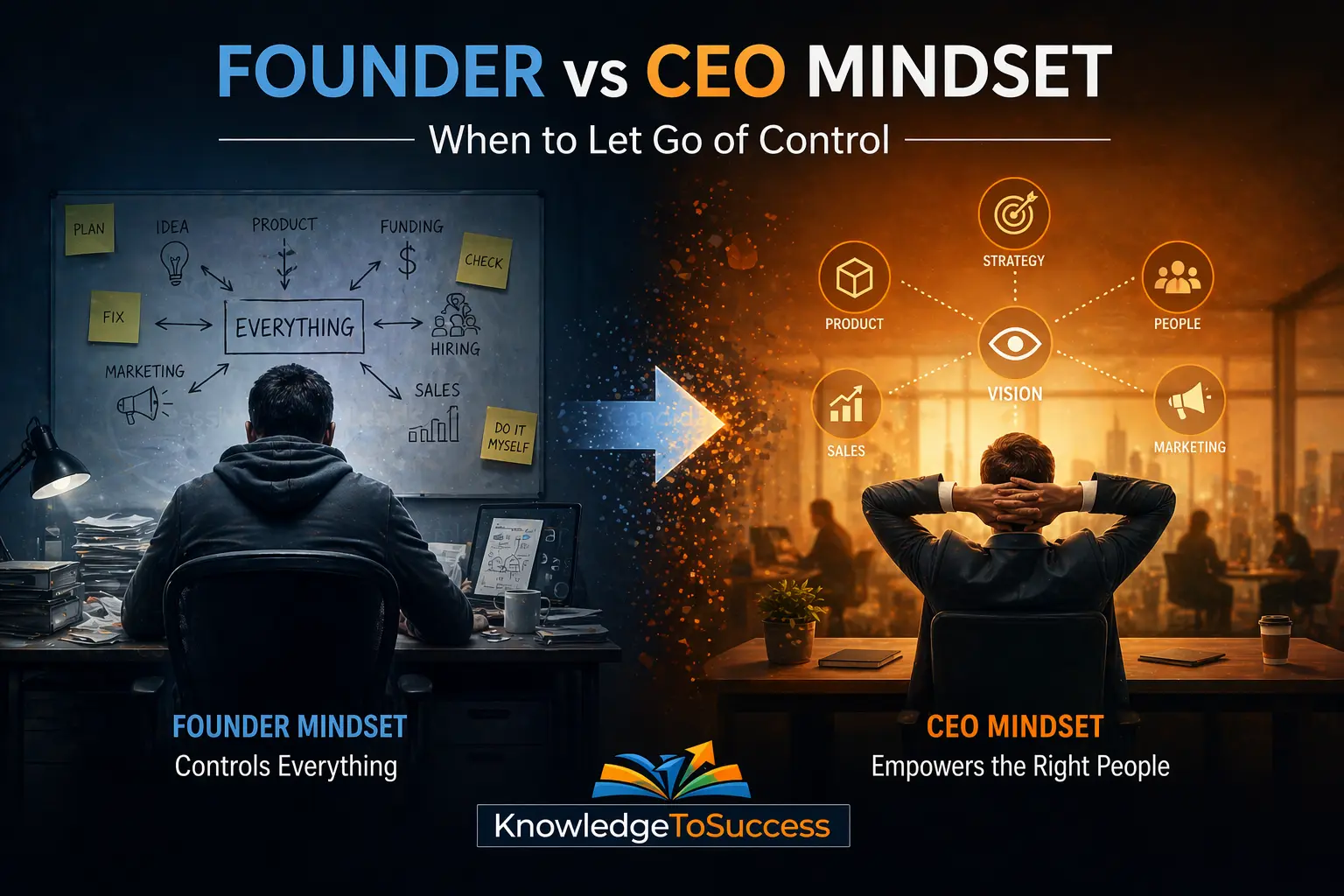
Understanding the Founder vs CEO Mindset is critical for scaling beyond founder-led chaos.
What Is the Founder Mindset?
The founder mindset is built around:
- Survival
- Speed
- Control
- Hustle
- Doing everything personally
This mindset is powerful in the beginning.
It helps launch ideas fast.
But later, it creates bottlenecks.
What Is the CEO Mindset?
The CEO mindset focuses on:
- Systems
- Delegation
- Strategy
- Leadership
- Long-term growth
A CEO builds an organization that works without needing constant founder intervention.
That is the shift many founders resist.
Founder vs CEO Mindset: Core Differences
| Founder Mindset | CEO Mindset |
|---|---|
| Do everything | Build teams |
| React quickly | Plan strategically |
| Control tasks | Empower leaders |
| Solve daily issues | Build systems |
| Hustle mode | Scale mode |
Understanding these differences is the heart of the Founder vs CEO Mindset shift.
Signs You’re Holding Too Much Control
1. Every Decision Needs Your Approval
If nothing moves without you, growth slows.
2. Team Waits Instead of Acts
When teams fear mistakes, they stop taking ownership.
3. You Are Always Busy but Not Growing
Founders trapped in operations mistake activity for progress.
4. Hiring Isn’t Solving Problems
If new hires still depend on you for everything, systems are missing.
5. Revenue Is Growing but Chaos Is Growing Faster
That means control is replacing leadership.
Read Previous Article on Startup Guides India
Why Founders Struggle to Let Go
Common reasons:
- Fear of losing quality
- Fear employees won’t care enough
- Identity tied to being needed
- Lack of trust in team
- No clear systems in place
This is emotional, not just operational.
Founder Mistakes That Hurt Growth
Micromanaging Teams
Kills speed and morale.
Staying in Every Function
Prevents strategic thinking.
Delaying Leadership Hires
Strong leaders multiply growth.
Avoiding Accountability Systems
Trust without systems becomes confusion.
When Should Founders Let Go of Control?
You should shift when:
- Revenue is increasing
- Team size is growing
- Customer demand is rising
- Daily operations consume founder time
- Strategic opportunities are being missed
That is the moment to move from founder mode to CEO mode.
How to Make the Transition
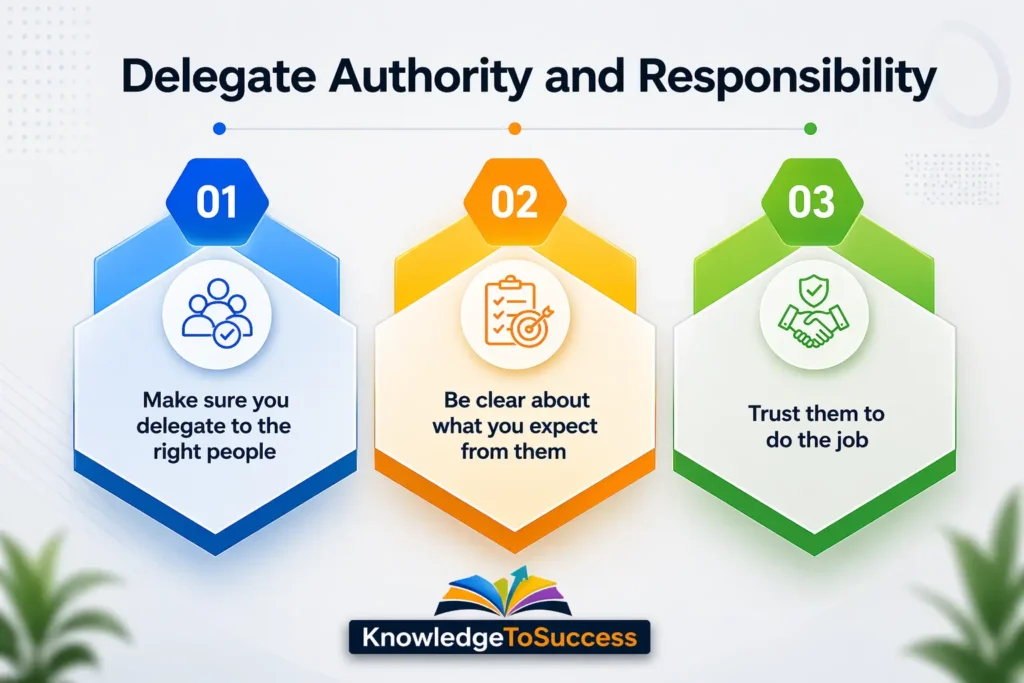
Step 1: Delegate Outcomes, Not Tasks
Give ownership, not instructions.
Step 2: Build Systems
Use SOPs, dashboards, weekly reviews.
Step 3: Hire Leaders, Not Helpers
Strong managers remove bottlenecks.
Step 4: Focus on CEO Work
Spend time on:
- Vision
- Hiring leaders
- Capital allocation
- Growth strategy
Step 5: Measure Results
Leadership requires visibility.
Investor Perspective
Investors often ask:
👉 Is this business scalable without the founder?
If the answer is no, valuation drops.
According to Harvard Business Review, founder dependence is a common growth constraint in scaling businesses.
Real Founder Insight
Many founders think control protects growth.
In reality:
Too much founder control often becomes the biggest threat to growth.
Final Verdict: Letting Go Is Leadership
The shift from founder to CEO is uncomfortable.
However, it is necessary.
The founder builds the company.
The CEO builds the machine that grows the company.
Understanding the Founder vs CEO Mindset helps founders:
- Escape bottlenecks
- Build leaders
- Scale sustainably
Growth begins when control becomes leadership.
FAQs
1. What is Founder vs CEO Mindset?
It is the shift from doing everything personally to leading systems and teams.
2. When should founders let go of control?
When growth depends on team execution more than founder effort.
3. Is delegation risky for startups?
Not if systems and accountability exist.
4. Why do founders micromanage?
Usually fear, lack of trust, or poor systems.
5. Does founder control affect valuation?
Yes, investor confidence drops if the company depends entirely on one person.