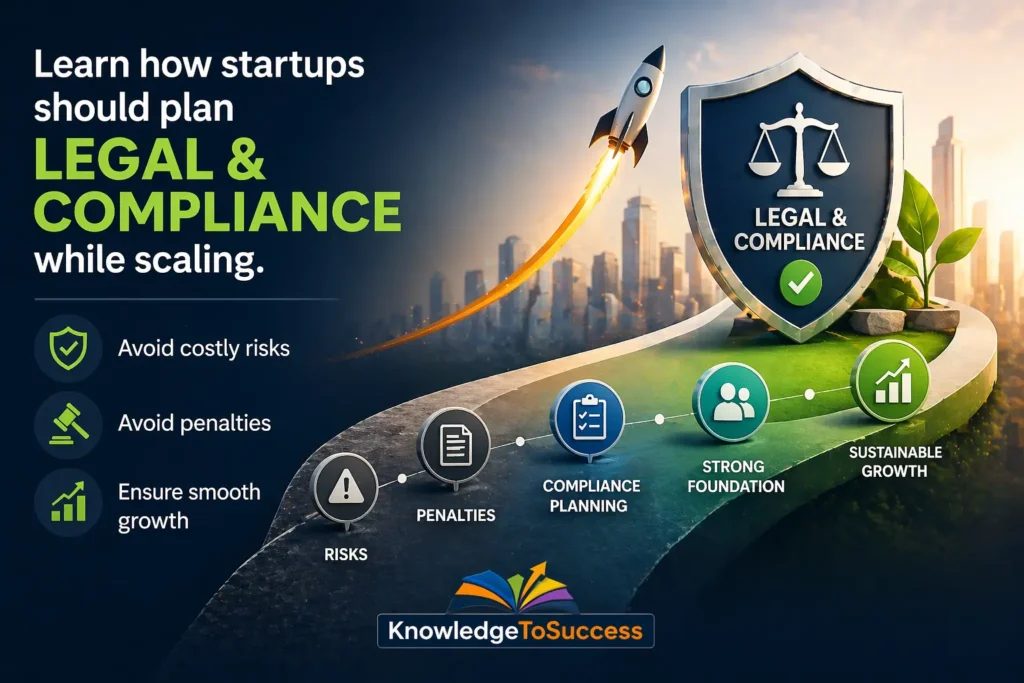
Understanding Legal & Compliance Planning While Scaling helps startups grow safely, not just quickly.
Scaling feels exciting.
- More customers.
- More revenue.
- More hiring.
- More momentum.
But growth often hides something dangerous:
👉 Legal and compliance gaps.
Many startups scale operations faster than they scale governance.
That creates silent risks that appear later as:
- Penalties
- Contract disputes
- Tax notices
- Investor red flags
- Founder stress
Why Legal Planning Matters During Scaling
Early-stage chaos can survive informality.
Scaling cannot.
As your startup grows, complexity increases:
- More customers
- More employees
- More contracts
- More vendors
- More liabilities
Without systems, growth becomes fragile.
Legal & Compliance Areas Startups Must Plan While Scaling
1. Corporate Structure
Ask:
- Is current structure still right?
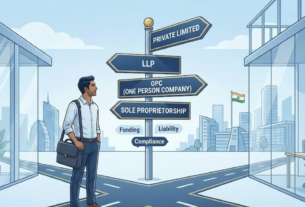
- Need Pvt Ltd upgrade from LLP/OPC?
- Ready for investors?
Wrong structure can slow funding.
2. ROC & Secretarial Compliance
Growing companies must stay current with:
- Annual filings
- Board meetings
- Director KYC
- Share records
Missed filings damage credibility.
3. Tax Compliance
As revenue grows:
- GST complexity rises
- TDS obligations increase
- Advance tax becomes important
Ignoring taxes during growth is expensive.
4. Employment Compliance
More hiring means:
- Offer letters
- Contracts
- Payroll systems
- PF / ESI (if applicable)
- HR policies
Team growth without compliance creates future disputes.
5. Contracts & Vendor Agreements
Scaling startups often operate informally.
That becomes risky.
Use proper contracts for:
- Clients
- Vendors
- Agencies
- Consultants
Read Previous Article on Startup Guides India
Common Legal Mistakes Scaling Startups Make
Hiring Fast Without HR Systems
Creates confusion and disputes.
Revenue Growth Without Tax Planning
Leads to surprise liabilities.
No Written Contracts
Causes payment and ownership disputes.
Founder-Controlled Everything
Governance becomes weak.
Ignoring Data Privacy
Especially dangerous for SaaS or tech startups.
Signs Your Startup Needs Better Compliance Systems
- Revenue growing rapidly
- Team size crossing 10+
- New states / markets entering
- Investor conversations starting
- Founder overwhelmed with approvals
These are signals to upgrade governance.
Scaling Compliance Checklist
| Area | What to Fix |
|---|---|
| ROC | All filings updated |
| Tax | GST, TDS, returns current |
| Hiring | Contracts + payroll |
| Finance | Books clean |
| Legal | Contracts signed |
| Governance | Delegation + approvals |
How Investors See Compliance While Scaling
Investors ask:
- Is growth clean or messy?
- Are filings current?
- Is legal risk hidden?
- Can this scale professionally?
According to Harvard Business Review, operational discipline improves scaling success and investor confidence.
Practical Founder Framework
Step 1: Quarterly Compliance Review
Don’t wait for year-end.
Step 2: Build Advisors
CA + CS + legal counsel.
Step 3: Standardize Documentation
Everything in writing.
Step 4: Delegate Governance
Move beyond founder approvals.
Step 5: Prepare for Due Diligence Early
Investors hate cleanup stories.
Real Founder Insight
Many startups don’t fail because they scaled.
They fail because they scaled messy.
Growth without systems becomes expensive chaos.
Final Verdict: Scale Clean or Pay Later
Growth creates opportunities.
But it also magnifies weaknesses.
Understanding Legal & Compliance Planning While Scaling helps startups:
- Protect momentum
- Reduce legal risk
- Improve valuation
- Build durable growth
Fast growth is exciting.
Clean growth wins long term.
FAQs
1. Why do startups need compliance while scaling?
Because complexity increases with growth.
2. When should startups upgrade legal systems?
Before growth creates stress.
3. Does compliance affect funding?
Yes, investors review legal readiness.
4. What is biggest scaling legal mistake?
Growing revenue without governance.
5. Should startups hire legal help early?
Yes, especially during expansion.