Most first-time founders focus on building products, acquiring users, and raising funds. Compliance usually comes later. However, ignoring compliance early creates silent risks. These risks show up during funding, audits, or legal scrutiny, when it’s already expensive to fix. A structured Startup Compliance Checklist for First-Time Founders helps you avoid penalties, build credibility, and operate smoothly from day one.
This guide simplifies compliance into a practical checklist you can actually follow.
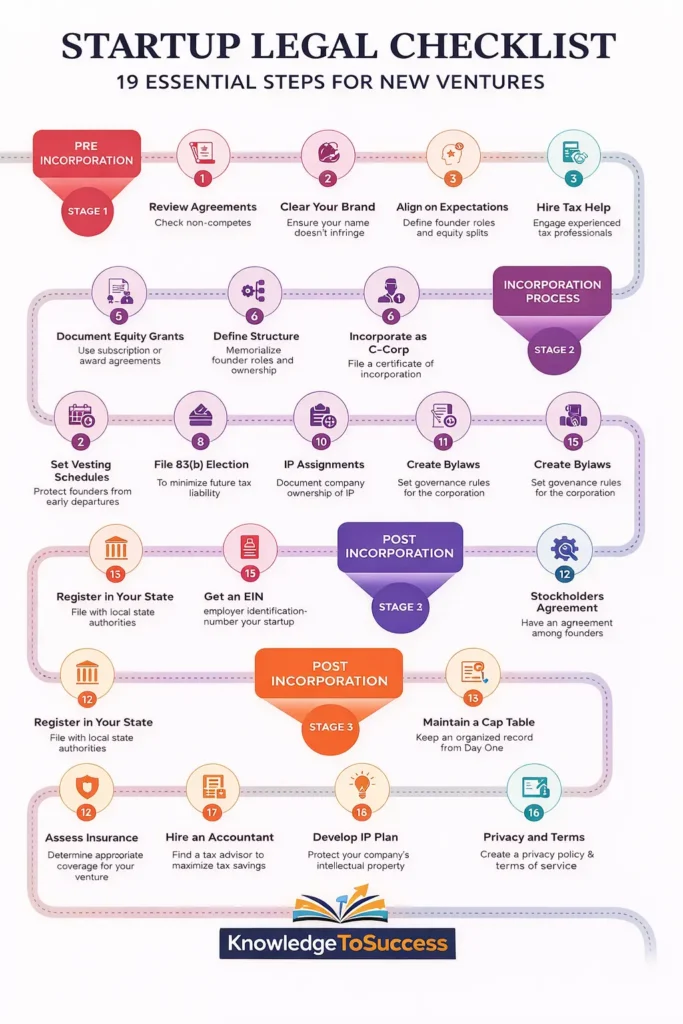
What Is a Startup Compliance Checklist?
A Startup Compliance Checklist for First-Time Founders is a structured list of legal, financial, and regulatory tasks that every startup must follow.
It ensures:
- Legal protection
- Smooth operations
- Investor readiness
- Avoidance of penalties
Without a checklist, founders rely on memory and that leads to missed deadlines.
Why Compliance Matters More Than You Think
Many founders believe compliance is just paperwork.
In reality, it impacts:
- Funding approvals
- Company valuation
- Legal protection
- Director safety
- Brand credibility
Investors and regulators both check compliance history.
You can explore official compliance guidelines from the Ministry of Corporate Affairs
Startup Compliance Checklist for First-Time Founders (Step-by-Step)
1. Company Incorporation (Startup) Compliance
Before anything else:
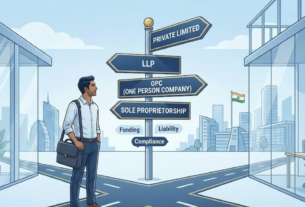
- Register your business structure (Pvt Ltd, LLP, OPC)
- Obtain Certificate of Incorporation
- Apply for PAN and TAN
- Open business bank account
This is your legal foundation.
2. Post-Incorporation Compliance
Immediately after incorporation:
- Appoint statutory auditor within 30 days
- Issue share certificates
- Maintain statutory registers
- File INC-20A (commencement of business)
Missing early compliance creates long-term problems.
3. ROC Compliance (Annual Filings)
Every Private Limited Company must file:
- AOC-4 (financial statements)
- MGT-7 (annual return)
- DIR-3 KYC (director compliance)
These filings are mandatory even if revenue is zero.
4. Tax Compliance Checklist
Tax compliance includes:
- Income tax return filing
- GST registration (if applicable)
- Monthly/quarterly GST returns
- TDS deduction and filing
Tax errors attract penalties and interest.
5. Board Meetings and Governance
- Minimum 4 board meetings annually
- Maintain meeting minutes
- Record resolutions
Governance is part of Startup Compliance Checklist for First-Time Founders, not optional.
6. Accounting and Bookkeeping
- Maintain accurate financial records
- Record all transactions
- Use accounting software or CA support
Clean books simplify audits and funding.
7. Audit Compliance
- Conduct statutory audit annually
- Prepare financial statements
- Maintain audit documentation
Audits are mandatory under Companies Act 2013.
8. Labour Law Compliance
If hiring employees:
- Issue offer letters and contracts
- Maintain payroll records
- Register for PF/ESI (if applicable)
Ignoring labour laws creates legal risk.
9. Intellectual Property Protection
- Trademark your brand name
- Protect product or technology
- Maintain ownership clarity
IP disputes can hurt valuation.
Read More Article on Startup Guides India.
10. Annual Compliance Calendar
Maintain a calendar including:
- ROC deadlines
- Tax deadlines
- Audit timelines
- Board meetings
A calendar prevents last-minute stress.
Common Compliance Mistakes First-Time Founders Make
Understanding Startup Compliance Checklist for First-Time Founders helps avoid these mistakes:
- Delaying ROC filings
- Mixing personal and business finances
- Ignoring GST applicability
- Not maintaining documentation
- Relying entirely on accountant without oversight
Most penalties are preventable.
Practical Compliance Framework for Founders
Follow this simple system:
Step 1: Build a Compliance Tracker
Track all deadlines in one place.
Step 2: Assign Responsibility
Founder must oversee, even if CA manages execution.
Step 3: Review Monthly
Don’t wait for year-end.
Step 4: Maintain Documentation
Store digital copies securely.
Step 5: Prepare for Due Diligence
Keep compliance clean for funding.
Startup Compliance Checklist (Quick Summary Table)
| Area | Key Requirement |
|---|---|
| Incorporation | PAN, TAN, bank account |
| ROC | AOC-4, MGT-7 |
| Tax | GST, Income Tax |
| Audit | Annual statutory audit |
| Governance | Board meetings |
| Labour | Employee compliance |
| IP | Trademark protection |
How Compliance Impacts Funding
Investors check:
- Filing history
- Legal structure
- Audit reports
- Governance practices
A startup with strong compliance:
- Raises funds faster
- Commands better valuation
- Faces fewer legal questions
Compliance builds trust before your pitch does.
Final Thoughts: Compliance Is a Growth Enabler
Compliance is often seen as a burden.
However, for first-time founders, it is actually a risk management system.
A strong Startup Compliance Checklist for First-Time Founders ensures:
- Legal safety
- Financial clarity
- Investor confidence
- Scalable growth
Startups that ignore compliance pay later. Startups that manage it early grow faster.
FAQs
1. What is a Startup Compliance Checklist for First-Time Founders?
It is a list of legal, tax, and regulatory tasks startups must follow to stay compliant.
2. Is Startup compliance required even if my startup has no revenue?
Yes, compliance is mandatory regardless of revenue.
3. What happens if compliance is ignored?
Penalties, legal notices, and funding issues may arise.
4. Can I outsource compliance to a CA?
Yes, but founders must still oversee it.
5. How often should compliance be reviewed?
At least monthly.