The debate around Bootstrapping vs Fundraising for Indian Startups is not about which is better universally. It’s about what’s right for your stage, market, and vision.
Every startup founder reaches a critical decision early:
👉 Should you bootstrap your startup
👉 Or raise external funding
This decision shapes everything, growth speed, ownership, risk, and long-term control.
Many founders choose funding too early. Others bootstrap too long.
Both can be costly mistakes.
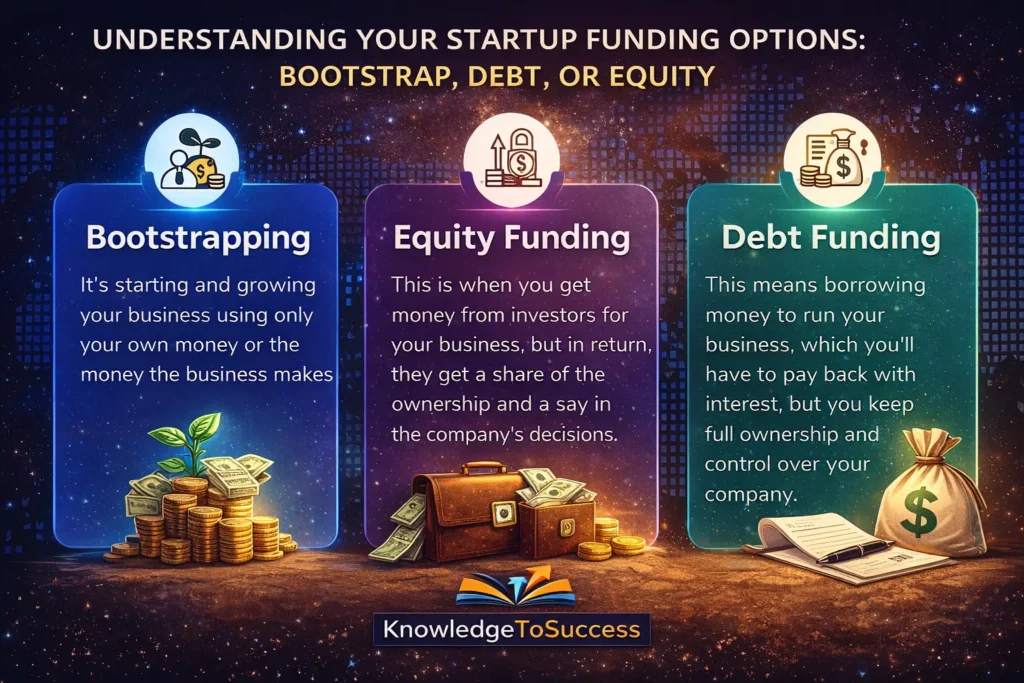
What Is Bootstrapping?
Bootstrapping means building your startup using:
- Personal savings
- Revenue generated from customers
- Minimal external capital
You grow slowly but retain full control.
What Is Fundraising?
Fundraising means raising capital from:
- Angel investors
- Venture capitalists
- Institutional investors
In exchange, you give up equity.
This accelerates growth, but reduces ownership.
Bootstrapping vs Fundraising for Indian Startups: Key Differences
| Factor | Bootstrapping | Fundraising |
|---|---|---|
| Ownership | 100% control | Shared ownership |
| Growth Speed | Slow | Fast |
| Risk | Lower financial risk | High expectations |
| Decision Making | Founder-driven | Investor-influenced |
| Pressure | Low | High |
Understanding these differences is critical before making a decision.
When Bootstrapping Works Best
Bootstrapping is ideal when:
- You have a clear revenue model
- You want full control
- You are building a niche product
- You prefer sustainable growth
Many successful Indian startups began this way.
Bootstrapping builds discipline.
When Fundraising Makes Sense
Fundraising is suitable when:
- You need fast scaling
- Market opportunity is time-sensitive
- Competition is aggressive
- Product requires heavy investment
For example:
- SaaS scaling globally
- Marketplace models
- Tech-heavy products
Fundraising accelerates execution.
Read More Article on Startup Guides India.
The Hidden Trade-Offs Founders Ignore
1. Control vs Speed
Bootstrapping = control
Fundraising = speed
You rarely get both.
2. Pressure vs Freedom
Funded startups face:
- Growth targets
- Investor expectations
- Reporting requirements
Bootstrapped founders operate with more flexibility.
3. Profitability vs Valuation
Bootstrapped startups focus on profit.
Funded startups often focus on valuation.
This changes decision-making significantly.
Common Founder Mistakes
- Raising funding without product-market fit
- Bootstrapping despite needing scale
- Choosing funding for “status”
- Not understanding dilution
These mistakes can permanently affect the startup.
How Investors See This Decision
Investors prefer:
- Clear growth strategy
- Strong fundamentals
- Scalable model
However, many investors also respect bootstrapped startups because they show discipline.
According to Harvard Business Review, disciplined capital allocation improves startup survival rates.
Decision Framework: How to Choose
Use this simple framework:
Choose Bootstrapping if:
- You can generate revenue early
- You want long-term control
- Market timing is flexible
Choose Fundraising if:
- You need rapid scale
- Market is competitive
- Capital accelerates growth significantly
Real Founder Insight
Some of the most successful founders:
- Bootstrapped initially
- Raised funding later
This hybrid approach balances control and scale.

Final Verdict: There Is No Universal Answer
The question is not:
👉 Bootstrapping vs Fundraising – which is better?
The real question is:
👉 Which is right for your startup right now?
Choosing the right path depends on:
- Market timing
- Business model
- Risk appetite
- Vision
Smart founders adapt their strategy as the company evolves.
FAQs
1. What is Bootstrapping vs Fundraising for Indian Startups?
It refers to choosing between self-funding or raising external capital to grow a company.
2. Is bootstrapping better than fundraising?
Not always. It depends on growth needs and market conditions.
3. When should startups raise funding?
When scaling requires significant capital and speed.
4. Can startups switch from bootstrapping to funding?
Yes, many successful companies follow this path.
5. Does fundraising reduce control?
Yes, equity dilution reduces founder control.