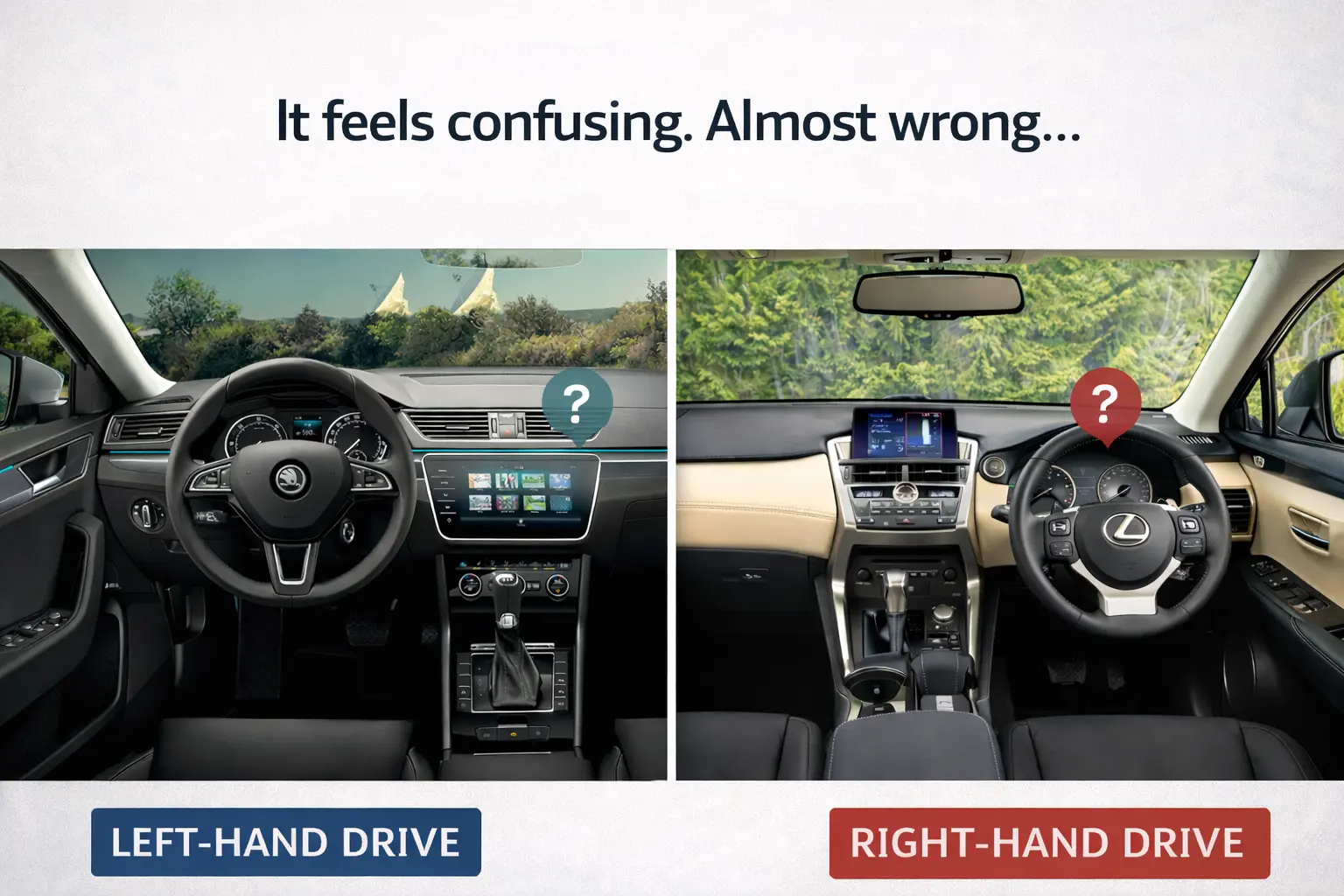
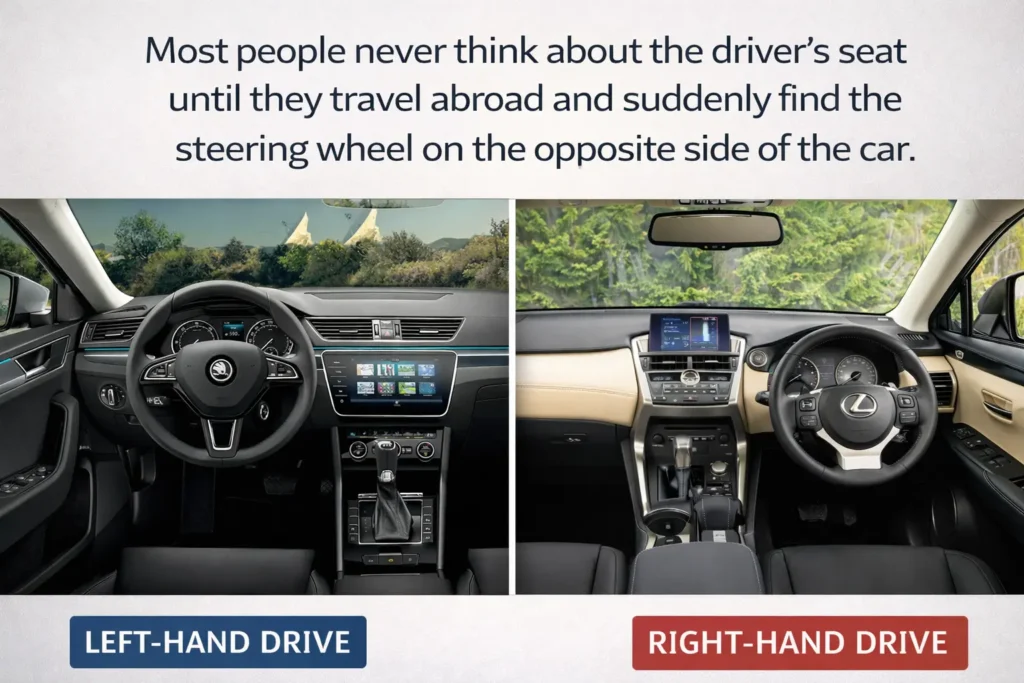
Most people never think about the driver seat until they travel abroad and suddenly find the steering wheel on the opposite side of the car.
It feels confusing. Almost wrong. But this is not a design mistake or a modern engineering choice.
The position of the driver seat is part of a hidden system shaped by history, safety, ancient travel habits, and old political decisions long before cars even existed.
Once you understand this system, the way the world drives suddenly makes sense.
Why Driver Seat Position by Country Is Different
The simplest rule is this:
- Countries that drive on the left side of the road
→ Place the driver seat on the right - Countries that drive on the right side of the road
→ Place the driver seat on the left
This positioning allows the driver to:
- Sit closer to the center of the road
- Judge oncoming traffic more accurately
- Overtake safely
- Maintain better road awareness
The driver seat is always placed where visibility matters most.
But this only explains how it works not why it started.
The Ancient Origins of Driver Seat Placement
To understand the driver seat, we must go back to a time before engines, highways, or traffic lights.
Life on Roads Before Cars
Centuries ago:
- Roads were narrow and unmarked
- Travel was done on horses or carts
- Encounters on the road could be dangerous
Most people were right-handed.
That mattered more than you might think.
To keep their dominant hand free for balance, control, or defense travelers preferred to:
- Stay on the left side of the road
- Pass others safely with their right hand ready
This habit slowly became tradition.
Long before cars, the rules that would later define seat placement were already forming.
British Influence on Driver Seat Position by Country
Britain was one of the first nations to officially standardize road rules.
It adopted left-side driving and enforced it strictly.
When the British Empire expanded, it carried these rules across the world.
That’s why countries like:
- India
- Australia
- Japan
- Sri Lanka
- South Africa
still follow:
- Left-side driving
- Right-side driver seat placement
This is a powerful unknown fact:
Decisions made centuries ago by empires still decide where the driver seat sits today.
Why Some Countries Chose the Opposite Driver Seat System
Not all countries followed Britain.
France, the United States, and much of Europe developed a different approach.
Large Wagons Changed Everything
In these regions:
- Heavy wagons were pulled by multiple horses
- Drivers often sat on the left rear horse
- Sitting on the left gave better visibility of the road
As a result:
- Traffic naturally moved to the right side
- The driver’s seat stayed on the left
When cars replaced wagons, the system stayed.
That’s why today:
- USA
- France
- Germany
- China
use right-side driving with a left-side driver seat.
How Driver Seat Position by Country Improves Safety
The driver’s seat is not about tradition alone it’s about safety.
Sitting closer to the center of the road allows:
- Better judgment of distance
- Safer overtaking
- Improved awareness of oncoming traffic
This is why importing a car with the “wrong” seat can feel uncomfortable and even unsafe.
Your brain is trained to expect traffic from a specific direction.
Why Countries Almost Never Change Driver Seat Rules
You might wonder:
Why not standardize the driver’s seat globally?
The answer is simple chaos and cost.
Changing driving sides would require:
- Redesigning roads
- Replacing traffic signs
- Modifying vehicles
- Retraining millions of drivers
Only a handful of countries have ever attempted it, and the transition caused widespread confusion.
Once a country commits to a driver’s seat system, it becomes permanent.
Common Myths About Driver Seat Position
❌ Right-side driver seat means better cars
False. It’s purely regional.
❌ Left-side driving is outdated
No. It works just as efficiently when infrastructure supports it.
❌ Modern technology makes driver seat rules unnecessary
Incorrect. Visibility and human reaction still matter more than automation.
The driver seat exists where it does for a reason.
Why Driver Seat Position by Country Still Matters Today
This unknown fact teaches a bigger lesson.
It shows that:
- Modern technology adapts to history
- Old habits shape new inventions
- Progress doesn’t erase the past it builds on it
Even today’s advanced vehicles follow rules created for horses and swords.
That’s not a flaw. It’s continuity.
A Hidden System in Everyday Life
The driver’s seat is something we interact with every day, yet rarely question.
And that’s what makes this fact powerful.
History is not locked in museums.
It’s built into our roads, vehicles, and daily routines.
Once you notice it, you’ll start seeing similar hidden systems everywhere.
Read More Article on Unknown Facts.
Conclusion: History Is Sitting in the Driver Seat
The position of the driver’s seat is not accidental.
It is the result of:
- Ancient travel habits
- Colonial decisions
- Safety logic
- Cultural continuity
Every time you sit behind the wheel, you are sitting inside history.
That is the real power of unknown facts they turn ordinary details into meaningful stories.
FAQs
1. Why is the driver seat on the right in some countries?
Because those countries drive on the left side of the road.
2. Why did left-side driving begin?
It began with horse riders wanting their right hand free for control and safety.
3. Which countries have right-side driver’s seat?
India, the UK, Japan, Australia, and several former British colonies.
4. Can countries change driver seat systems today?
Technically yes, but it is extremely expensive and risky.
5. Does driver’s seat position affect driving safety?
Yes. It improves visibility and reaction time based on traffic direction.