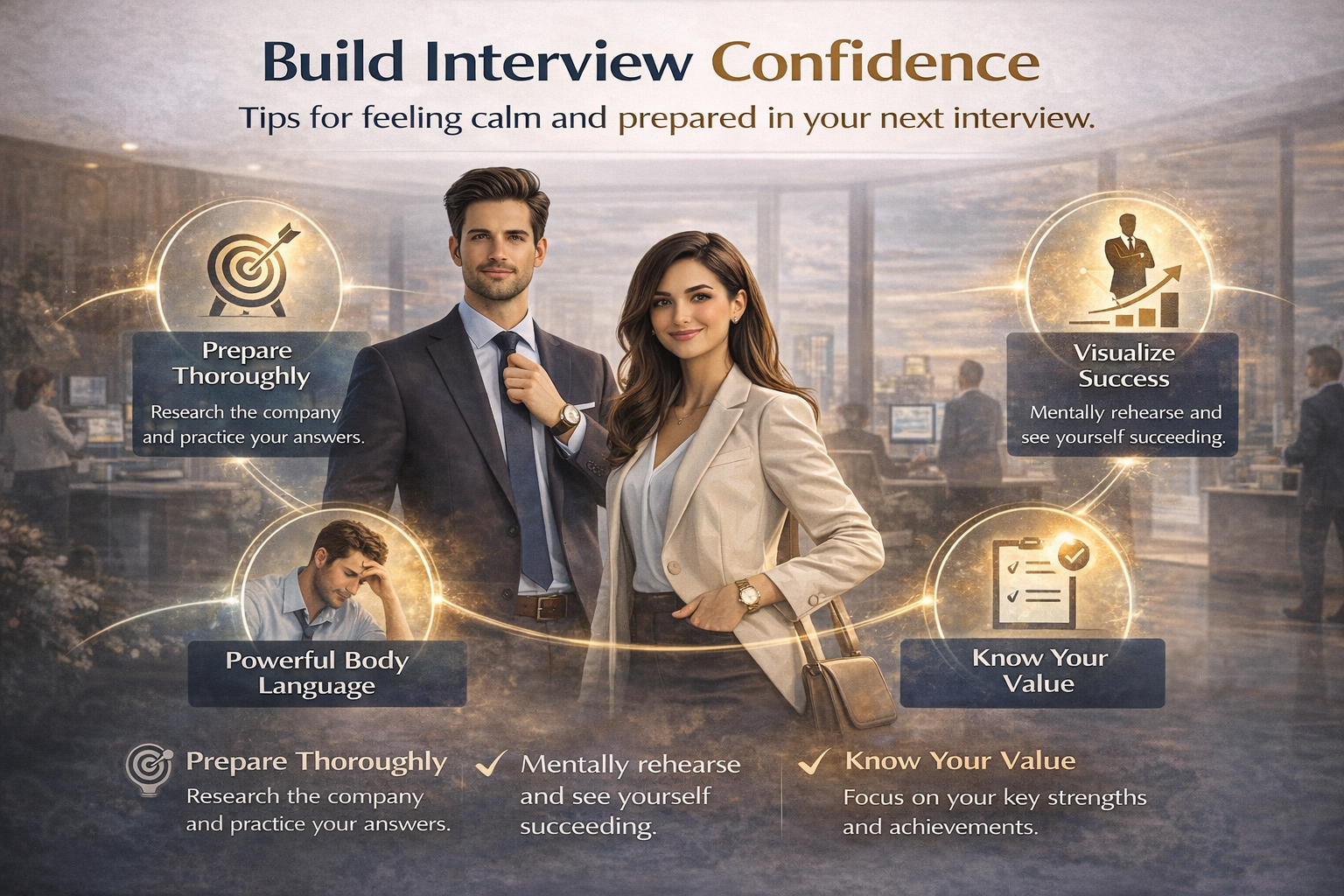
Many candidates believe confidence comes naturally. However, that belief quietly hurts their performance. Confidence is not a personality trait. It’s a skill. And like any skill, it can be built. Learning how to build confidence before interview situations is one of the most powerful upgrades you can make.
You may have the right experience. You may even know the answers. Still, confidence often collapses under pressure. When that happens, strong candidates under perform. Therefore, confidence deserves deliberate preparation not last-minute motivation.
This guide shows you how to build calm, grounded confidence before interviews using practical, repeatable steps.
Why Interview Confidence Is Often Misunderstood
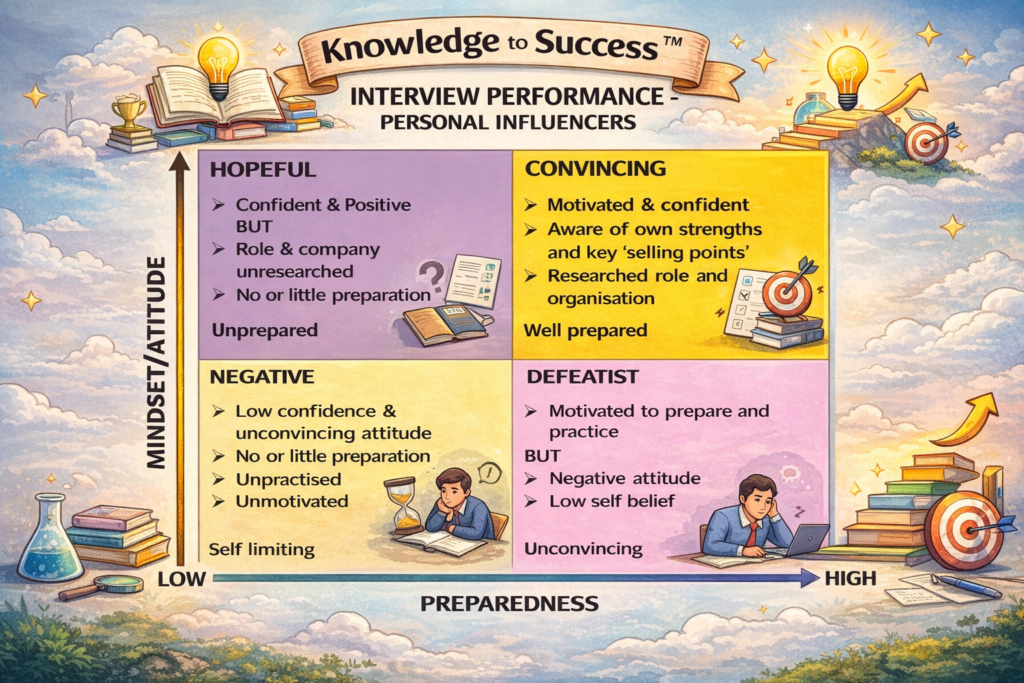
Confidence is not about sounding loud or appearing dominant. Instead, it’s about clarity, calmness, and control.
True confidence looks like:
- Pausing before answering
- Admitting uncertainty calmly
- Speaking clearly under pressure
- Staying present during tough questions
Therefore, the fastest way to build confidence is to reduce uncertainty.
Step 1: Replace “Confidence” With “Prepared Familiarity”
Most candidates chase confidence directly. That approach fails.
Instead, focus on familiarity.
Confidence increases naturally when:
- Questions feel familiar
- Structure feels known
- Situations feel practiced
This is why mock interviews work so well. Familiarity calms the nervous system.
Step 2: Prepare Fewer Answers – But Prepare Them Better
Over-preparation often increases anxiety. Meanwhile, focused preparation reduces it.
What to Prepare
- Your introduction
- 4–5 core experience stories
- 2–3 problem-solving examples
- One failure or weakness example
When these stories are clear, confidence improves automatically. You stop guessing. You start responding.
Step 3: Control the Physical Side of Confidence
Confidence is not only mental. It’s physical too.
Simple Physical Techniques
- Slow breathing (4–6 seconds per breath)
- Relaxed shoulders
- Grounded sitting posture
- Unrushed movements
These signals tell your brain that you’re safe. Calm body = calm mind.
This principle is also supported by research on mind-body connection
Step 4: Reframe Nervousness (Don’t Fight It)
Trying to “eliminate nervousness” often backfires. Instead, reframe it.
Nervousness means:
- You care
- You’re alert
- You’re engaged
Interviewers don’t expect zero nerves. They expect control.
Say this internally:
“This energy is helping me focus.”
That single shift reduces pressure immediately.
Step 5: Build Confidence Through Small Wins
Confidence grows in layers.
Before the Interview
- Prepare outfit early
- Organize documents
- Test interview setup
- Review company notes
Each completed task sends a signal of readiness. Readiness builds confidence quietly.
Step 6: Use a Simple Confidence Script (Mentally)
Avoid motivational speeches. Use grounding reminders instead.
Example Script
- “I don’t need to be perfect.”
- “I only need to be clear.”
- “This is a conversation, not an exam.”
These statements reduce unrealistic expectations. Lower pressure = better performance.
Step 7: Confidence During Difficult Questions
Confidence is most tested when you don’t know an answer.
What Confident Candidates Do
- Pause calmly
- Acknowledge uncertainty
- Think out loud
- Stay composed
What breaks confidence is panic not lack of knowledge.
Step 8: Avoid These Confidence-Killing Habits
Many candidates lose confidence before interviews even start.
Common mistakes include:
- Comparing yourself to others
- Over-researching the interviewer
- Watching negative content before interviews
- Skipping rest
Protect your mental state deliberately.
Step 9: Confidence for Virtual vs In-Person Interview
Confidence shows differently across formats.
Virtual Interview
- Camera at eye level
- Upright posture
- Slower speech
In-Person Interview
- Calm walk-in
- Steady eye contact
- Relaxed handshake
Prepare for the format, not just the questions.
A 10-Minute Confidence Routine (Day Before Interview)
Use this routine the night before:
- Review key stories (3 min)
- Practice slow breathing (2 min)
- Visualize calm responses (3 min)
- Prepare clothes & setup (2 min)
Short routines work better than long sessions.
Read More Article on Career Guidance
Why Confidence Improves Interview Outcomes
Interviewers don’t look for flawless candidates. They look for reliable ones.
Confidence signals:
- Emotional stability
- Problem-solving ability
- Leadership potential
That’s why equally skilled candidates get different outcomes.
Conclusion: Confidence Is Built, Not Found
Confidence doesn’t come from talent alone. It comes from familiarity, preparation, and calm control. When you understand how to build confidence before interviews situations, you stop relying on luck.
You don’t need to feel fearless. You only need to feel prepared.
Prepared candidates appear confident. Confident candidates perform better.
FAQs
1. Can confidence really be learned?
Yes. Confidence is a skill built through preparation and repetition.
2. Is nervousness a bad sign in interviews?
No. Lack of control over nerves is the issue not nerves themselves.
3. How early should I start confidence preparation?
Ideally, 3–5 days before the it.
4. Do mock interview help confidence?
Yes. They reduce uncertainty and build familiarity.
5. Does confidence matter more than skills?
No. However, confidence helps skills come across clearly.