
Many candidates prepare carefully for interview questions about experience, achievements, and skills. However, when the discussion turns to compensation / salary, confidence suddenly disappears. That moment often decides the final outcome.
Knowing how to talk about compensation expectations confidently is one of the most important professional skills during interviews. A poorly handled salary conversation can create two problems. First, candidates may undervalue themselves. Second, they may appear unrealistic or unprepared.
Hiring managers are not just evaluating your technical skills. They are also evaluating your professional judgment. Therefore, your ability to discuss salary calmly and logically sends a strong signal about your maturity and self-awareness.
This guide explains how to approach salary discussions with clarity, professionalism, and confidence so you protect your value without risking the opportunity.
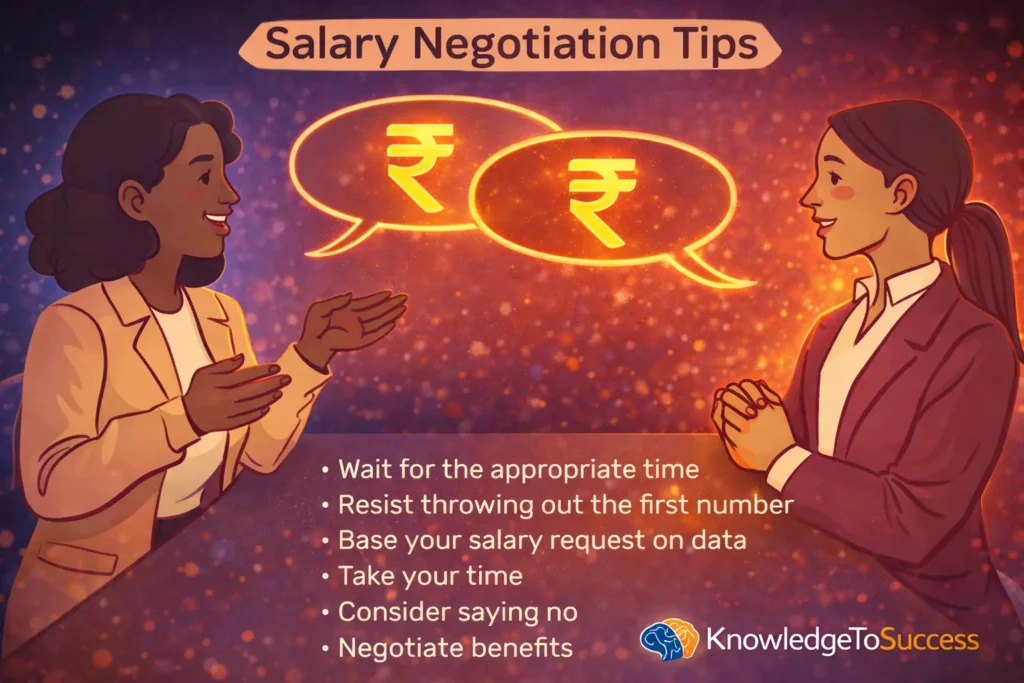
Why Salary Discussions Matter More Than You Think
Salary questions are not simply about numbers. They reveal how candidates think about their professional worth.
Interviewers evaluate several factors during this conversation:
| Factor | What Interviewers Observe |
|---|---|
| Confidence | Do you communicate your value clearly? |
| Market awareness | Do you understand industry salary standards? |
| Professional maturity | Can you discuss compensation calmly? |
| Negotiation ability | Can you protect your value respectfully? |
According to insights published by Harvard Business Review, candidates who handle salary discussions professionally are perceived as more prepared and confident.
Therefore, compensation discussions should never feel like uncomfortable surprises. Instead, they should be handled as structured professional conversations.
When Salary Questions Usually Appear
Salary questions appear in different stages depending on the company.
Common timing includes:
- During recruiter screening
- Mid-interview discussions
- Final negotiation stages
- After the offer is made
Understanding this timing helps candidates prepare appropriate responses.
For example, early compensation questions often aim to ensure alignment with the company’s budget rather than final negotiation.
Step 1: Research Salary Before the Interview
Confidence comes from preparation. Therefore, research market salaries before discussing compensation.
Good sources include:
- Industry salary reports
- Professional networks
- Job portals
- Market benchmarking platforms
A few reliable sources include:
These resources provide compensation benchmarks across roles, locations, and experience levels.
Knowing market ranges allows you to speak with authority instead of uncertainty.
Step 2: Provide a Range, Not a Single Number
One of the biggest mistakes candidates make is giving a fixed salary number immediately.
Instead, provide a salary range.
Example response:
“Based on my research and experience level, I would expect a range between ₹12–15 lakh annually, depending on the overall compensation structure.”
This approach shows:
- flexibility
- awareness
- professionalism
It also creates space for negotiation.
Step 3: Delay Salary Discussion When Possible
If salary appears too early in the process, it is reasonable to delay the conversation.
Example:
“I’’’d be happy to discuss compensation once we determine whether the role and responsibilities are a good fit for both of us.”
This response achieves two goals.
First, it shows professionalism. Second, it prevents premature negotiation.
Step 4: Emphasize Value Before Numbers
Strong candidates focus on value first, salary second.
Before discussing compensation, reinforce your contribution.
Example:
“Based on my experience managing cross-functional teams and improving project delivery timelines, I believe my expected compensation would fall in the ₹15 – 18 lakh range.”
This framing connects salary expectations to business impact.
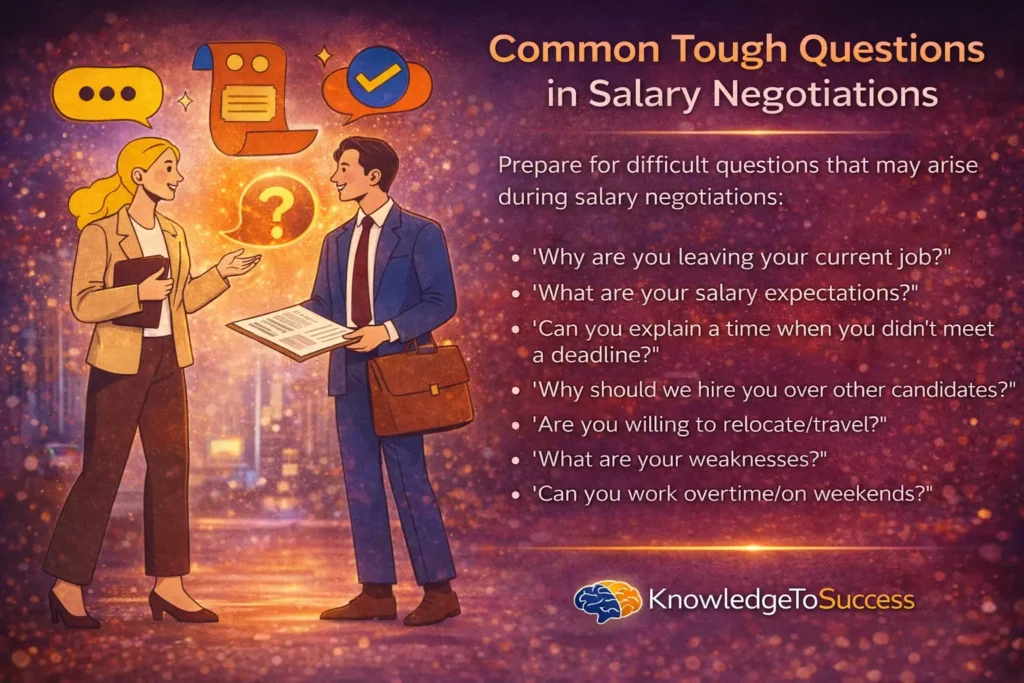
Step 5: Stay Calm When the Offer Is Lower
Sometimes companies propose lower compensation than expected. Your reaction matters.
Avoid immediate rejection or emotional responses.
Instead:
- Acknowledge the offer
- Express appreciation
- Ask clarifying questions
- Negotiate calmly
Example response:
“Thank you for the offer. I’m very interested in the role. Based on my experience and market benchmarks, I was expecting something closer to ₹14 lakh. Is there flexibility in the package?”
This keeps the conversation constructive.
Step 6: Understand Total Compensation
Salary is only one part of the compensation package.
Other components include:
- bonuses
- stock options
- health insurance
- learning budgets
- remote work flexibility
Sometimes overall benefits make a slightly lower salary acceptable.
Common Salary Discussion Mistakes
Even experienced candidates make errors during compensation discussions.
1. Answering Without Research
Guessing compensation expectations signals poor preparation.
2. Undervaluing Yourself
Many candidates give extremely low numbers out of fear.
3. Being Aggressive
Demanding unrealistic salaries damages credibility.
4. Avoiding the Conversation Completely
compensation discussions are normal professional conversations.
Ignoring them creates confusion.
Practical Salary Response Framework
Use this simple structure when asked about compensation expectations.
| Step | Response Strategy |
|---|---|
| Step 1 | Acknowledge the question calmly |
| Step 2 | Reference market research |
| Step 3 | Provide a reasonable range |
| Step 4 | Mention flexibility |
| Step 5 | Reinforce interest in the role |
Example:
“Based on my experience and market research, I’m expecting a range between ₹10–12 lakh. However, I’m flexible depending on the role responsibilities and overall compensation structure.”
Important Reminder for Candidates
Salary discussions are not confrontations. They are negotiations between professionals.
Companies expect candidates to ask questions about compensation. Therefore, speaking confidently about salary does not reduce your chances.
Instead, it signals professionalism.
Conclusion
Salary conversations often feel uncomfortable because candidates rarely prepare for them properly. However, avoiding the topic or handling it poorly can cost strong professionals valuable opportunities.
Learning how to talk about salary expectations confidently allows you to protect your professional value while maintaining a respectful and collaborative tone.
Preparation, market research, and calm communication make these discussions much easier. When you approach compensation as a professional conversation rather than a stressful negotiation, interviewers see you as a confident and mature candidate.
In the next article in this interview success series, we will explore:
The Best Questions to Ask at the End of an Interview
Understanding what to ask interviewers can dramatically improve your chances of receiving an offer.
Frequently Asked Questions
1. How do I talk about salary expectations confidently in interviews?
Research salary benchmarks, provide a reasonable range, and connect your expectations to your experience and value.
2. Should I give my current salary during an interview?
You can share it if required, but focus more on the expected salary range based on the role and market standards.
3. What if the interviewer insists on a salary number?
Provide a researched range instead of a single number to maintain flexibility.
4. Is it okay to negotiate salary after receiving an offer?
Yes. Negotiation is common and expected in many professional roles.
5. How to avoid undervaluing yourself in salary discussions?
Research industry salary data and confidently communicate your value and experience level.