Starting a business alone no longer means exposing yourself to unlimited risk. With the One Person Company (OPC) structure, solo founders can enjoy limited liability, legal recognition, and corporate credibility. However, many entrepreneurs are unsure about the OPC registration process in India—what documents are needed, who is eligible, and how long it takes.
This article explains the complete step-by-step process to register an OPC in India, in simple language, so you can incorporate confidently and correctly.
Why Choose OPC as a Solo Founder?
Before diving into the process, it’s important to understand why OPC exists.
OPC was introduced to:
- Protect solo entrepreneurs from personal liability
- Encourage formalisation of individual businesses
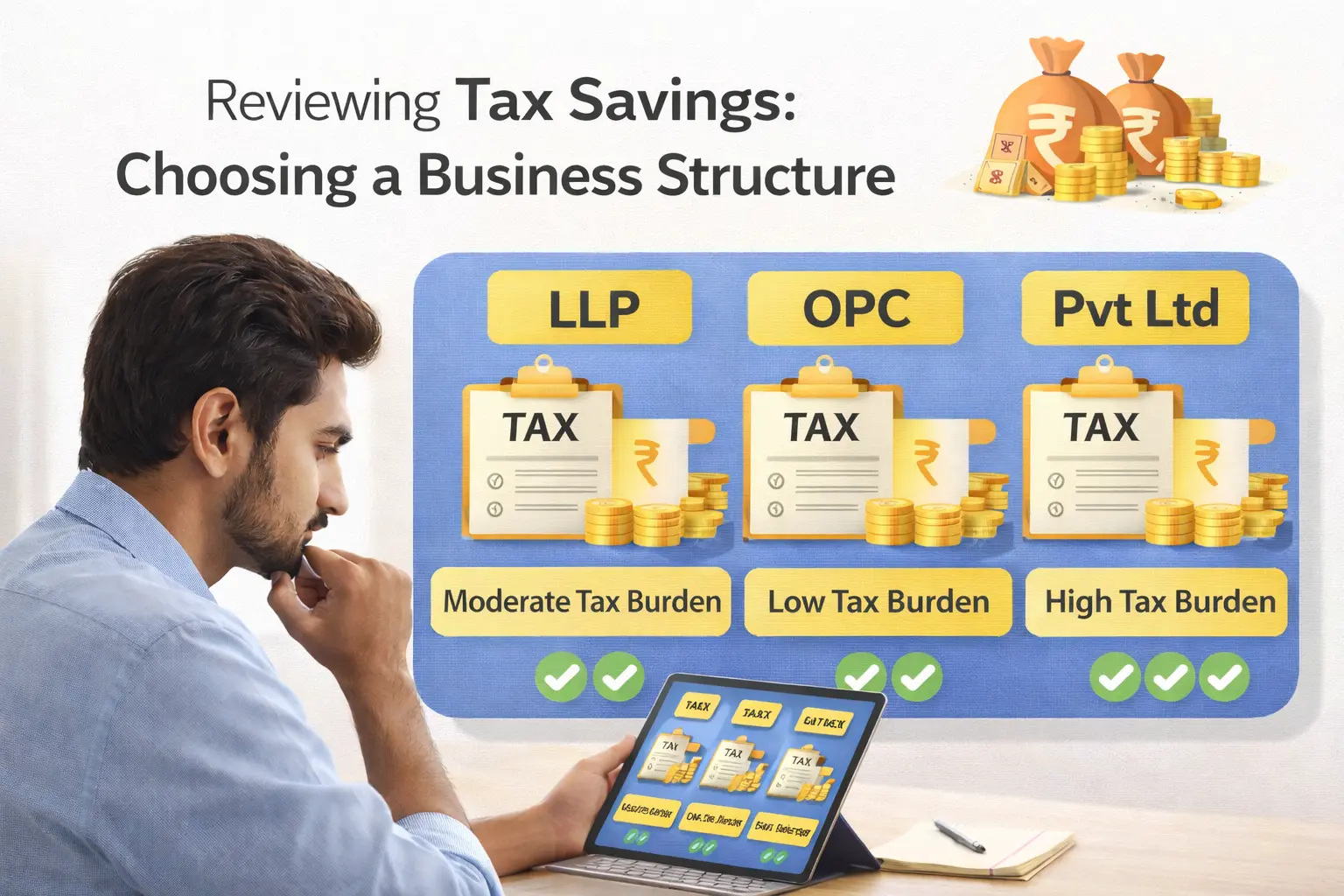
- Offer a bridge between proprietorship and Pvt Ltd
If you want control without compromise, OPC is a practical starting point.
Eligibility Criteria for OPC Registration in India
Not everyone can register an OPC. The law sets clear eligibility rules.
To register an OPC, you must:
- Be an Indian citizen
- Be a resident of India
- Be at least 18 years old
- Form only one OPC at a time
- Appoint one nominee (mandatory)
These rules are governed by the Ministry of Corporate Affairs.
Documents Required for OPC Registration
For the Founder
- PAN card
- Aadhaar / Passport / Voter ID
- Address proof (bank statement or utility bill)
- Passport-size photograph
For the Nominee
- PAN card
- Address proof
- Nominee consent form
For Registered Office
- Electricity / water bill
- Rent agreement or ownership proof
- NOC from owner (if rented)
Keeping documents ready speeds up the OPC registration process in India.
Step-by-Step OPC Registration Process in India
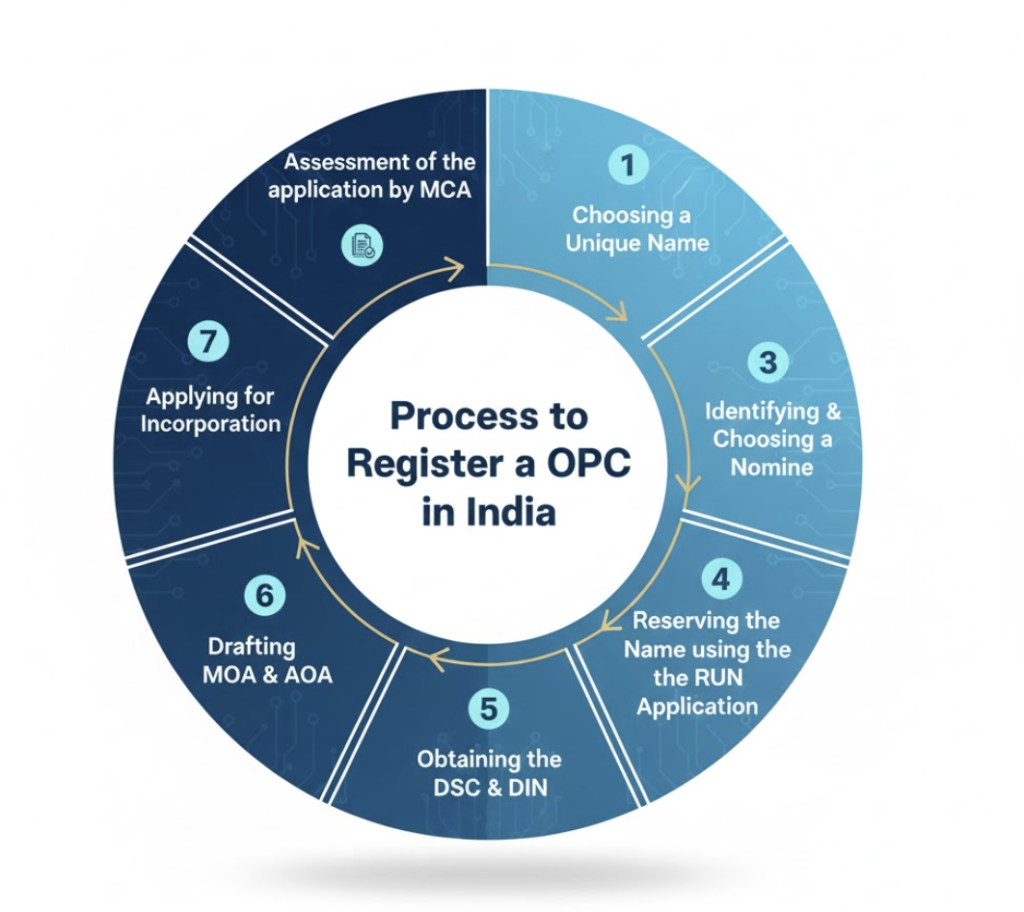
Step 1: Obtain Digital Signature Certificate (DSC)
DSC is required to sign online forms.
- Mandatory for the founder
- Issued by authorised certifying agencies
Step 2: Apply for Director Identification Number (DIN)
DIN is allotted through the incorporation form.
- Applied via SPICe+
- Lifetime validity
Step 3: Company Name Approval
You must propose a unique company name.
Guidelines:
- Must end with “(OPC) Private Limited”
- Should reflect business activity
- Must not violate trademarks
Name approval is a common delay point—choose wisely.
Step 4: Draft MOA & AOA
- MOA defines business objectives
- AOA defines internal rules
These documents act as the company’s legal constitution.
Step 5: File SPICe+ Form
This integrated form covers:
- OPC incorporation
- PAN & TAN allotment
- Director & nominee details
- Registered office address
Once approved, your company is legally incorporated.
Step 6: Receive Certificate of Incorporation
After approval, MCA issues:
- Certificate of Incorporation
- Company Identification Number (CIN)
- PAN & TAN
🎉 Your OPC is now officially registered.
Read Previous Article on Startup Guides India.
Time Required for OPC Registration
| Stage | Time |
|---|---|
| DSC & DIN | 1–2 days |
| Name approval | 1–3 days |
| MCA approval | 3–5 days |
⏱️ Total time: 7–10 working days (average)
Cost of OPC Registration in India
Typical cost range:
- Government fees: Minimal / Nil
- DSC: ₹1,000 – ₹1,500
- Professional fees: ₹5,000 – ₹10,000
👉 Total estimated cost: ₹8,000 – ₹15,000
Post-Registration Compliance for OPC
Even OPCs have compliance responsibilities:
- Open a current bank account
- File INC-20A (commencement of business)
- Appoint auditor
- Annual ROC filings
Compliance is simpler than Pvt Ltd—but still mandatory.
Common Mistakes During OPC Registration
❌ Choosing an ineligible nominee
❌ Trademark conflict in company name
❌ Incorrect address proof
❌ Ignoring post-incorporation filings
Avoiding these ensures a smooth OPC journey.
When Should You Convert OPC to Pvt Ltd?
Conversion becomes mandatory if:
- Turnover exceeds ₹2 crore
- Paid-up capital exceeds ₹50 lakh
Voluntary conversion is also allowed when growth begins.
External Authority Reference
All OPC rules and procedures are governed by the
Ministry of Corporate Affairs
Conclusion: OPC Registration Is Simple When Done Right
The OPC registration process in India is structured, transparent, and founder-friendly—if you follow the steps correctly.
For solo entrepreneurs who want:
- Limited liability
- Legal identity
- Growth flexibility
OPC is a smart and safe starting point.
FAQs
1. Is OPC Registration possible without a nominee?
No, appointing a nominee is mandatory.
2. Can a foreigner register an OPC in India?
No, only Indian citizens and residents are eligible.
3. Is GST mandatory after OPC registration?
Only if your business crosses the GST threshold or requires it.
4. Can OPC hire employees?
Yes, OPCs can hire employees like any company.
5. Can OPC be converted into Pvt Ltd later?
Yes, conversion is allowed and common.