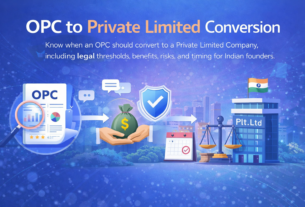
Freelancers and consultants in India are earning more than ever. Many now cross ₹20–30 lakh annually and some even more making the question of Private Limited Company registration increasingly relevant.
Yet, despite this growth, most freelancers continue operating as individuals or sole proprietors, assuming a Private Limited Company is only meant for startups with teams and funding. That assumption is outdated.
The real question today is not can a freelancer register a Private Limited Company but should they.
This article explains:
- Whether freelancers and consultants can legally register a Private Limited Company
- The benefits and risks of doing so
- When it makes financial and strategic sense
- When it doesn’t
Can a Freelancer or Consultant Legally Register a Private Limited Company?
Yes. Absolutely. There is no legal restriction preventing freelancers or consultants from registering a Private Limited Company in India.
As long as you:
- Are an Indian resident
- Have at least one more shareholder/director (can be spouse, friend, or family)
- Meet basic compliance requirements
…you can register a Pvt Ltd Company, even if:
- You work alone
- You offer services
- You don’t plan funding immediately
The Companies Act does not distinguish between “startup” and “freelancer.“
Why Freelancers Are Considering a Private Limited Company Today
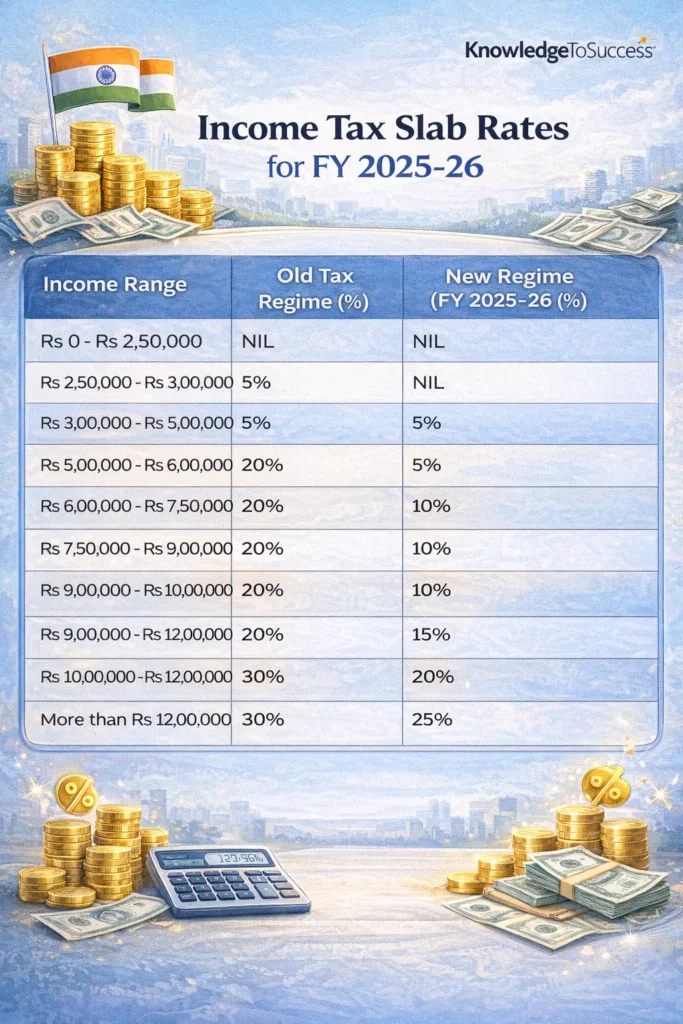
Freelancers move to a Private Limited Company because of:
- Rising income
- Higher tax burden as individuals
- International clients demanding formal structure
- Need for credibility and contracts
- Long-term business mindset
Once income grows, remaining informal becomes expensive and risky.
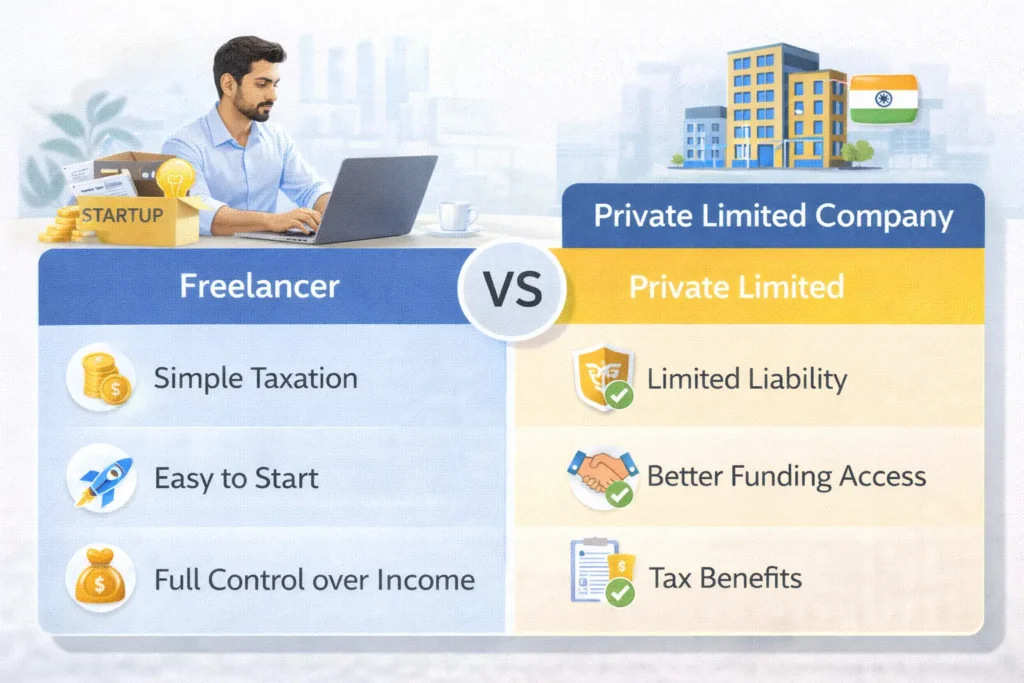
How Freelancers Are Usually Structured (And Their Limits)
Individual / Sole Proprietor
- Easy to start
- High personal tax
- Unlimited liability
- Limited credibility
LLP
- Better liability protection
- Flat 30% tax
- Limited investor flexibility
Private Limited Company
- Lower corporate tax
- Strong credibility
- Better long-term planning
This is why many high-earning freelancers eventually outgrow simpler structures.
Key Benefits of a Private Limited Company for Freelancers
1. Lower and Smarter Taxation
As income rises, individual tax slabs become painful.
A Pvt Ltd Company offers:
- Corporate tax rates
- Better expense optimisation
- Startup tax benefits (if eligible)
- Reinvestment advantages
For many freelancers earning ₹25L+, the tax difference is significant.
2. Strong Professional Credibility
Large clients, especially:
- Corporates
- International firms
- Government or enterprise buyers
…prefer dealing with a Pvt Ltd Company over individuals.
It signals:
- Stability
- Legal accountability
- Long-term intent
3. Clear Separation of Personal & Business Risk
As an individual:
- You are the business
- Your personal assets are exposed
A Private Limited Company:
- Is a separate legal entity
- Limits liability
- Protects personal wealth
This matters once contracts and revenues grow.
4. Long-Term Scalability
Many freelancers later:
- Hire teams
- Launch products
- Build agencies
- Raise funds
A Private Limited Company allows smooth evolution without restructuring chaos.
Read Previous Article on Startup Guides India.
When Registering a Private Limited Company Makes Sense
You should seriously consider it if:
- Annual income is ₹20–25 lakh or more
- You work with international or enterprise clients
- You want tax efficiency
- You plan to hire or scale
- You want brand credibility
At this stage, remaining informal often costs more than compliance.
When It Does NOT Make Sense
Avoid Private Limited registration if:
- Income is low or inconsistent
- Work is temporary or part-time
- You want zero compliance effort
- You don’t plan to scale
For early-stage freelancers, simplicity still wins.
Common Mistakes Freelancers Make
- Registering a company too early
- Choosing LLP without understanding tax impact
- Not planning shareholding properly
- Mixing personal and company finances
- Ignoring ongoing compliance
The structure should match the business stage, not ego.
Tax Reality: Individual vs Private Limited Company
Same income, different outcome.
A freelancer earning ₹40 lakh as:
- Individual → pays high slab tax
- Company → pays corporate tax + plans withdrawals
Over years, this difference compounds massively.
Compliance Reality (No Scare Tactics)
Yes, a Private Limited Company has:
- ROC filings
- Audit requirements
- Basic governance
But these are manageable and predictable especially compared to tax savings and credibility gained.
Final Verdict: Freelancer Today, Business Tomorrow
A Private Limited Company is not just for startups.
For serious freelancers and consultants, it is often:
- A tax strategy
- A credibility upgrade
- A risk-management decision
- A future-proofing move
The right time is not “when funding comes.” The right time is when your freelance work becomes a business.
FAQs
1. Can a single freelancer register a Private Limited Company?
Yes, with one additional shareholder/director.
2. Is GST mandatory after Private Limited Company registration?
Only if applicable to your services or turnover.
3. Is OPC better for freelancers?
OPC works early, but Private Limited offers more flexibility long-term.
4. Will compliance be expensive?
Usually far less than the tax saved at higher income levels.
5. Can freelancers convert later to Private Limited Company?
Yes, but early planning avoids disruption.