Many founders believe startup funding depends only on ideas, traction, or pitch decks. In reality, investors often reject startups before discussions even begin, because of one silent factor: business structure.
You may have a solid product, early customers, and growing revenue. Yet funding conversations stall or never progress.
Why?
Because the wrong business structure sends red flags to investors.
This article explains the most common business structure mistakes that block startup funding, why investors care so much about structure, and how founders can fix these issues before approaching capital.
Why Business Structure Matters to Investors
Investors don’t just invest in ideas. They invest in legal clarity, ownership transparency, and scalability.
Your business structure directly affects:
- Shareholding clarity
- Exit possibilities
- Legal risk exposure
- Compliance reliability
- Long-term scalability
A weak business structure signals risk, not potential.
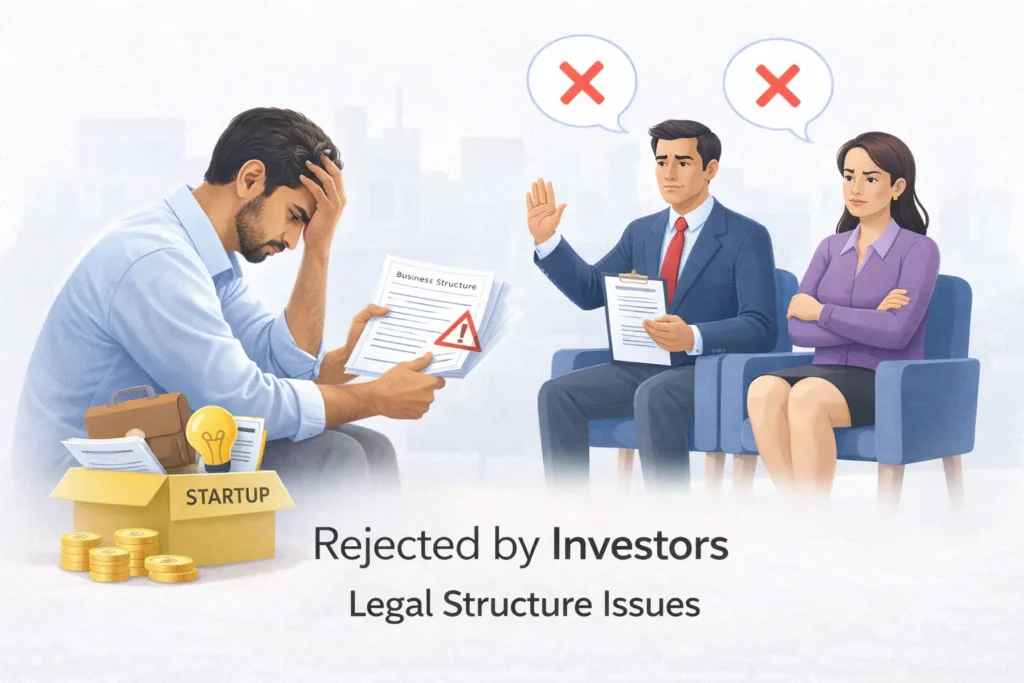
Mistake #1: Operating as a Sole Proprietorship
One of the biggest funding blockers is operating as a sole proprietorship.
Why Investors Avoid It
- No separate legal entity
- No equity ownership possible
- Unlimited personal liability
- No shareholding framework
Even angel investors cannot legally invest in a proprietorship.
👉 If funding is your goal, sole proprietorship is a dead end.
Mistake #2: Choosing LLP Assuming It’s “Investor-Friendly“
LLPs are often chosen because they look professional and simple.
Unfortunately, most equity investors avoid LLPs.
Why LLPs Struggle With Funding
- Equity shares cannot be issued
- ESOP implementation is complex
- Exit structures are unclear
- Venture capital norms don’t align
LLPs work well for consulting and professional services, not for funded startups.
Read Previous Article on Startup Guides India
Mistake #3: Delaying Conversion to a Private Limited Company
Many founders start with a simple structure and plan to convert “later”.
This delay often costs funding opportunities.
Why Delay Hurts
- Investors don’t wait for conversions
- Legal restructuring slows deal momentum
- Valuation discussions pause
- Term sheets get withdrawn
If funding conversations have started, your business structure should already be ready.
Mistake #4: Poor Shareholding & Cap Table Design
Even with the right structure, bad equity design kills deals.
Common problems include:
- Too many early shareholders
- Friends/family holding equity without roles
- No vesting clauses
- Unequal founder splits without logic
Investors fear future disputes and exits becoming messy.
Mistake #5: No ESOP Framework
Serious investors expect startups to:
- Attract talent
- Retain key employees
- Align long-term incentives
Without an ESOP framework, your business structure looks short-sighted.
Private Limited Companies support ESOPs naturally.
Other structures don’t.
Mistake #6: Non-Compliant or Casual Legal Setup
Investors conduct legal due diligence early.
Common red flags:
- Missed ROC filings
- No auditor appointment
- Improper board structure
- Mixing personal and business funds
A sloppy business structure signals governance risk.
Mistake #7: Ignoring Exit & Scalability Requirements
Investors invest for returns, not just revenue.
If your business structure:
- Makes exits complex
- Blocks mergers or acquisitions
- Limits foreign investment
…funding interest drops sharply.
What Investors Actually Want in a Business Structure
| Expectation | Why It Matters |
|---|---|
| Private Limited Company | Equity & exits |
| Clean cap table | Predictable ownership |
| Compliance discipline | Risk reduction |
| ESOP readiness | Team scaling |
| Conversion flexibility | Long-term growth |
How to Fix Business Structure Mistakes Before Fundraising
Step 1: Choose the Right Structure Early
For fundable startups, Private Limited Company is non-negotiable.
Step 2: Clean Up Shareholding
Remove unnecessary shareholders and formalise vesting.
Step 3: Stay Compliance-Ready
Missed filings hurt credibility instantly.
Step 4: Prepare for Due Diligence
Your business structure should survive scrutiny without panic.
Business Structure vs Idea: What Matters More?
A great idea in the wrong structure struggles to raise funds.
A decent idea in the right structure often succeeds.
That’s the uncomfortable truth.
Final Verdict: Funding Fails Before the Pitch
Most startups don’t lose funding because investors say NO. They lose funding because they are not legally ready to say YES.
Your business structure is not paperwork.
It’s your funding foundation.
Fix it early, before opportunities disappear.
FAQs
1. Can startups raise funding as LLPs?
Rarely. Most equity investors prefer Private Limited Companies.
2. Is sole proprietorship suitable for startups seeking funding?
No. Equity funding is not possible.
3. When should a startup convert to Pvt Ltd for funding?
Before investor discussions begin.
4. Does business structure affect valuation?
Yes. Poor structure increases perceived risk and lowers valuation.
5. Is compliance really checked by investors?
Yes. Legal diligence is a standard step.