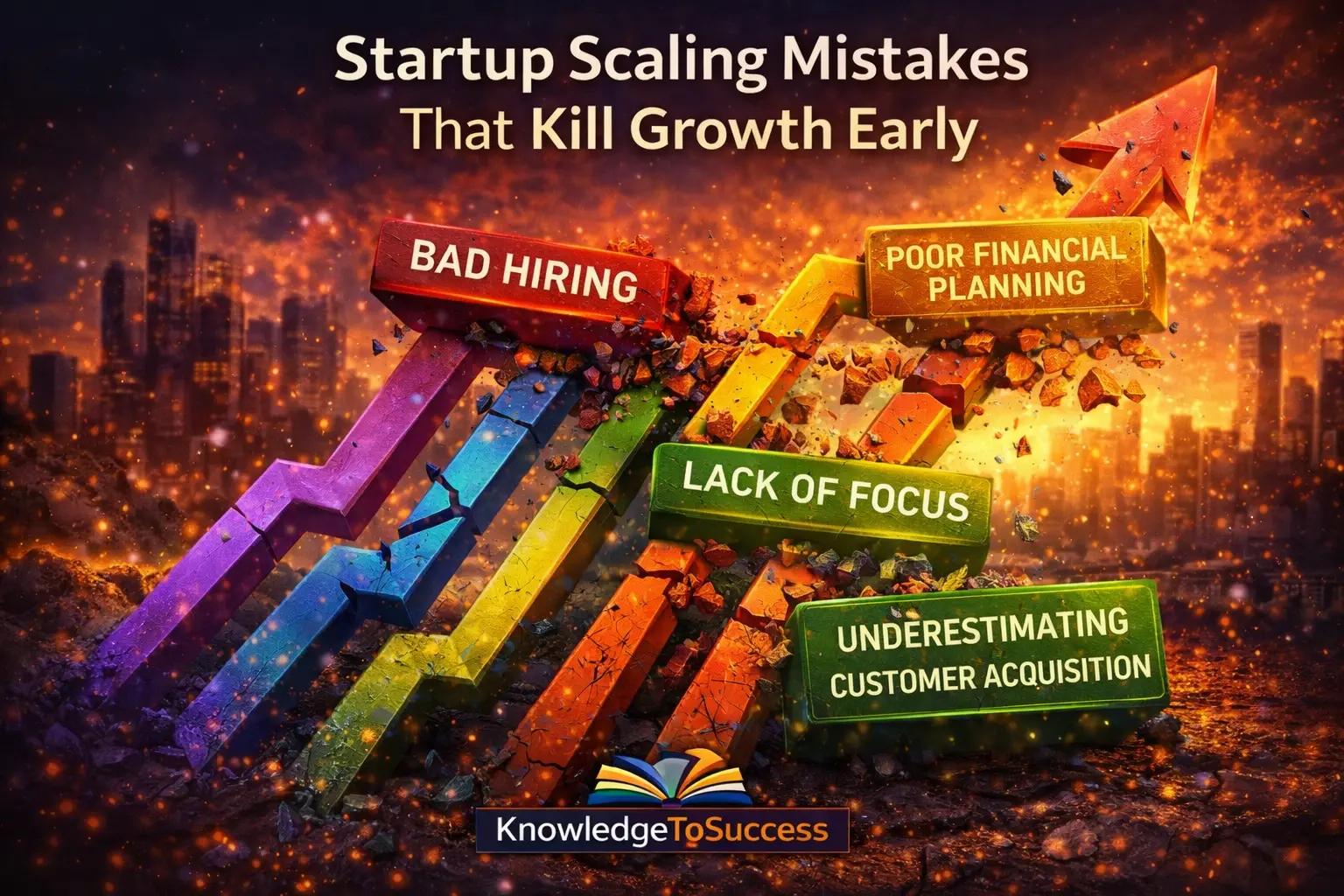
Scaling feels like success. But for many startups, it’s the beginning of failure. The biggest problem is not lack of growth it’s scaling at the wrong time. Many founders make critical scaling mistakes that quietly kill momentum, burn cash, and break operations. This article breaks down the most dangerous startup scaling mistakes that kill growth early and how to avoid them.
Growth sounds exciting. Scaling sounds even better. But scaling at the wrong time is one of the fastest ways to break a startup. Many founders assume growth automatically means scale. That’s not true.
Scaling is about replicating success, not experimenting.
Understanding the Signs Your Startup Is Ready to Scale helps founders avoid costly mistakes and grow sustainably.
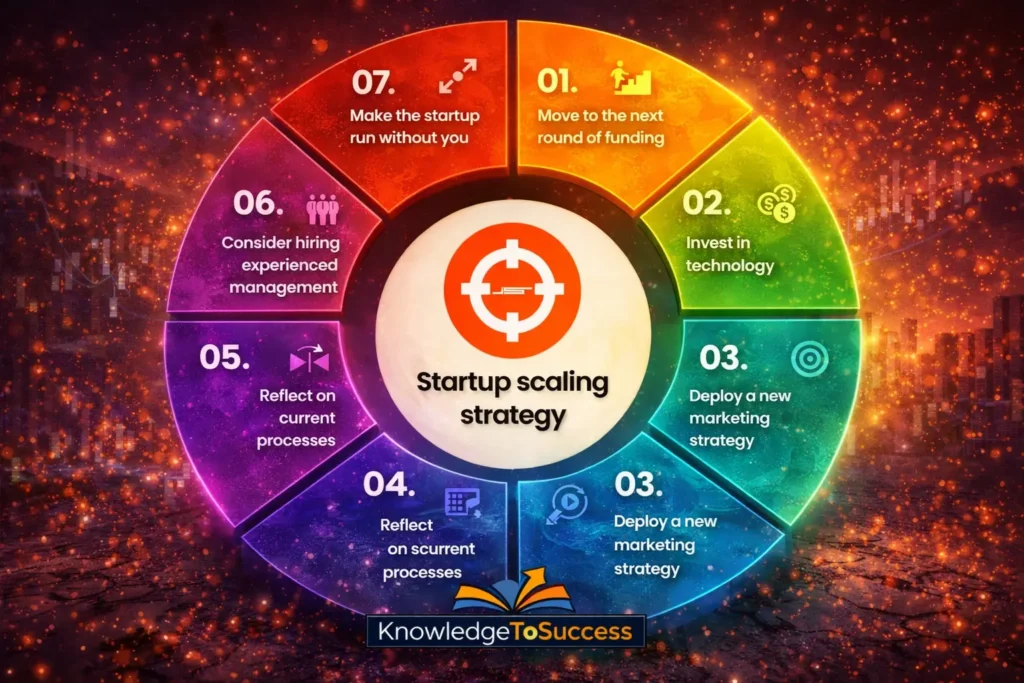
What Does “Scaling” Actually Mean?
Scaling means:
- Increasing revenue faster than costs
- Expanding operations efficiently
- Growing without breaking systems
It is not just growth.
It is controlled, repeatable growth.
Signs Your Startup Is Ready to Scale
1. You Have Product-Market Fit
Customers are:
- Consistently buying
- Returning regularly
- Recommending your product
Without this, scaling increases losses.
2. Your Unit Economics Are Clear
You understand:
- Customer acquisition cost (CAC)
- Lifetime value (LTV)
- Profit margins
If CAC > LTV, scaling will multiply losses.
3. Demand Is Growing Consistently
Growth should not be random.
Look for:
- Stable monthly growth
- Increasing customer demand
- Predictable sales patterns
4. Your Processes Are Repeatable
If your operations depend on:
- Founder involvement
- Manual effort
- Constant firefighting
You are not ready to scale.
5. Your Team Can Handle Growth
Scaling requires:
- Hiring
- Delegation
- Strong leadership
A weak team breaks under scale.
Read More Article on Startup Guides India.
Signs Your Startup Is NOT Ready to Scale
1. Revenue Is Unpredictable
2. Customer Retention Is Low
3. Operations Are Unstable
4. Product Is Still Changing Frequently
5. No Clear Growth Strategy
Scaling at this stage increases chaos.
Common Scaling Mistakes Founders Make
- Hiring too fast
- Expanding too early
- Spending heavily on marketing without ROI
- Ignoring customer feedback
- Scaling before fixing product issues
These mistakes destroy startups quickly.
Scaling vs Growth: Key Difference
| Growth | Scaling |
|---|---|
| Increase in revenue | Efficient increase in revenue |
| Costs increase proportionally | Costs grow slower than revenue |
| Short-term improvement | Long-term strategy |
Many founders confuse these.
How Investors Evaluate Scaling Readiness
Investors look for:
- Strong unit economics
- Consistent traction
- Scalable model
- Founder clarity
According to Harvard Business Review, premature scaling is one of the top reasons startups fail.
Scaling Readiness Checklist
Use this quick checklist:
- Product-market fit achieved
- Positive unit economics
- Stable demand
- Repeatable processes
- Strong team
- Clear growth strategy
If you check most of these, you are ready.

Real Founder Insight
Many successful company follow this pattern:
👉 Build → Validate → Optimize → Scale
Skipping steps leads to failure.
Final Verdict: Scale Only What Works
Scaling is not about doing more.
It is about doing what already works, faster.
Understanding the Signs Your Startup Is Ready to Scale helps you:
- Avoid costly mistakes
- Grow sustainably
- Build long-term success
The right timing makes all the difference.
FAQs
1. What are the signs your startup is ready to scale?
Product-market fit, stable demand, strong unit economics, and repeatable processes.
2. What happens if startups scale too early?
It leads to increased costs, operational issues, and failure.
3. Can startups grow without scaling?
Yes, growth can happen without scaling efficiently.
4. How do investors judge scaling readiness?
Through metrics like traction, unit economics, and scalability.
5. Is scaling necessary for all startups?
Not always. It depends on the business model.