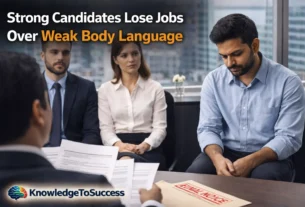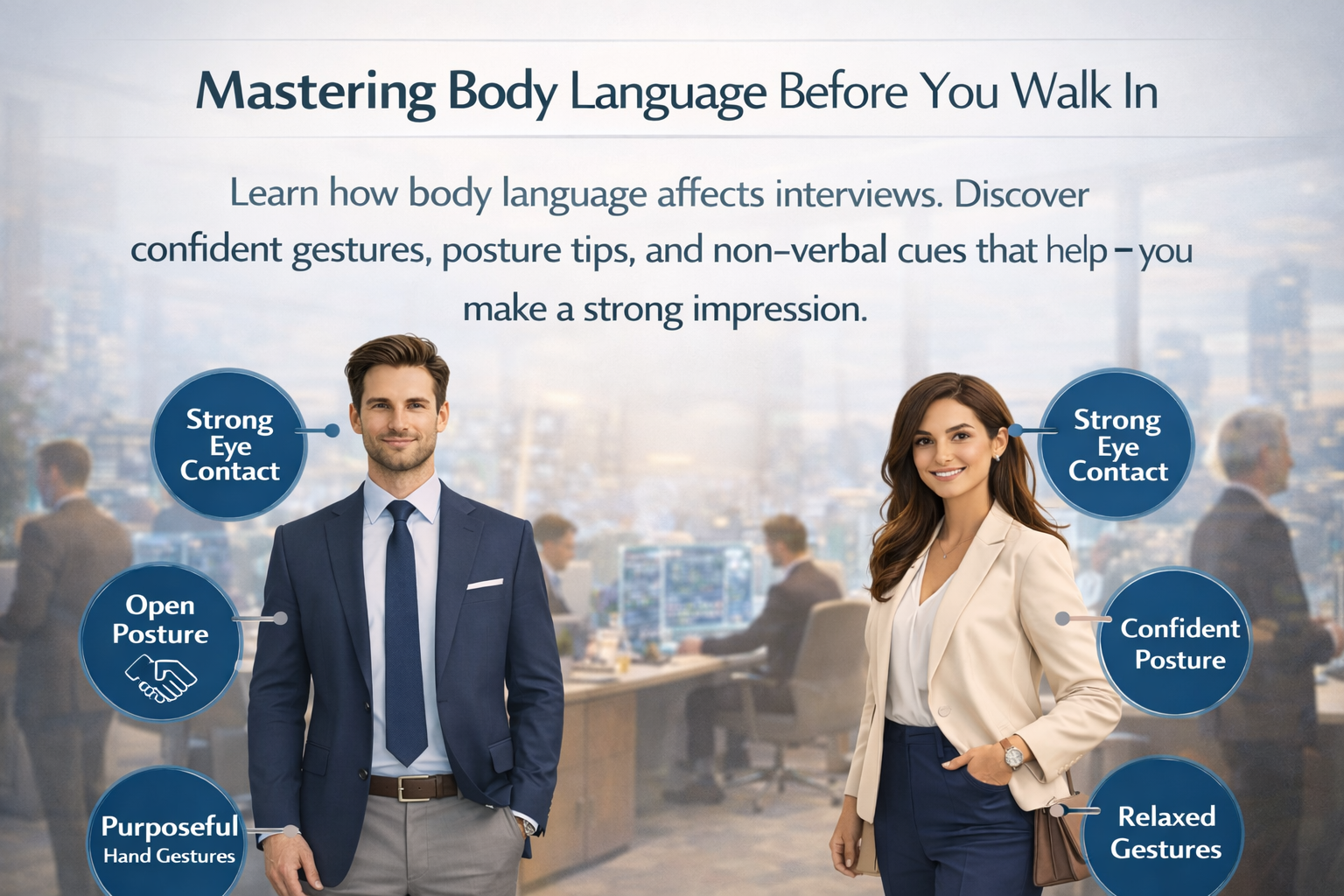
You may prepare strong answers. You may have the right experience. Yet, interviews often fail for reasons candidates never notice. One of the biggest reasons is body language. Mastering it before the interview situations can change how interviewers perceive you within seconds.
Before you speak, your posture, eye contact, and expressions already send messages. Interviewers read those signals subconsciously. Therefore, even confident answers lose impact when body language contradicts them.
In this article, you’ll learn how body language influences interviews, what signals interviewers notice most, and how to prepare your non-verbal communication before you walk in.
Why Body Language Matters More Than You Think
Interviewers rarely remember every word you say. However, they remember how you made them feel. It plays a major role in that perception.
Your non-verbal cues communicate:
- Confidence or nervousness
- Honesty or hesitation
- Engagement or disinterest
- Leadership or passiveness
According to research summarized by Wikipedia on non-verbal communication, a large part of human communication happens without words.
Therefore, mastering body language or non-verbal signals before interview moments helps you align your presence with your answers.
The First 30 Seconds: Where Body Language Decides Everything
The interview starts before the first question. The moment you enter the room or join a video call, judgment begins.
What Interviewers Notice Immediately
- How you walk in
- Your posture
- Your facial expression
- Your handshake (for in-person interviews)
- Your eye contact
These signals form an instant impression. After that, interviewers unconsciously look for confirmation of that first judgment.
Posture: The Foundation of Confident Body Language
Posture silently communicates confidence and readiness.
Good Posture Signals
- Straight back
- Relaxed shoulders
- Balanced sitting position
- Slight forward lean while listening
Poor Posture Signals
- Slouching
- Leaning back too casually
- Crossing arms tightly
- Constant shifting
Before interviews, practice sitting and standing posture. Good posture not only looks confident—it also helps you feel confident.
Read Previous Article on Career Guidance
Eye Contact: Balance Is Everything
Eye contact builds trust. However, too much or too little can hurt your impression.
How to Use Eye Contact Correctly
- Maintain eye contact while listening
- Break naturally while thinking
- Look back when answering
- Avoid staring continuously
In panel interviews, distribute eye contact evenly. This shows awareness and respect.
Hand Gestures: Support, Don’t Distract
Hands add emphasis when used correctly. However, uncontrolled gestures distract interviewers.
Effective Hand Gestures
- Open palms while explaining
- Small, natural movements
- Controlled gestures aligned with speech
Gestures to Avoid
- Pointing aggressively
- Excessive movement
- Fidgeting with pens or rings
Practicing in front of a mirror helps you control unnecessary movements.
Facial Expressions: Match Your Words
Your face often reveals emotions faster than words.
Positive Facial Signals
- Natural smile when greeting
- Relaxed jaw
- Engaged expressions while listening
Negative Facial Signals
- Frowning while thinking
- Tight lips
- Blank expressions
A calm, approachable face makes interviewers comfortable. Comfort builds connection.
Body Language While Listening (Often Ignored)
Many candidates focus only on speaking. However, interviewers also observe how you listen.
Strong Listening Signals
- Nodding occasionally
- Leaning slightly forward
- Maintaining eye contact
- Avoiding interruptions
These cues show respect and engagement. They also make conversations smoother.
Body Language During Difficult Questions
Stress reveals itself through non-verbal signals. Interviewers notice this quickly.
Common Stress Signals
- Rapid blinking
- Tight shoulders
- Shallow breathing
- Rushed movements
How to Control Stress Body Language
- Take a short pause before answering
- Breathe slowly
- Sit firmly
- Speak at a steady pace
Calm non-verbal signals emotional control even when answers aren’t perfect.
Virtual Interview Body Language: Different Rules Apply
Virtual interviews magnify non-verbal signals. Small mistakes feel bigger on camera.
Best Practices for Video Interviews
- Sit upright, not leaning
- Keep camera at eye level
- Look at the camera while speaking
- Use controlled gestures
- Keep hands visible when possible
Avoid looking at your own video feed constantly. Instead, focus on the camera.
Cultural Awareness and Professional Signals
In professional settings, subtle signals matter.
Professional Body Language Signals
- Polite nodding
- Controlled enthusiasm
- Calm energy
- Respectful distance
Over-familiar gestures can reduce professionalism. Therefore, stay balanced.
Common Body Language Mistakes Candidates Make
Even strong candidates lose points due to these habits:
- Fidgeting continuously
- Crossing arms defensively
- Avoiding eye contact
- Rushing movements
- Slouching during long interviews
Awareness is the first step to fixing them.
Simple Body Language Practice Routine (10 Minutes Daily)
Use this routine before interviews:
- Stand straight and breathe deeply (2 minutes)
- Practice smiling naturally (2 minutes)
- Answer one question while maintaining posture (3 minutes)
- Review in mirror or camera (3 minutes)
Consistency improves natural confidence.
How Body Language Supports Strong Answers
non-verbal signals doesn’t replace good answers. Instead, it amplifies them.
When words and body language align:
- Interviewers trust you more
- Answers feel authentic
- Confidence feels natural
That alignment often separates selected candidates from rejected ones.
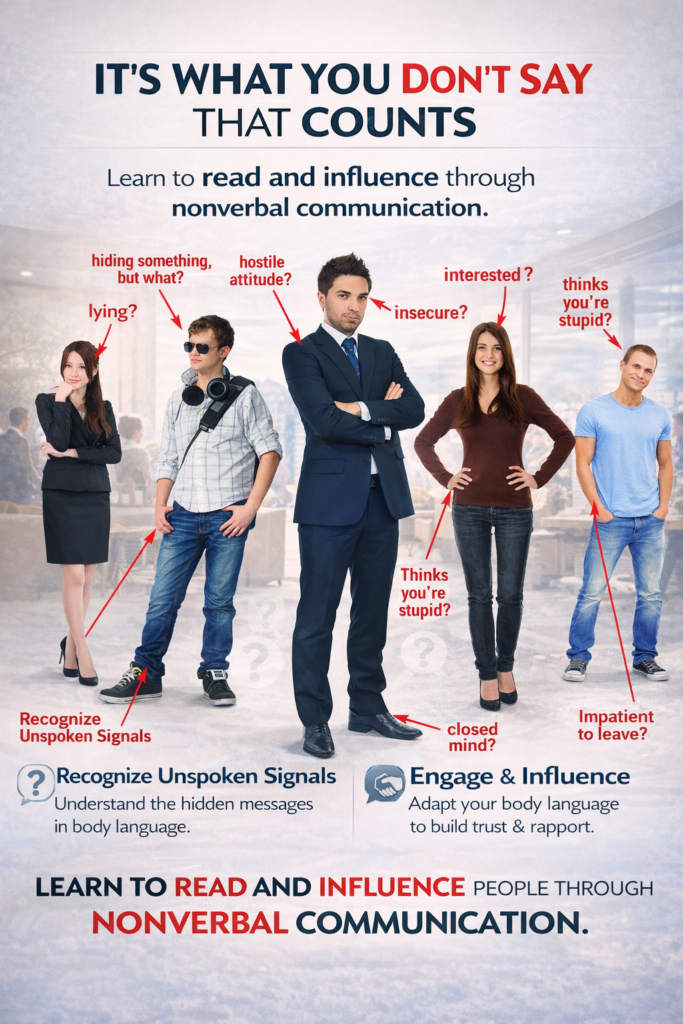
Important Note for Founders & Experienced Professionals
Senior candidates are judged more on presence than content. Therefore, mastering non-verbal signals before interview settings becomes even more critical as experience increases.
Leadership presence is often non-verbal.
Conclusion: Let Your Body Support Your Words
Interviews are conversations, not exams. While preparation improves answers, body language determines how those answers land. When you focus on mastering body language before interview moments, you control the silent signals that influence decisions.
Confidence isn’t loud. It’s calm, controlled, and visible.
FAQs
1. How important is body language in interviews?
Very important. It shapes first impressions and trust before answers matter.
2. Can body language override weak answers?
No. However, strong body language can soften imperfect answers.
3. Is body language different for virtual interviews?
Yes. Camera angle, posture, and eye focus matter more online.
4. How can I improve body language quickly?
Practice posture, breathing, and eye contact daily for short sessions.
5. Does non-verbal signals matter for experienced professionals?
Even more. Leadership presence is judged largely through non-verbal cues.