Customer experience has changed.
Not loudly.
Not dramatically.
But quietly.
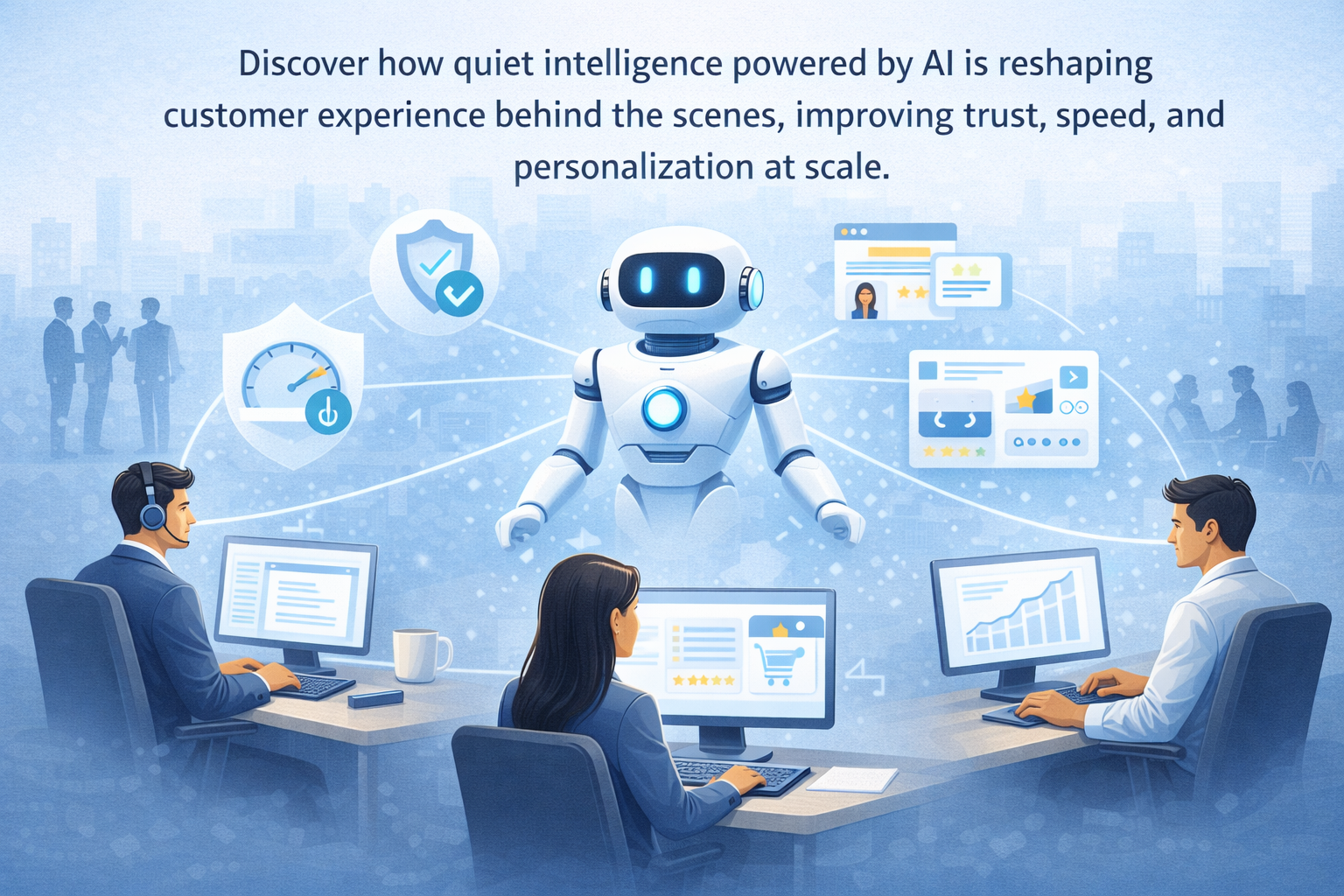
Today’s most effective brands are not shouting about artificial intelligence. Instead, they are using quiet intelligence in customer experience to remove friction so smoothly that customers never realize AI is involved.
Think about it.
When was the last time a checkout loaded instantly, a support issue resolved itself, or a recommendation felt perfectly timed?
That invisible layer is where modern AI operates.
This article explains how quiet intelligence in customer experience is redesigning journeys, decisions, and trust without breaking the human connection. More importantly, it shows founders and CX leaders how to adopt it without overengineering or alienating users.

What Is Quiet Intelligence in Customer Experience?
Quiet intelligence in customer experience refers to AI systems that:
- Work in the background
- Anticipate needs instead of reacting
- Optimize flows without interrupting users
- Reduce effort rather than adding features
Unlike visible AI tools such as chatbots or voice assistants, quiet intelligence in customer experience focuses on prevention, not conversation.
A Simple Founder Perspective
Early-stage founders often assume:
“We’ll add AI later.”
In reality, the smartest AI decisions are baked into process design, not dashboards.
Quiet intelligence:
- Adjusts delivery windows automatically
- Detects churn signals before complaints
- Personalizes journeys without asking questions
The customer feels cared for not managed by a machine.
Why Loud AI Is Failing Customer Experience
Many companies rushed into AI with enthusiasm but little restraint.
The result?
| Loud AI Tactic | Customer Reaction |
|---|---|
| Overactive chatbots | Frustration |
| Forced automation | Loss of trust |
| Scripted responses | Emotional disconnect |
| Too many AI prompts | Cognitive fatigue |
Customers don’t hate AI.
They hate bad interruptions.
That’s why quiet intelligence in customer experience is becoming the dominant model—especially in fintech, SaaS, ecommerce, and healthcare.
How Quiet Intelligence in Customer Experience Actually Works
1. Predictive Assistance, Not Reactive Support
Instead of waiting for tickets:
- AI predicts likely failure points
- Systems fix issues automatically
- Customers never raise complaints
Example: A failed payment retry happens silently before the user refreshes the page.
That is quiet intelligence in customer experience at work.
2. Contextual Personalization Without Questions
Modern AI learns from:
- Browsing patterns
- Micro-behavior signals
- Time-based intent
No pop-ups.
No surveys.
The experience adapts quietly offers, layouts, even tone of communication change naturally.
Quiet Intelligence in Customer Experience Across Industries
Ecommerce
- Auto-adjust delivery promises
- Dynamic pricing without confusion
- Smart inventory routing
SaaS
- Feature discovery based on usage maturity
- Silent onboarding optimization
- Proactive churn prevention
Banking & Fintech
- Fraud detection without transaction friction
- Spending alerts that feel advisory, not alarming
Healthcare
- Appointment reminders timed to behavior
- Predictive follow-ups without anxiety
In each case, quiet intelligence in customer experience removes stress rather than adding steps.
Founder Mistakes When Implementing Quiet Intelligence
Many founders sabotage their own CX by misunderstanding AI’s role.
Common Mistakes
- Over-automating emotional moments
- Exposing internal AI logic to users
- Measuring AI success only through dashboards
- Ignoring edge cases and exceptions
AI should support judgment, not replace empathy.
How to Design Quiet Intelligence the Right Way
A Practical Checklist for CX Teams
| Principle | What to Do |
|---|---|
| Invisibility | If users notice it, simplify |
| Predictability | Avoid surprise automation |
| Reversibility | Always allow manual override |
| Trust | Explain outcomes, not algorithms |
This approach ensures quiet intelligence in customer experience enhances relationships rather than controlling them.
Where Indian Founders Should Be Extra Careful
Indian users are:
- Price-sensitive
- Trust-conscious
- Extremely vocal when unhappy
That means silent AI failures spread faster than visible ones.
Before deploying:
- Test AI behavior across low-bandwidth and regional contexts
Also, document decision logic internally, even if customers never see it.
Read Previous Article on Startup Guides India.
Measuring Quiet Intelligence in Customer Experience
Traditional metrics won’t work.
Instead, track:
- Reduced support tickets
- Faster task completion time
- Lower abandonment rates
- Higher repeat usage
If customers say, “It just works,” your AI is doing its job.
The Future of Quiet Intelligence in Customer Experience
The next phase isn’t smarter AI.
It’s calmer AI.
Expect:
- Fewer dashboards
- More background orchestration
- AI that adapts to human emotion, not just behavior
The brands that win will be those whose AI knows when to stay silent.
Conclusion: The Power You Don’t See Is the Power You Trust
Quiet intelligence in customer experience is not about innovation theatre.
It’s about respecting attention.
When AI disappears into the experience:
- Customers feel valued
- Teams move faster
- Trust compounds silently
In the next article of this series, we’ll explore how founders can audit their existing CX for hidden friction before adding more AI.
Stay tuned.
Frequently Asked Questions (FAQs)
1. What is quiet intelligence in customer experience?
Quiet intelligence in customer experience refers to AI systems that work silently in the background to reduce friction, predict needs, and improve journeys without user interruption.
2. How is quiet intelligence different from chatbots?
Chatbots are visible AI. Quiet intelligence operates behind the scenes, preventing issues instead of responding to them.
3. Is quiet intelligence suitable for startups?
Yes. In fact, startups benefit more because it improves scalability without increasing support or operational costs.
4. Can quiet intelligence harm customer trust?
Only if poorly implemented. When designed with transparency and reversibility, it actually strengthens trust.
5. How do I start using quiet intelligence in customer experience?
Begin by mapping friction points, then automate prediction and prevention not conversation.