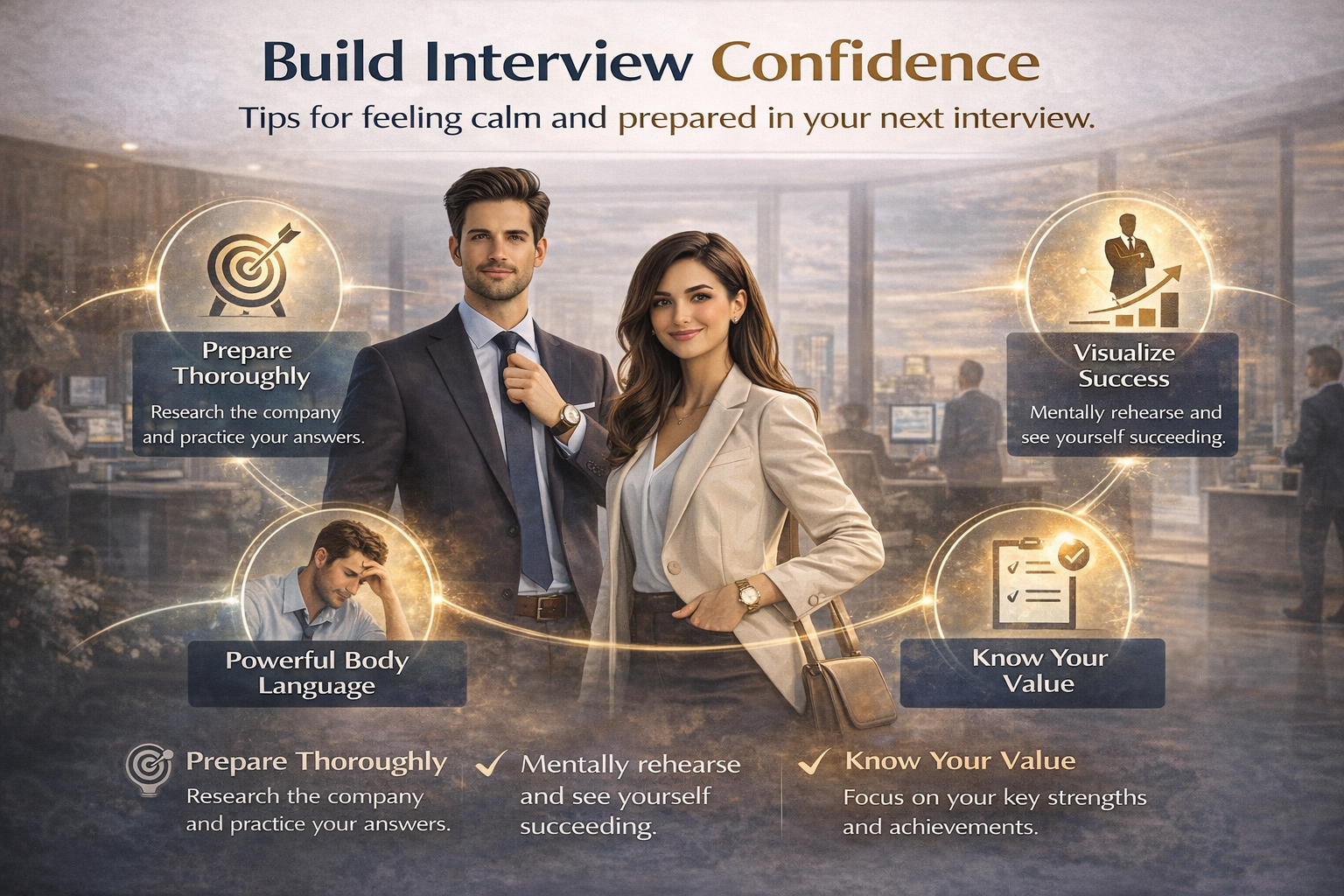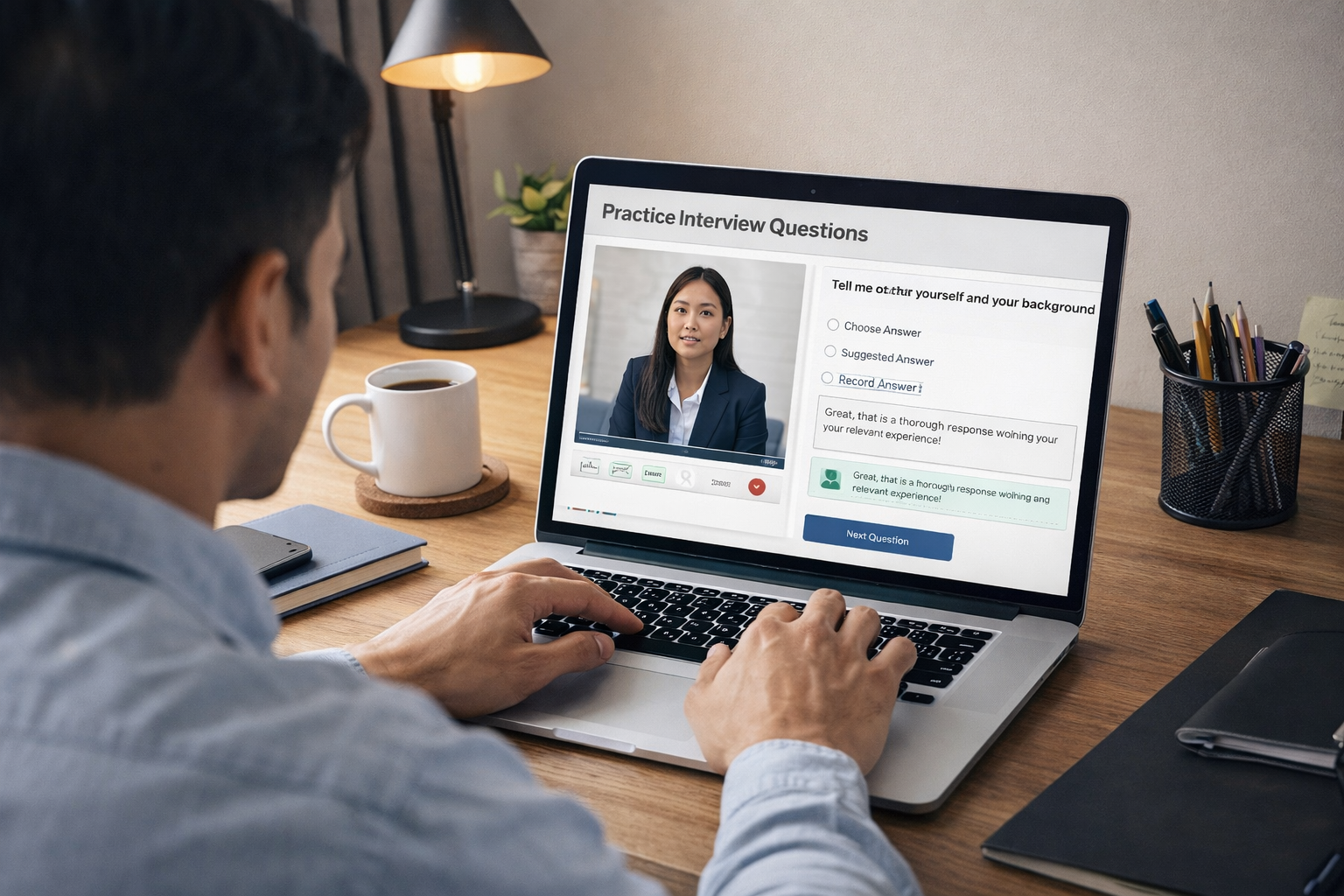
Preparing for interviews is no longer limited to reading questions from a PDF. Today, candidates have access to powerful platforms that simulate real interviews, give instant feedback, and improve confidence. Therefore, using the top tools to practice interview questions online can significantly increase your chances of success.
Although experience matters, practice makes the real difference. When you practice in the right environment, your answers become sharper. Meanwhile, your nervousness reduces naturally. In this article, we’ll explore the best online tools both free and paid that help you prepare smarter, not harder.
Why Online Interview Practice Tools Are So Effective
Traditional preparation often feels passive. However, online tools make preparation interactive and realistic.
They help you:
- Practice under time pressure
- Get structured questions
- Improve answer clarity
- Receive feedback
- Build confidence gradually
According to Harvard Business Review, active practice improves performance far more than passive reading. As a result, these tools are becoming essential for serious job seekers.
Tool Category 1: Mock Interview Platforms (Real People)
Mock interviews are the closest experience to real interviews. Therefore, they are extremely valuable.
1. Pramp
- Peer-to-peer mock interviews
- Structured interview formats
- Feedback after each session
- Free for most roles
Best for: Freshers and mid-level professionals
2. Interviewing.io
- Anonymous mock interviews
- Conducted by engineers from top companies
- Realistic pressure environment
Best for: Technical and engineering roles
Tool Category 2: AI-Powered Interview Practice Tools
AI tools have transformed interview preparation. While they don’t replace humans, they provide fast and repeatable practice.
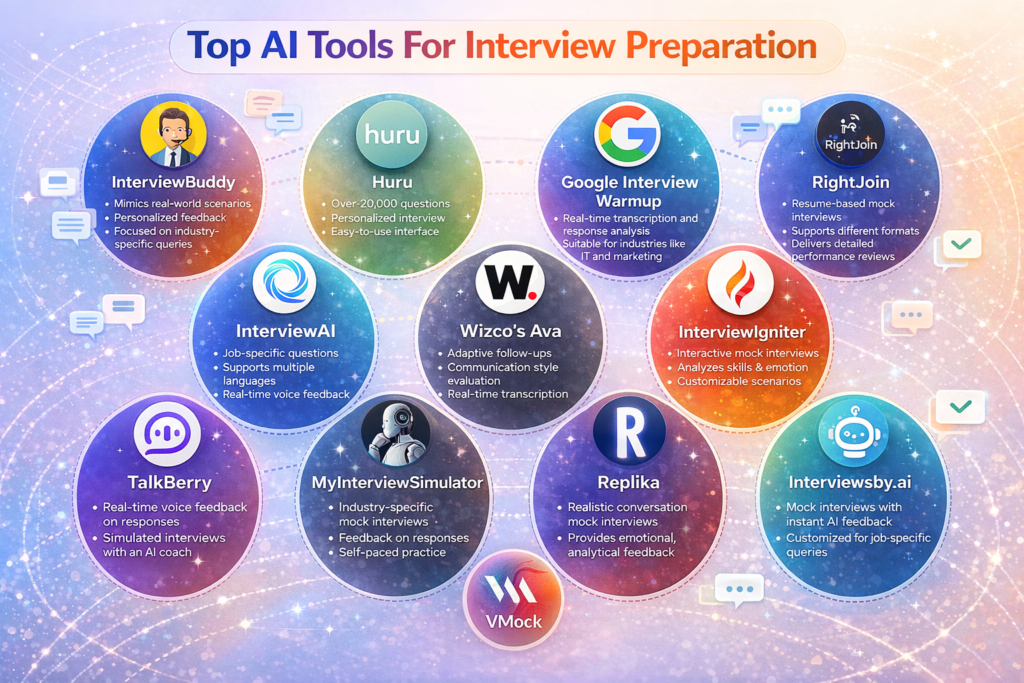
3. Interview Warmup by Google
- Role-specific questions
- AI-based feedback
- Speech-to-text analysis
Best for: Beginners and confidence building
4. Yoodli
- Communication-focused feedback
- Tracks filler words and pacing
- Improves clarity and confidence
Best for: Communication heavy roles
Tool Category 3: Question Banks & Practice Libraries
Sometimes, structured question banks are enough especially early in preparation.
5. Glassdoor Interview Section
- Real interview questions shared by candidates
- Company-specific insights
- Role-based filtering
However, use these questions for understanding patterns not memorization.
External reference: Glassdoor Interview Resources
6. Indeed Career Guide
- Common interview questions
- Sample answers
- Role-specific guidance
External reference: Indeed Career Guide
Tool Category 4: Technical Interview Practice Platforms
For technical roles, general practice isn’t enough. Instead, you need skill-specific tools.
7. LeetCode
- Coding challenges
- Company-tagged problems
- Timed practice
Best for: Software engineers
8. HackerRank
- Coding and problem-solving tests
- Language-specific challenges
- Mock assessments
Best for: Entry to mid-level technical roles
Tool Category 5: Video & Self-Recording Practice
Self-review is powerful when done correctly.
9. Zoom or Phone Camera
- Record mock answers
- Review body language
- Improve tone and pace
Although uncomfortable at first, this method reveals habits you never notice otherwise.
How to Choose the Right Tool for Your Needs
Not every tool suits everyone. Therefore, choose based on your situation.
Quick Selection Guide
- Freshers → AI tools + question banks
- Experienced professionals → Mock interviews + peer feedback
- Technical roles → Coding platforms
- Communication roles → AI speech tools
Internal link suggestion: Pair these tools with Common Mistakes to Avoid Before the Interview Day for best results.
Read Previous Article on Career Guidance
How to Use Interview Practice Tools Effectively
Using tools alone isn’t enough. You must use them strategically.
Best Practices
- Schedule practice sessions
- Simulate real interview conditions
- Review feedback immediately
- Improve one skill at a time
- Repeat consistently
Consistency beats intensity every time.
Common Mistakes While Using Interview Practice Tools
Even with good tools, candidates fail when they:
- Practice randomly
- Skip feedback review
- Memorize answers
- Avoid mock interviews
- Stop after one session
Avoid these mistakes to maximize results.
Conclusion: Practice Smarter, Not Longer
Interview success isn’t about talent alone. It’s about preparation quality. When you use the top tools to practice interview questions online, you create a safe space to fail, learn, and improve.
Most candidates practice in their heads. Strong candidates practice in real conditions. That difference shows clearly on interview day.
Choose the right tools, practice consistently, and walk into interviews with confidence—not guesswork.
FAQs
1. Are online interview practice tools really effective?
Yes. They simulate real scenarios and provide feedback that improves performance.
2. Are free tools enough for interview preparation?
Often, yes. However, paid tools add realism and expert feedback.
3. How often should I practice interviews online?
Ideally, 2–3 sessions per week before interviews.
4. Do AI interview tools replace mock interviews?
No. They complement mock interviews but don’t replace human feedback.
5. Which tool is best for freshers?
AI-based tools and question banks are best for beginners.