You may have the right skills. You may give great answers. However, if your appearance sends the wrong signal, interviewers notice instantly. That’s why understanding how to dress for success matters more than most candidates realize.
Studies show that interviewers form first impressions within seconds. Clothing plays a major role in that judgment. Therefore, dressing well is not about fashion. Instead, it’s about credibility, confidence, and respect for the opportunity.
In this guide, you will learn exactly what to wear for interviews whether you are a fresher or an experienced professional, attending in person or online.

Why Interview Attire Matters So Much
Interviewers don’t expect perfection. However, they do expect intentional professionalism.
Your outfit silently communicates:
- How serious you are about the role
- Whether you understand workplace norms
- Your attention to detail
- Your confidence level
According to Harvard Business Review, appearance influences perceived competence—especially in high-stakes conversations.
External reference: Harvard Business Review – First Impressions
Therefore, dressing appropriately gives you an immediate advantage before you even speak.
The Golden Rule of Interview Dressing
Before choosing clothes, remember this rule:
Dress one level more formal than the company’s daily dress code.
This approach works across industries. Meanwhile, it prevents both over-dressing and under-dressing.
Interview Attire for Men: What Works Best
Men often assume suits are mandatory. That’s not always true. Context matters.
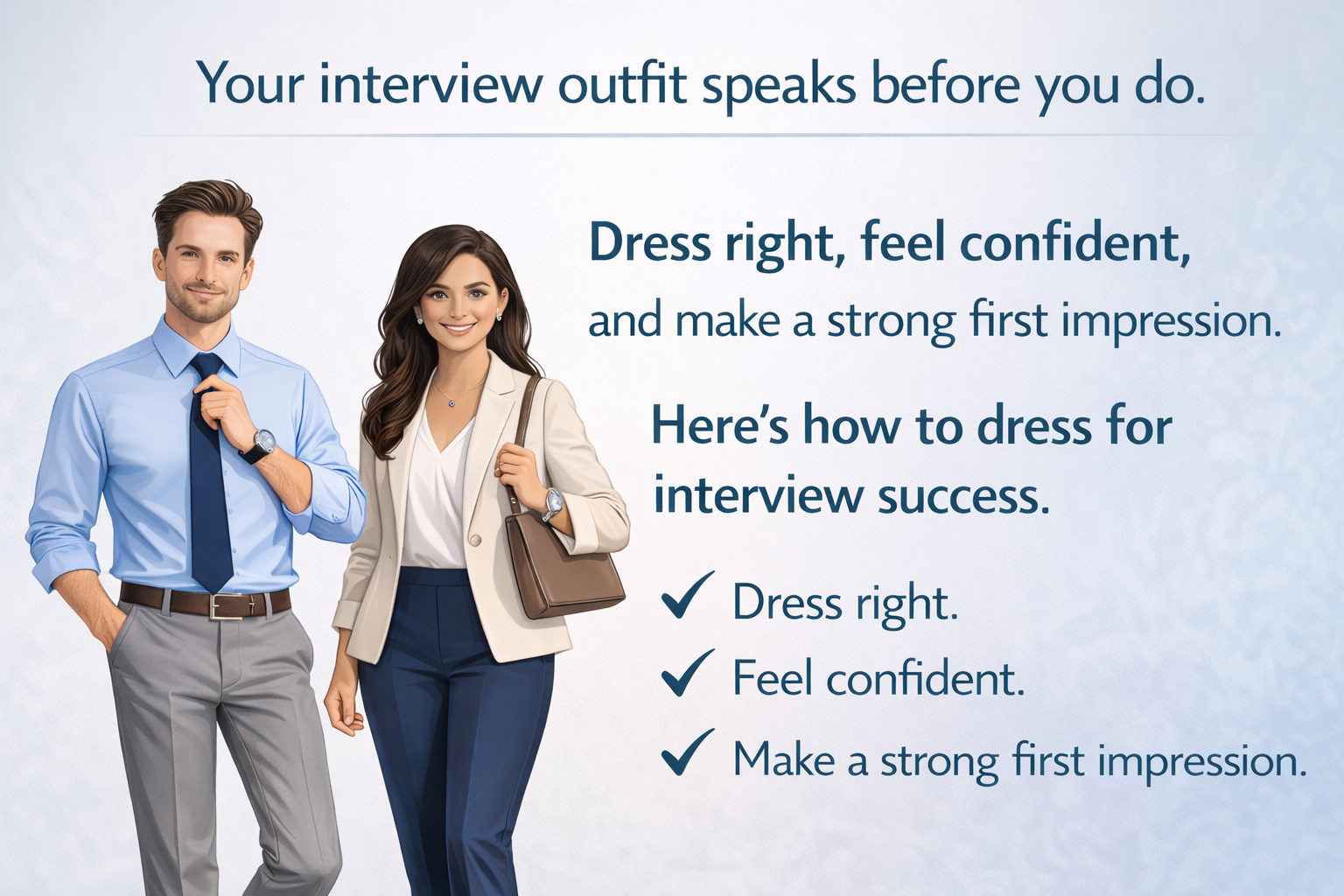
Formal / Corporate Roles
- Well-fitted suit (navy, charcoal, grey)
- Light-colored shirt
- Conservative tie
- Polished formal shoes
Semi-Formal / Business Casual Roles
- Blazer with trousers
- Button-down shirt
- Loafers or formal shoes
What to Avoid
- Loud colors
- Wrinkled shirts
- Casual shoes
- Excessive accessories
Fit matters more than brand. A simple, clean outfit always wins.
Interview Attire for Women: Professional and Confident Choices
Women often face more uncertainty. However, simplicity solves most doubts.
Formal / Corporate Roles
- Tailored blazer with trousers or skirt
- Neutral or pastel tops
- Closed-toe heels or flats
Semi-Formal / Business Casual Roles
- Professional dress or blouse with trousers
- Minimal jewelry
- Comfortable footwear
What to Avoid
- Very bright colors
- Heavy makeup
- Distracting accessories
- Uncomfortable footwear
Confidence improves when you’re comfortable. Therefore, choose outfits that feel natural.
What to Wear for Virtual Interviews
Virtual interviews still require professional dressing. In fact, they demand more attention to detail.
Best Practices
- Solid colors (blue, grey, white)
- Avoid busy patterns
- Proper lighting
- Clean background
- Dress fully, not just the top half
Glassdoor notes that interviewers judge virtual presence the same way as in-person presence.

Dressing for Different Industries
Not all industries follow the same rules. Therefore, adapt wisely.
Tech & Startups
- Smart casual works best
- Clean, modern look
- Avoid over-formality
Finance, Law, Consulting
- Conservative and formal
- Neutral colors only
Creative Roles
- Professional with personality
- Subtle creativity allowed
Research the company culture beforehand. Then, adjust accordingly.
Grooming: The Often-Ignored Detail
Clothes alone aren’t enough.
Grooming Checklist
- Neat hair
- Clean nails
- Light fragrance
- Ironed clothes
- Well-maintained shoes
Small grooming details silently boost professionalism.
Common Interview Dressing Mistakes
Many candidates lose points unnecessarily by:
- Dressing too casually
- Ignoring fit
- Over-accessorizing
- Wearing distracting colors
- Copying someone else’s style blindly
Avoiding these mistakes immediately improves your impression.
The Night-Before Outfit Checklist
To avoid last-minute stress:
- Finalize outfit
- Iron clothes
- Check shoes
- Prepare accessories
- Test virtual setup (if online)
Preparation reduces anxiety. Calm candidates perform better.
Conclusion: Dress Like You Belong There
Attire is not about impressing others. It’s about aligning with expectations and showing respect. When you know how to dress for success, you remove one major uncertainty from the process.
Strong answers matter. However, strong first impressions open the door for those answers to be heard.
Dress prepared. Walk in confident. Let your skills do the rest.
FAQs
1. Is formal wear always required for interview?
No. Dress based on company culture, but stay professional.
2. Can casual clothes ever be acceptable?
Yes, for startups or creative roles but never sloppy.
3. What colors work best for interview?
Neutral colors like navy, grey, black, and white.
4. Does interview attire really affect selection?
Yes. It influences first impressions and perceived professionalism.
5. Should I dress differently for virtual interview?
Yes. Camera-friendly colors and neat setup matter.