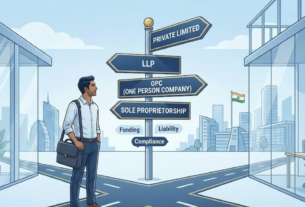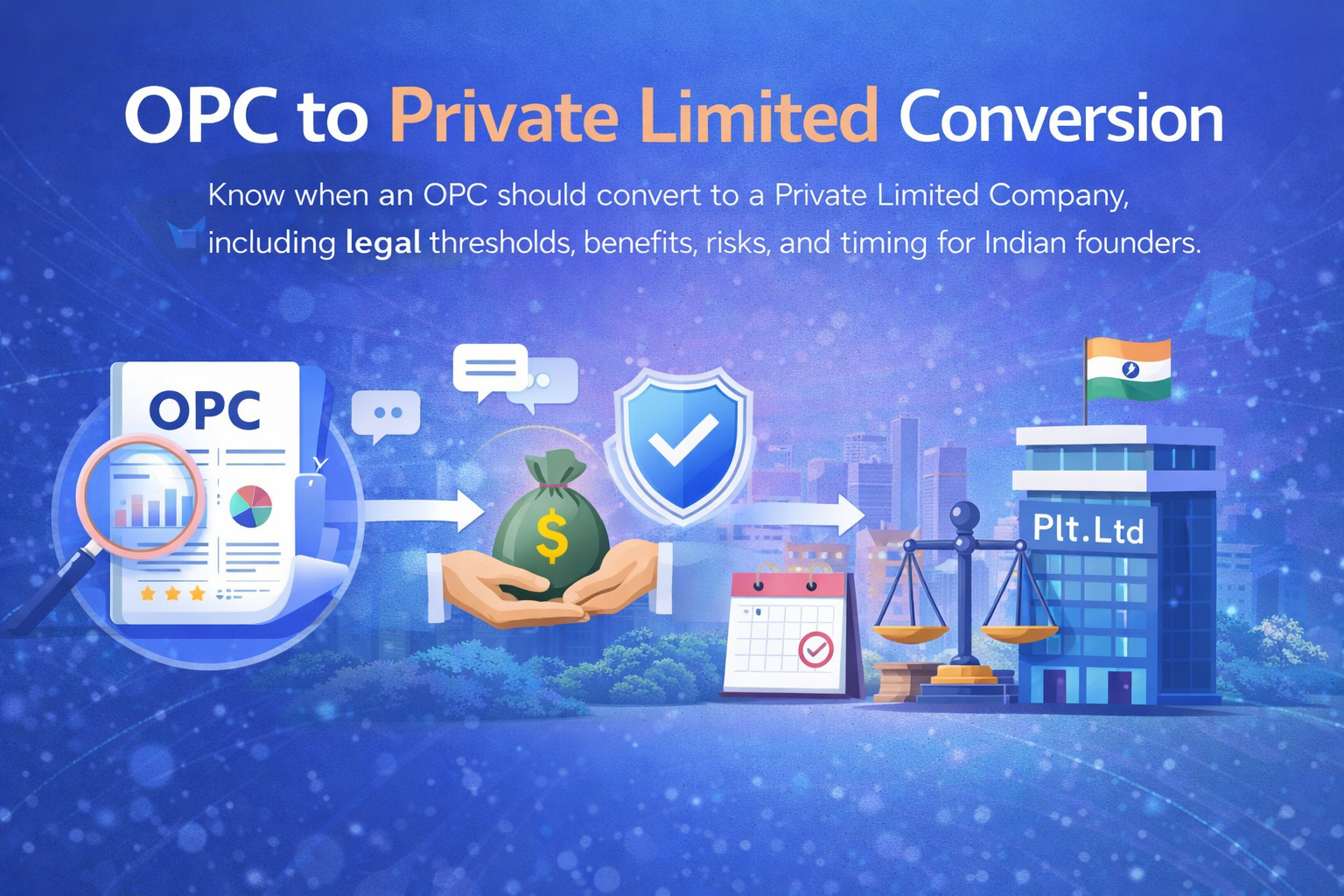
Starting as a One Person Company (OPC) is a smart move for many solo founders. It offers legal protection, credibility, and flexibility without the complexity of a Private Limited Company.
However, OPC is not designed for long-term scaling. At a certain stage, continuing as an OPC can actually slow growth, block funding, and limit opportunities.
This article explains when an One Person Company should convert to a Private Limited Company, the legal thresholds involved, and how founders can make the transition at the right time.
Why OPC Conversion Becomes Necessary
One Person Company was created as a transitional structure, not a permanent one.
As your business grows, you may face:
- Funding limitations
- Client credibility barriers
- Hiring constraints
- Compliance restrictions
Understanding One Person Company to Private Limited conversion early helps you plan growth instead of reacting to legal pressure.
Mandatory OPC Conversion Rules in India
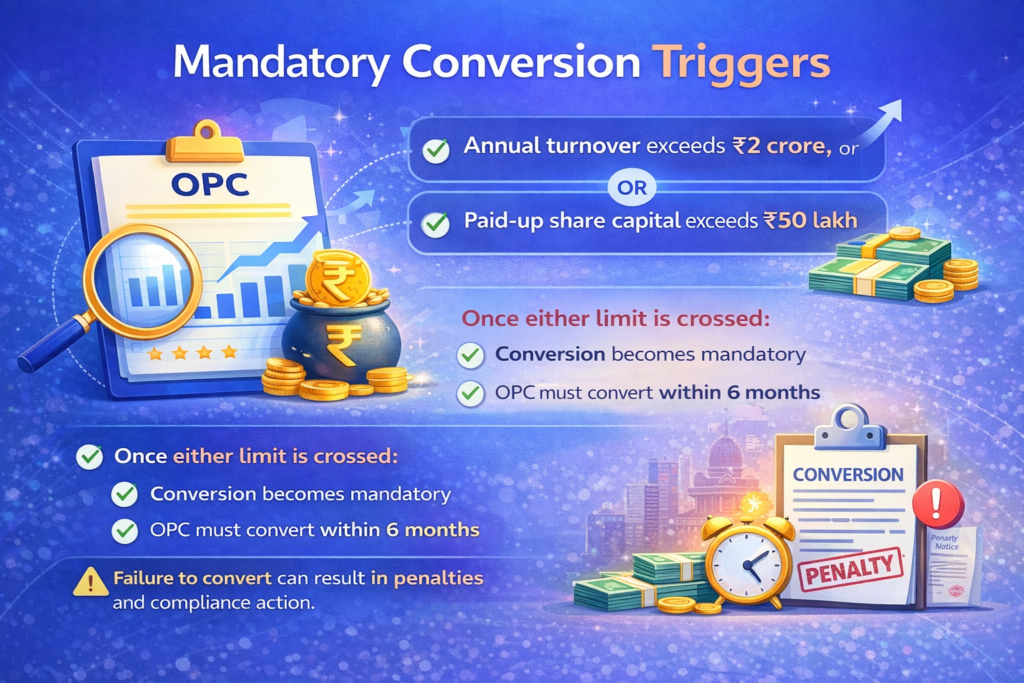
As per Companies Act rules, OPC must convert into a Private Limited Company when:
🚨 Mandatory Conversion Triggers
- Annual turnover exceeds ₹2 crore, or
- Paid-up share capital exceeds ₹50 lakh
Once either limit is crossed:
- Conversion becomes mandatory
- OPC must convert within 6 months
Failure to convert can result in penalties and compliance action.
Voluntary OPC Conversion: When It Makes Sense
You don’t need to wait for mandatory thresholds.
Voluntary conversion is recommended when:
- You want to raise angel or VC funding
- You want to add co-founders or partners
- You plan aggressive scaling
- You want to issue ESOPs
- You are entering enterprise or B2B contracts
👉 Most high-growth founders convert before hitting mandatory limits.
Key Signs Your OPC Is Ready for Conversion
Watch out for these signals:
📈 Growth Signals
- Revenue growing steadily
- Increasing client base
- Hiring plans expanding
💰 Funding Signals
- Investor conversations starting
- Need for external capital
- ESOP discussions
🏢 Structural Signals
- Need for additional directors
- Shared ownership required
- Corporate governance expectations
If two or more apply, conversion is the right next step.
Read Previous Article on Startup Guides India.
Benefits of Converting OPC to Private Limited Company
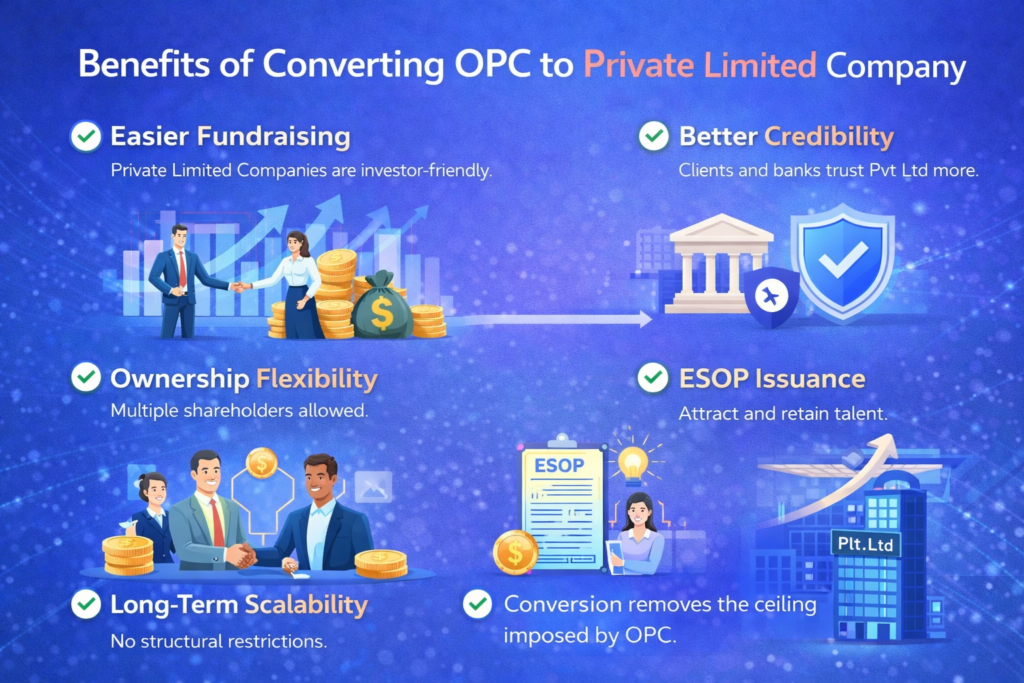
✅ Easier Fundraising
Private Limited Companies are investor-friendly.
✅ Better Credibility
Clients and banks trust Pvt Ltd more.
✅ Ownership Flexibility
Multiple shareholders allowed.
✅ ESOP Issuance
Attract and retain talent.
✅ Long-Term Scalability
No structural restrictions.
Conversion removes the ceiling imposed by One Person Company.
Risks of Delaying OPC Conversion
Delaying conversion can lead to:
- Forced conversion under pressure
- Compliance penalties
- Missed funding opportunities
- Legal complications during audits
Planned conversion is always cheaper and cleaner than forced conversion.
High-Level OPC to Pvt Ltd Conversion Process
- Board resolution for conversion
- Alteration of MOA & AOA
- Increase in directors/shareholders
- Filing conversion forms with MCA
- Issue of fresh Certificate of Incorporation
👉 Detailed step-by-step process will be covered in the next article.
Compliance After Conversion
After conversion:
- Annual ROC compliance applies
- Board meetings become mandatory
- Audit requirements continue
- Corporate governance strengthens
While compliance increases, growth freedom multiplies.
OPC vs Private Limited: Post-Conversion Reality
| Factor | One Person Company | Pvt Ltd |
|---|---|---|
| Funding | Not allowed | Allowed |
| Scalability | Limited | High |
| Compliance | Medium | Higher |
| Ownership | Single | Multiple |
| Exit Options | Limited | Strong |
This shift is essential for ambitious founders.
All conversion rules are governed by the Ministry of Corporate Affairs
Conclusion: Convert by Choice, Not by Force
The best time for One Person Company to Private Limited conversion is before the law forces you.
If you wait too long:
- Decisions become reactive
- Compliance pressure increases
- Opportunities slip away
If you convert strategically:
- Growth becomes smoother
- Funding becomes possible
- Your business becomes future-ready
OPC is a great start but Private Limited Company is the destination for serious entrepreneurs.
FAQs
1. Is OPC conversion to Pvt Ltd mandatory?
Yes, once turnover or capital thresholds are crossed.
2. Can OPC convert voluntarily?
Yes, voluntary conversion is allowed and common.
3. Does conversion affect existing contracts?
No, contracts continue under the new structure.
4. Is GST registration impacted after conversion?
Generally no, but details should be updated.
5. How long does conversion take?
Typically 30–45 days.