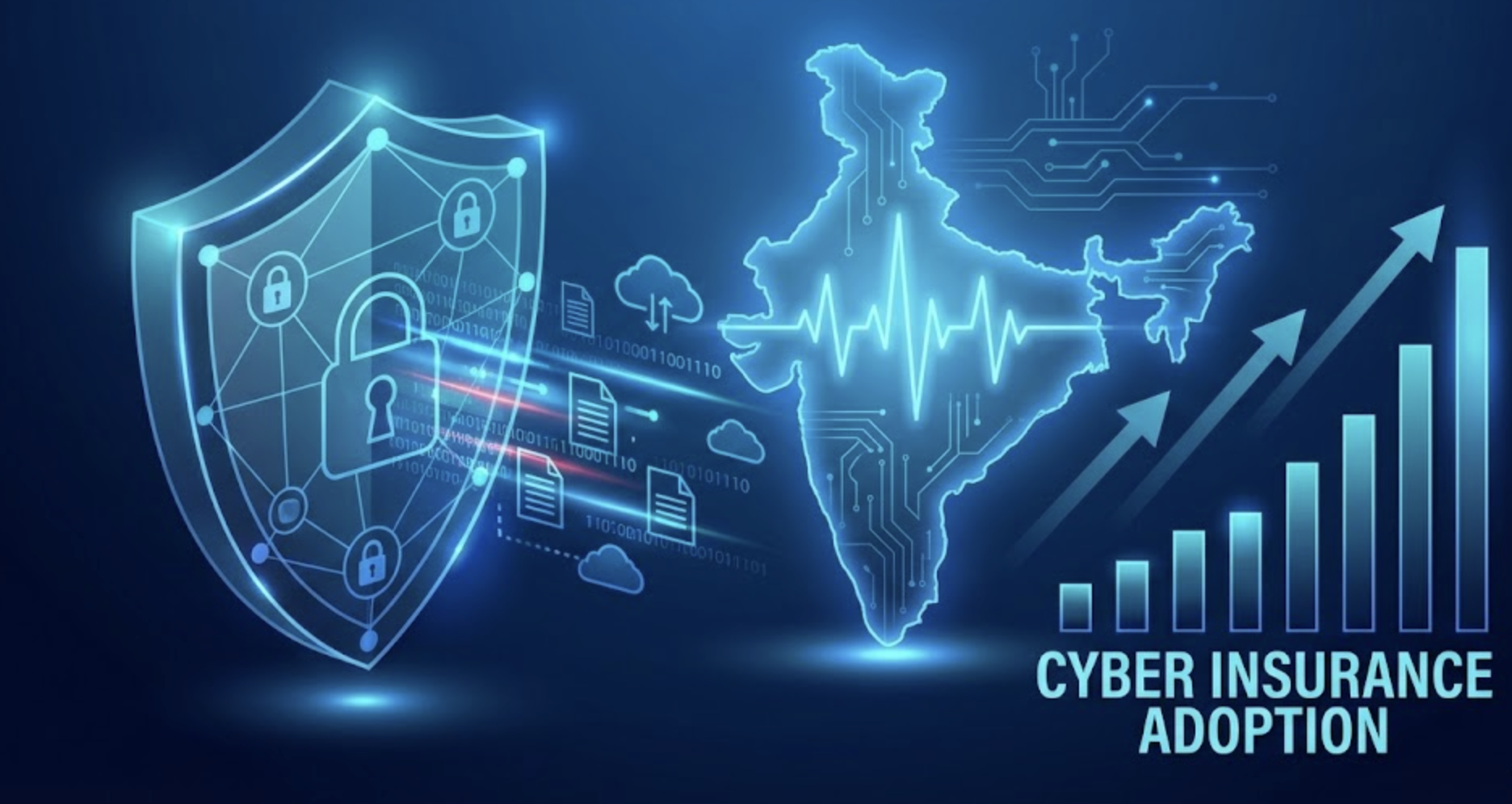
India’s digital transformation has unlocked unprecedented growth, but it has also opened the floodgates to cyber risks. With the Digital Personal Data Protection (DPDP) Act now in force and penalties reaching as high as ₹250 crore, Indian companies are rapidly reassessing their cybersecurity posture. A 20 – 25% surge in cyber insurance demand in 2025, according to The Economic Times.
And this rise is not just among large enterprises – SMEs, startups, and mid-sized firms are now joining the cyber-insurance race to avoid catastrophic liability.
This article explores why cyber insurance demand is rising, what policies cover, how AI-driven attacks are changing risk, and why most Indian businesses still remain dangerously under-insured.
Why Cyber Insurance Demand Is Rising So Fast in India
The shift is being driven by three major factors:
✔ A) Digital Personal Data Protection (DPDP) Act & Huge Penalties
The DPDP Act introduces:
- Strict rules on data storage
- Consent-based data processing
- Mandatory breach reporting
- Penalties up to ₹250 crore for violations
This has made cyber insurance not optional, but essential.
Businesses now realize: “A single data breach could wipe out the entire company.”
Cyber insurance helps companies cover:
- Legal expenses
- Penalties (where allowed)
- Forensic investigations
- Customer notification
- PR damage repair
The DPDP Act has become one of the biggest catalysts for cyber insurance adoption.
✔ B) Explosion in AI-Driven Cyberattacks
AI is transforming cybersecurity — for good and bad.
Attackers are now using:
- AI-driven ransomware
- Synthetic identity fraud
- Deepfake-based social engineering
- Automated phishing
- AI-powered attack bots
This means traditional security tools are not enough.
Companies now need AI-aware cyber insurance policies that protect them from:
- AI-generated malware
- Algorithmic vulnerabilities
- Deepfake-based financial fraud
- Automated data theft
✔ C) Increased Digitalisation Across All Sectors
In 2025, almost every business, from small retailers to mid-sized fintech startups — is fully digital.
More digital transformation = more exposure points.
Industries most at risk:
- Banking & FinTech
- Healthcare
- Retail & e-commerce
- SaaS & IT services
- Pharma & manufacturing
- Logistics & supply chain companies
This broad digital adoption is pushing firms to secure cyber insurance as a survival necessity.
India’s Cyber Insurance Market Is Growing at 25–30% Annually
India is now among the fastest-growing cyber insurance markets globally.
Factors contributing to this rapid growth:
- Cloud adoption
- Remote & hybrid work
- AI-based cyber risks
- Increasing number of data-breach incidents
- Strict regulatory compliance
- Higher awareness after several high-profile breaches
Insurance companies report:
“Even companies that never considered cyber risk before are now seeking coverage.”
This includes education startups, standalone clinics, hospitality chains, manufacturing units, and even NGOs.
What Exactly Does Cyber Insurance Cover?
A modern cyber insurance policy typically covers:
🔹 Direct Losses
- Data recovery
- Ransomware payments (with guidelines)
- Loss of revenue due to downtime
- System restoration costs
- Forensic investigation
🔹 Legal & Compliance Costs
- Lawyer fees
- Court expenses
- Settlement costs
- DPDP compliance enforcement
- Fines (only where legally permitted)
🔹 Third-Party Liabilities
If customer or partner data is leaked:
- Compensation payouts
- Regulatory penalties
- Contractual breach liabilities
🔹 Cyber Extortion
- DDoS attacks
- Ransomware
- Threats to release stolen data
🔹 Crisis Management
- PR and brand repair
- Customer communication
- Credit monitoring for affected users

Why SMEs Are Still Highly Under-Insured
Despite the rising demand, SMEs in India continue to remain the most vulnerable.
Reasons SMEs avoid cyber insurance:
- Cost concerns
- Low awareness
- “It won’t happen to us” mentality
- Lack of cybersecurity teams
- Complexity of insurance products
But SMEs are the most targeted group by cyber attackers because:
- They often lack strong security
- Many store customer data in unsecured systems
- Most use outdated software
- They rarely monitor network anomalies
A single ransomware attack can shut down an SME permanently.
Yet most still operate without any coverage.
Cost of Cyber Insurance in India (2025)
Typical pricing:
| Company Size | Annual Premium |
|---|---|
| Small Business (up to ₹10 cr turnover) | ₹50,000 – ₹2 lakh |
| Mid-size (₹10–100 cr turnover) | ₹2 lakh – ₹10 lakh |
| Large Enterprises | ₹10 lakh – ₹1 crore+ |
Pricing depends on:
- Industry
- Data sensitivity
- Cloud usage
- Number of employees
- Security infrastructure
- DPDP compliance readiness
What Businesses Must Do Before Buying Cyber Insurance
Insurance companies now demand:
✔ Cybersecurity audit report
✔ Data-mapping and DPDP compliance
✔ Multi-factor authentication (MFA)
✔ Proper access controls
✔ Incident response plan
✔ Cloud security posture assessment
Without these, businesses may:
- Face higher premiums
- Get reduced coverage
- Be rejected entirely
The Future of Cyber Insurance in India (2025–2030)
The next 5 years will bring explosive growth because:
- Every company will be forced to comply with DPDP
- AI cyberattacks will multiply
- Cloud-first companies will require mandatory insurance
- Investors will prefer insured, compliant startups
Cyber insurance will soon become:
👉 A business requirement, not a business option
👉 A compliance checkbox for funding
👉 A key part of risk management frameworks
Conclusion – Cyber Insurance Is Now a Business Essential
With the DPDP Act in action, rising financial penalties, and AI-driven cyber threats, India is entering a new era of digital risk. Cyber insurance demand is rising because companies finally understand: “Cyber attacks are not a possibility, they are inevitable.”
Large enterprises have already moved towards full-spectrum cyber insurance coverage.
The real challenge remains convincing SMEs, who face the highest risk but have the lowest protection.
2025 marks a turning point, cyber insurance is no longer optional.
It is a critical shield for survival in India’s fast-digitizing economy.
❓ FAQs
1. Why has cyber insurance demand increased in India?
Due to the DPDP Act, massive penalties, rising AI-driven cyber threats, and growing digital dependency.
2. Which sectors are buying cyber insurance most actively?
FinTech, e-commerce, IT services, healthcare, retail, and manufacturing.
3. How much does cyber insurance cost in India?
Between ₹50,000 and ₹10 lakh annually depending on company size and risk.
4. Do SMEs need cyber insurance?
Yes. SMEs face the highest attack probability and often lack internal security teams.
5. Does cyber insurance cover DPDP penalties?
Only partially and only when legally allowed. Coverage varies by insurer.