You may prepare excellent answers. You may rehearse your introduction. However, interviewers often decide how they feel about you before you finish your first sentence. That decision is shaped by body language. Learning how to impress interviewers with body language can quietly elevate your entire performance.
Words explain your experience. Body language explains your confidence.
In interviews, non-verbal signals influence trust, credibility, and leadership presence. Therefore, mastering your physical presence is just as important as preparing your answers.
This guide shows you exactly how to use posture, eye contact, gestures, and facial expressions to leave a strong and lasting impression.
Why Body Language Matters More Than You Realize
Interviewers do not evaluate only your words. They evaluate your overall presence.
Body language communicates:
- Confidence
- Emotional control
- Honesty
- Engagement
- Leadership potential
Research summarized in discussions on non-verbal communication suggests that a significant portion of human communication is non-verbal.
Therefore, strong answers delivered with weak body language lose impact quickly.
Posture: The Foundation of Impressive Presence
Posture is the first signal interviewers notice.
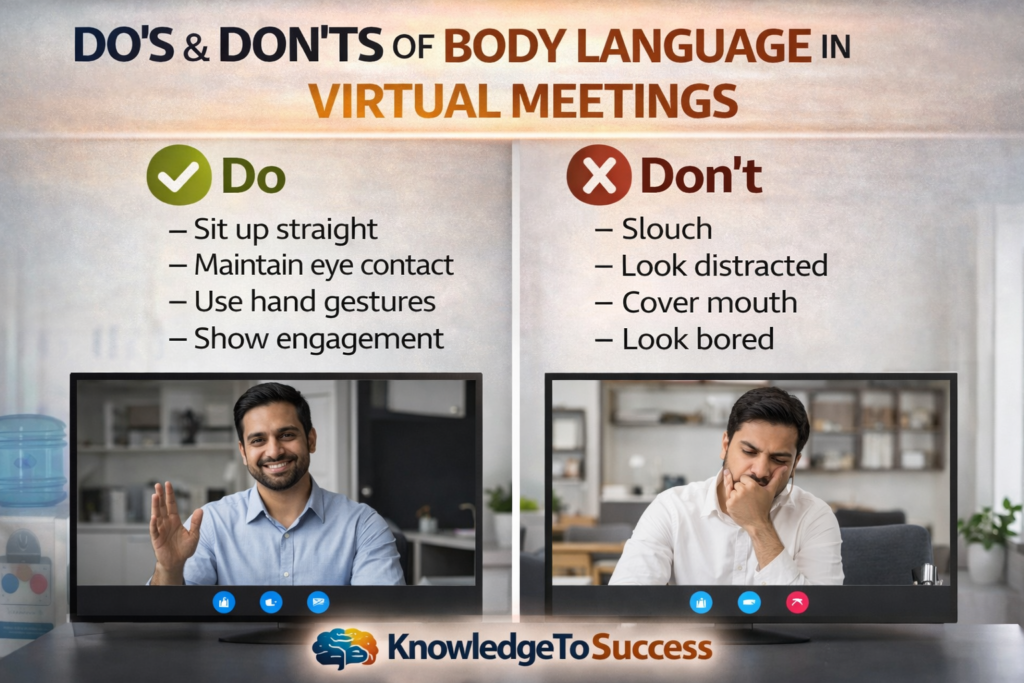
Impressive Posture Looks Like:
- Straight back
- Relaxed shoulders
- Both feet grounded
- Slight forward lean while listening
Weak Posture Signals:
- Slouching
- Leaning back too casually
- Crossed arms defensively
- Constant shifting
Good posture does two things. It makes you look confident. It also makes you feel more confident.
Eye Contact: Build Trust Without Staring
Eye contact is powerful. However, balance is essential.
How to Use Eye Contact Effectively:
- Maintain eye contact while speaking
- Break naturally while thinking
- Resume eye contact when finishing a point
Avoid:
- Staring intensely
- Looking down continuously
- Looking around the room frequently
Balanced eye contact builds connection and trust.
Hand Gestures: Controlled, Not Distracting
Hands can strengthen your message. However, uncontrolled gestures distract interviewers.
Effective Gestures:
- Open palms while explaining
- Small, natural movements
- Hands visible on the table
Distracting Habits:
- Fidgeting
- Playing with pens
- Touching your face repeatedly
- Excessive hand waving
Controlled gestures signal emotional control.

Facial Expressions: Align With Your Words
Your face often reveals your mindset before your words do.
Positive Signals:
- Natural smile when greeting
- Engaged expression while listening
- Calm expression during difficult questions
Negative Signals:
- Frowning while thinking
- Blank stare
- Tight lips
Even small facial tension can signal nervousness.
Read more articles on Career Guidance
How to Enter the Interview Room (First 10 Seconds Matter)
Impression begins before you sit down.
Impressive Entry:
- Calm walk
- Gentle smile
- Firm but not aggressive handshake
- Steady eye contact
Those first few seconds shape perception strongly.
Listening Body Language (Often Overlooked)
Candidates focus heavily on speaking. However, interviewers observe listening behavior closely.
Strong Listening Signals:
- Slight nodding
- Leaning forward slightly
- Maintaining eye contact
- Avoiding interruptions
These cues show respect and engagement.
Body Language During Difficult Questions
Pressure reveals body language instantly.
Common Stress Signals:
- Rapid blinking
- Tight shoulders
- Forced smiles
- Fast gestures
When facing tough questions:
- Pause calmly
- Breathe slowly
- Maintain steady posture
- Avoid rushing
Calm recovery impresses more than flawless answers.
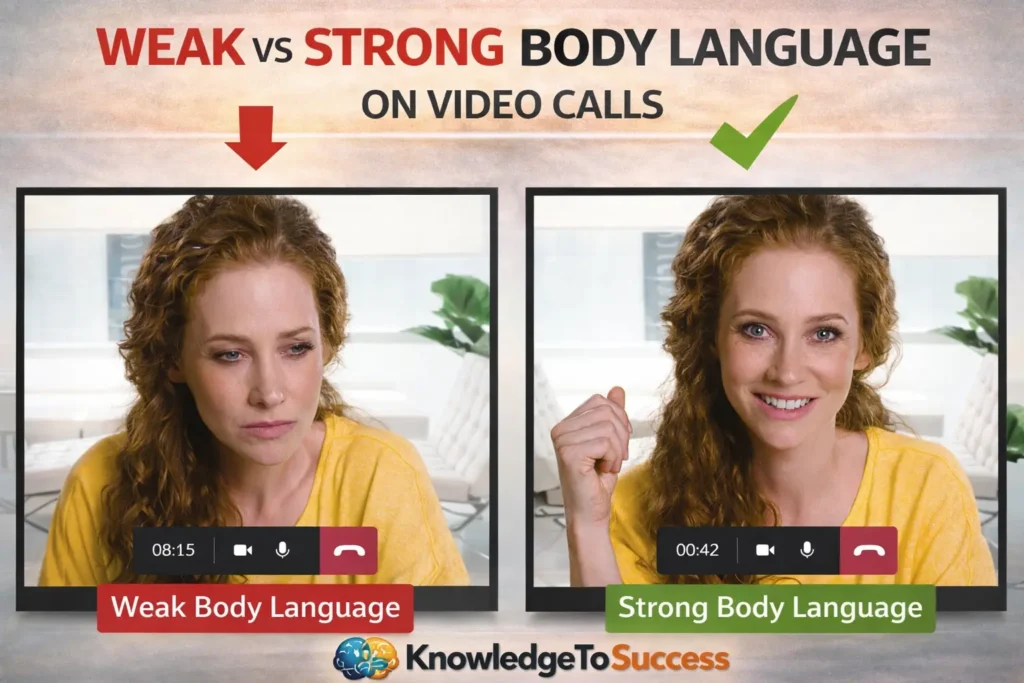
Virtual Interview Body Language Adjustments
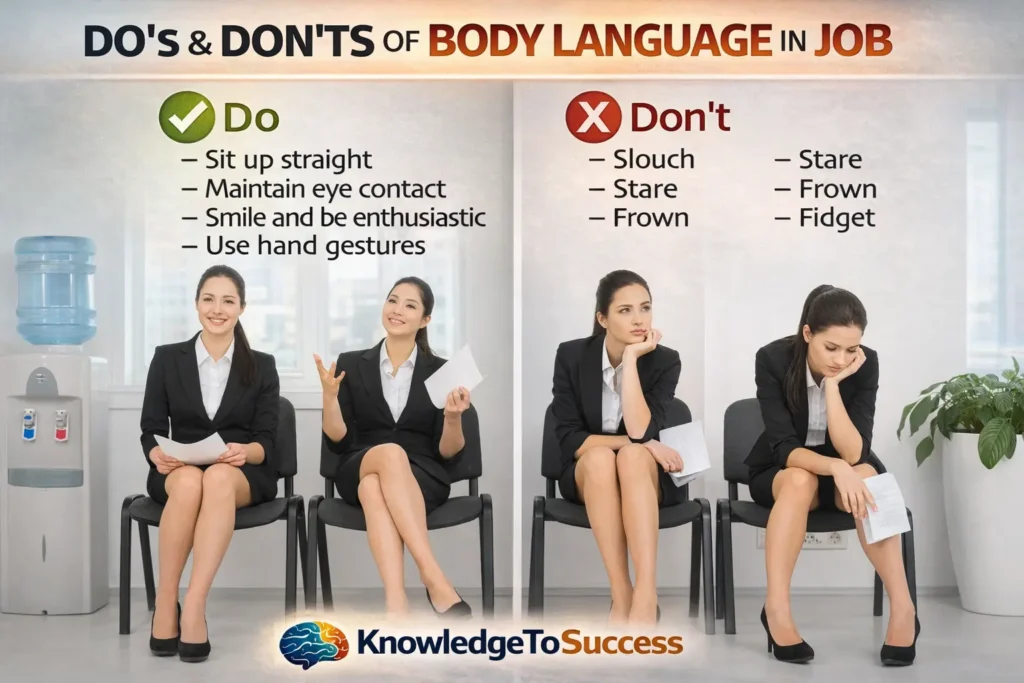
Virtual interviews require small but important changes.
For Video Interviews:
- Camera at eye level
- Sit upright
- Look at the camera while speaking
- Avoid exaggerated gestures
- Keep movements controlled
Small online movements appear larger on screen.
Body Language Mistakes That Quietly Hurt Candidates
Even strong candidates lose impact due to:
- Slouching after first few minutes
- Avoiding eye contact during tough questions
- Crossing arms defensively
- Smiling nervously at serious topics
- Moving too much
Awareness fixes most of these quickly.
A Simple 5-Minute Body Language Reset Routine
Before interviews:
- Stand upright and breathe deeply (1 min)
- Roll shoulders back gently (1 min)
- Practice steady eye contact in mirror (1 min)
- Answer one question aloud (2 min)
Short physical preparation improves mental calm instantly.
Why Body Language Builds Leadership Perception
Leadership presence is often non-verbal.
Interviewers subconsciously associate:
- Steady posture → Reliability
- Calm gestures → Emotional control
- Balanced eye contact → Confidence
That’s why strong candidates lose jobs over weak body language, even when answers are solid.
Conclusion: Let Your Body Support Your Words
Interview success is not only verbal. When you learn how to impress interviewers with body language, your presence supports your answers instead of weakening them.
Confidence isn’t loud.
It’s steady, composed, and visible.
Master your posture. Control your gestures. Own your presence.
FAQs
1. How important is body language in interviews?
Very important. It influences trust and perception instantly.
2. Can good body language compensate for weak answers?
No. However, it strengthens solid answers significantly.
3. Is body language different online?
Yes. Movements appear amplified on camera.
4. How can I improve quickly?
Practice posture and eye contact daily for short sessions.
5. Do senior roles require stronger presence?
Yes. Leadership presence is judged heavily through non-verbal cues.