Startup Funding Opportunities are not lost during investor meetings.
They are often lost months before a founder sends the first pitch deck.
Many entrepreneurs assume funding depends on networking, presentations, or investor connections. While those factors matter, they are rarely the reason investors reject startups.
The real problem usually starts much earlier.
Weak customer validation, poor business models, lack of traction, compliance gaps, and unrealistic expectations quietly reduce investor confidence long before fundraising begins.
Understanding these mistakes can dramatically improve your Startup Funding Opportunities and increase your chances of attracting the right investors.
Why Startup Funding Opportunities Are Lost Early
Most investors review hundreds of startups every year.
Only a small percentage move forward.
The reason is simple.
Investors are not looking for ideas alone. They are looking for evidence that a business can grow, scale, and generate returns.
When startups fail to build this foundation, funding opportunities disappear before serious discussions even begin.
Startup Funding Opportunities Depend on Customer Validation
One of the biggest mistakes founders make is building before validating.
Many startups invest months developing products based on assumptions.
They assume:
- Customers have the problem
- Customers need the solution
- Customers will pay for it
Unfortunately, assumptions do not create businesses.
Validation comes from:
- Customer interviews
- Market research
- Early sales
- User feedback
- Real usage data
Without validation, Startup Funding Opportunities become significantly harder to secure.
Startup Funding Opportunities Are Limited by Weak Business Models
A startup may have a good product and still struggle to attract investors.
Why?
Because investors need to understand how the business will make money.
Common business model problems include:
- No clear revenue strategy
- Poor pricing structure
- Low profit margins
- Limited scalability
- Dependence on a small customer base
A weak business model creates uncertainty.
Investors avoid uncertainty whenever possible.
Startup Funding Opportunities and Investor Readiness
Many founders approach investors too early.
They spend time creating pitch decks but ignore the fundamentals investors care about.
Before seeking investment, startups should be prepared with:
- Financial projections
- Revenue forecasts
- Growth strategy
- Market analysis
- Competitive positioning
Investor readiness signals professionalism.
A lack of preparation signals risk.
Read Previous Article on Startup Guides India.
Startup Funding Opportunities Can Be Lost Due to Poor Compliance
Many founders underestimate compliance.
Investors do not.
Before investing, investors often review:
- Company registration
- ROC filings
- Shareholding records
- Tax compliance
- Legal agreements
Poor compliance creates unnecessary risk.
Even strong startups can lose Startup Funding Opportunities because basic legal requirements were ignored.
The official Ministry of Corporate Affairs provides guidance on company compliance requirements.
Startup Funding Opportunities and Unrealistic Valuations
Valuation is one of the most sensitive topics during fundraising.
Many founders overestimate the value of their startup.
Common reasons include:
- Comparing themselves with large startups
- Ignoring current traction
- Assuming future growth is guaranteed
Investors expect valuations to be supported by evidence.
When expectations become unrealistic, discussions often end quickly.
Why Investors Walk Away From Startups
Investors typically become concerned when they see:
No Product-Market Fit
Customers are not consistently using or paying for the product.
Weak Financial Understanding
Founders cannot explain:
- Revenue projections
- Burn rate
- Unit economics
- Customer acquisition costs
Founder Dependency
Everything depends on one individual.
Lack of Focus
The startup is trying to solve too many problems at once.
These issues significantly reduce Startup Funding Opportunities.
Startup Funding Opportunities and Team Quality
Investors fund teams, not just products.
Strong teams demonstrate:
- Complementary skills
- Execution capability
- Industry understanding
- Leadership
Weak teams create uncertainty.
Uncertainty reduces investor confidence.
According to Harvard Business Review, execution quality and team capability often matter more than the originality of the idea itself.

Common Startup Mistakes That Cost Funding Opportunities
Chasing Funding Before Traction
Investors prefer proof over promises.
Ignoring Customer Feedback
Customers often reveal weaknesses before investors do.
Building Features Nobody Wants
Product complexity does not equal market demand.
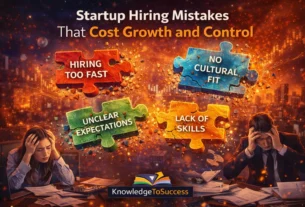
Hiring Too Fast
Large teams increase burn without guaranteeing growth.
Focusing on Valuation Instead of Growth
Growth attracts investors more effectively than ambitious valuation discussions.
How Founders Can Improve Startup Funding Opportunities
Improving Startup Funding Opportunities starts with building a stronger business.
Focus on:
Customer Validation
Prove demand first.
Revenue Growth
Show customers are willing to pay.
Financial Discipline
Understand key metrics.
Compliance Readiness
Maintain clean records.
Team Development
Build a capable execution team.
Each improvement increases investor confidence.
Startup Funding Opportunities Checklist Before Meeting Investors
Before approaching investors, ensure:
- Product-market fit exists
- Customer demand is validated
- Revenue model is clear
- Financial projections are realistic
- Compliance records are updated
- Team roles are defined
- Growth strategy is documented
This checklist helps founders avoid common fundraising mistakes.
Conclusion
Startup Funding Opportunities are rarely lost because of one bad investor meeting.
More often, they disappear because founders overlook critical business fundamentals.
Customer validation, financial discipline, strong teams, compliance readiness, and realistic expectations create the foundation investors look for.
The startups that attract investments are usually the ones that spend less time chasing investors and more time building a business worth investing in.
investments should accelerate success.
It should not be used to discover whether a business can succeed.
FAQs
1. What reduces Startup Funding Opportunities the most?
Lack of customer validation, weak business models, and poor investor readiness are among the biggest factors.
2. When should startups start fundraising?
After validating demand, building traction, and preparing financial projections.
3. Do investors fund ideas alone?
Rarely. Most investors prefer startups that demonstrate execution and market demand.
4. Why is compliance important for funding?
Investors review legal and compliance records during due diligence.
5. How can founders improve Startup Funding Opportunities?
By focusing on validation, growth, financial discipline, and investor readiness.