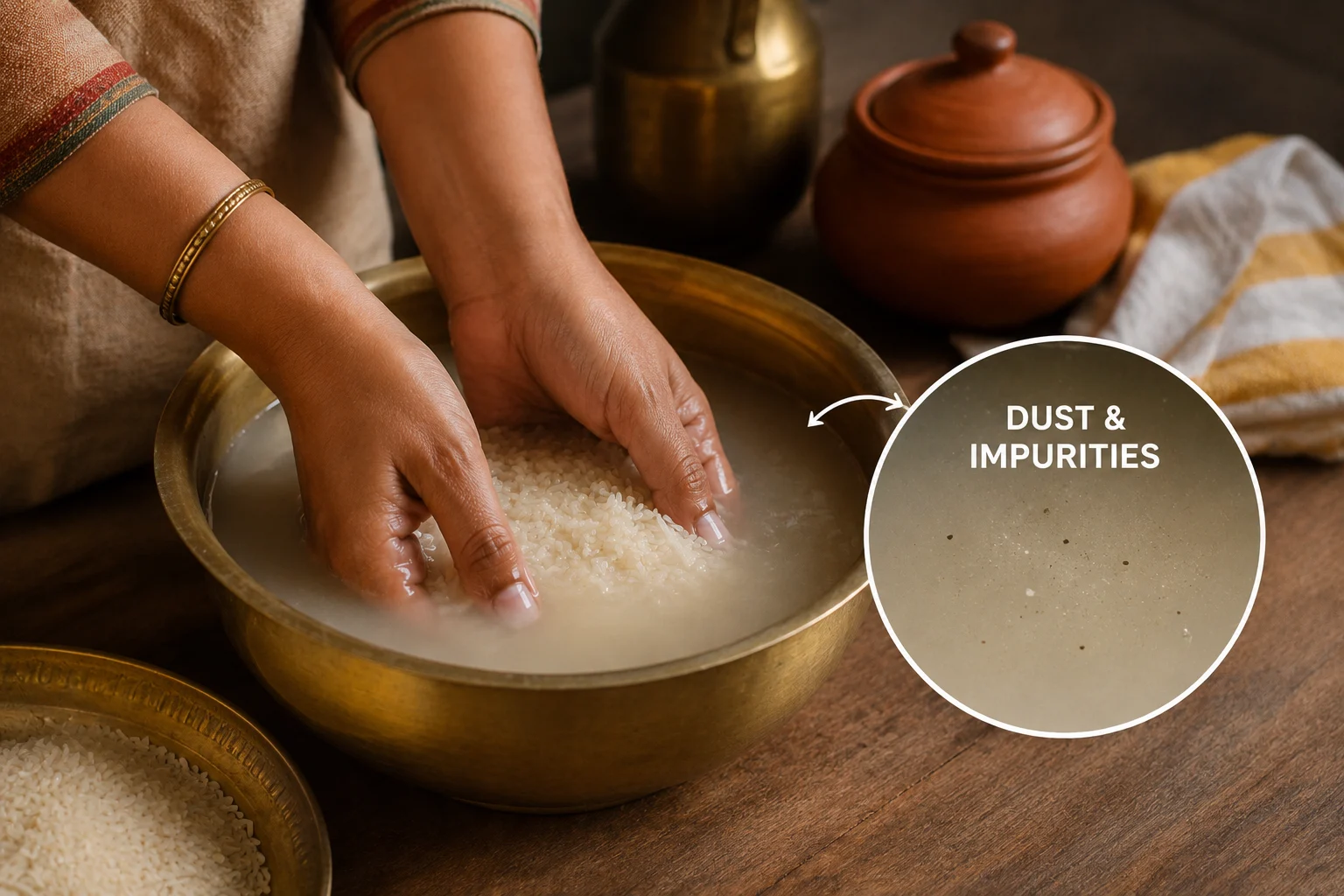
Almost every culture that eats rice has one thing in common.
People wash rice before cooking.
Many of us learned this habit from our parents or grandparents without ever asking why. We simply assume it is done to remove a little dust.
However, the real story is much more interesting.
The practice of washing rice is not just about cleanliness. It is a tradition shaped by centuries of farming, storage, transportation, and food safety concerns.
What began as a practical necessity became a habit passed down through generations. Today, millions of people continue doing it—even though many no longer know the original reason.
The History Behind Why People Wash Rice Before Cooking
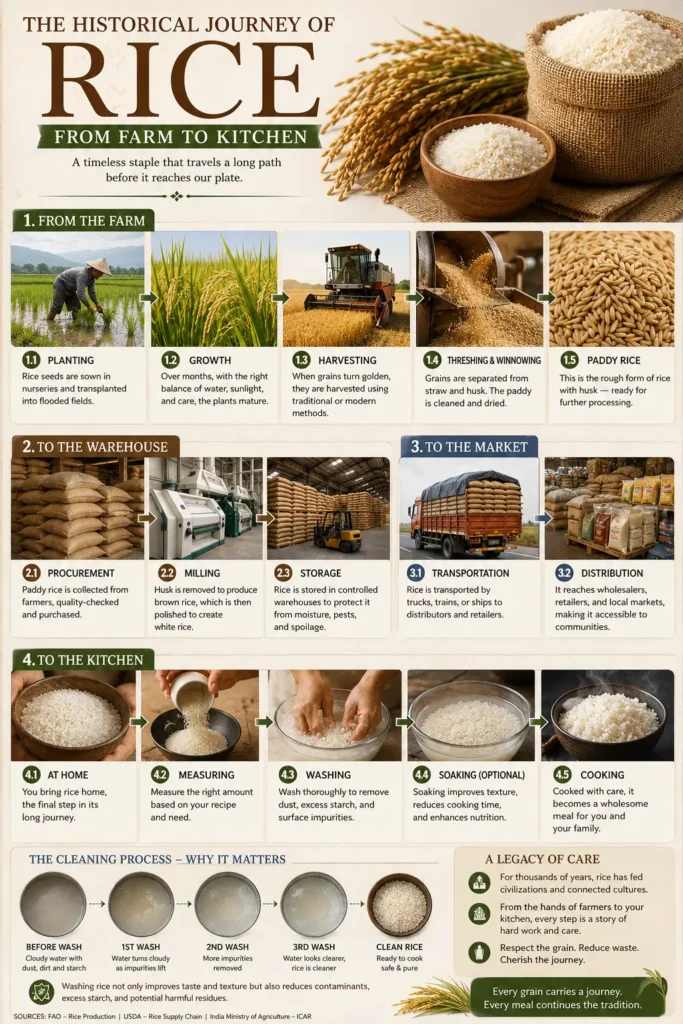
Long before modern packaging and food processing existed, rice traveled through farms, storage houses, markets, and warehouses before reaching kitchens.
Unlike today’s automated systems, rice was often:
- Stored in open environments
- Transported in sacks
- Exposed to dust and dirt
- Handled by multiple people
As a result, washing rice became an essential step before cooking.
For many families, it was simply common sense.
The habit survived because it worked.
Why Rice Was Rarely Clean in the Past
Centuries ago, rice processing was far less advanced than it is today.
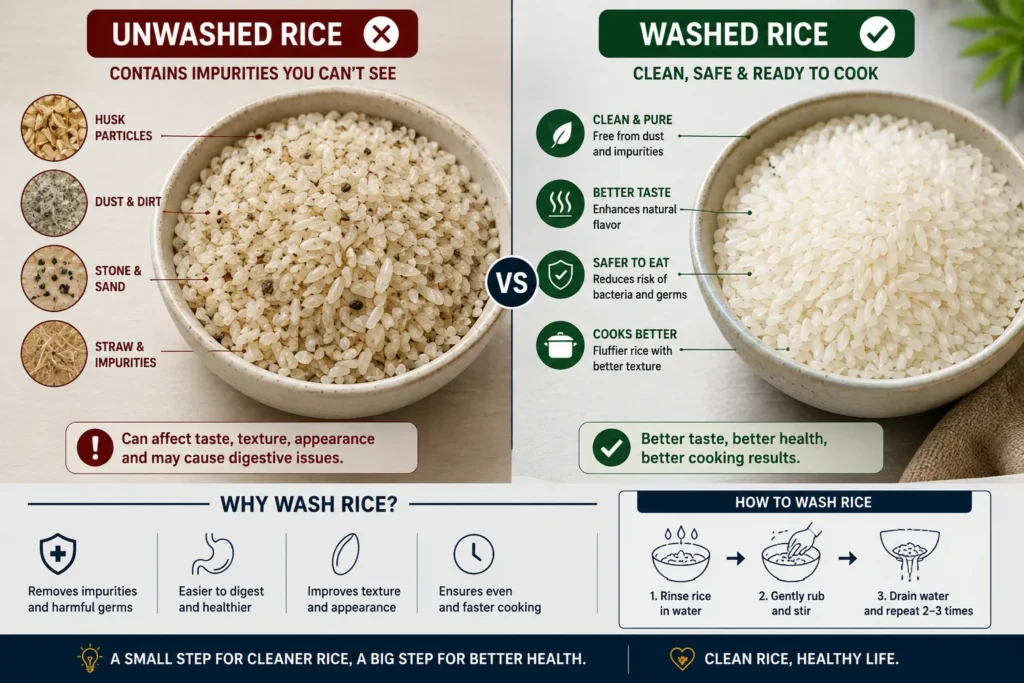
Even after milling, rice could contain:
- Tiny stones
- Husk fragments
- Dust particles
- Bran residue
- Insect fragments
People quickly learned that rinsing rice improved both cleanliness and cooking quality.
This practical solution eventually became part of daily life.
Wash Rice Before Cooking: The Problem of Storage Pests
Rice is one of the world’s most widely stored foods.
Unfortunately, it is also attractive to pests.
Common storage pests include:
- Rice weevils
- Grain beetles
- Small larvae
Even when insects are not visible, traces such as eggs, droppings, or fragments may remain on the surface of stored rice.
Washing helps remove many of these surface contaminants.
Wash Rice Before Cooking to Remove Dust and Residue
Rice may look clean inside a package.
However, appearance can be misleading.
During harvesting, milling, transport, and packaging, rice can collect:
- Fine dust
- Bran powder
- Husk particles
When rice is washed, the cloudy water you see is often a mixture of starch and surface residue.
This is one reason many cooks rinse rice multiple times before cooking.
The Modern Reason to Wash Rice Before Cooking
Today, food safety standards are much better than they were in the past.
However, some concerns still exist.
Food safety investigations around the world have occasionally detected:
- Pesticide residues
- Storage-related contaminants
- Chemical traces from handling and preservation processes
While regulated products are generally considered safe, washing rice remains a simple precaution.
It takes only a few minutes and may help reduce unwanted surface residues.
Can Rice Contain Chemicals?
In large storage facilities, rice may be protected using pest-control methods.
Historically, fumigation has been used to prevent insect infestations during long-term storage.
Depending on local regulations and practices, grains may be exposed to treatments designed to keep pests away.
Although these methods are regulated, many people still prefer to rinse rice before cooking as an additional safety measure.
Wash Rice Before Cooking and the Question of Arsenic
One of the most discussed rice-related concerns today is arsenic.
Rice plants naturally absorb substances from soil and groundwater.
This can include:
- Nutrients
- Minerals
- Trace metals
Research has shown that washing and soaking rice may help reduce certain surface contaminants.
Cooking rice in excess water and draining the remaining water may further reduce arsenic levels in some cases.
Why Soaking Rice Became a Traditional Practice
In many parts of Asia, rice is not only washed but also soaked before cooking.
This practice offers several benefits:
- Improved texture
- Faster cooking
- Better water absorption
- More even cooking
What started as a traditional kitchen technique is now supported by modern cooking science.
Common Myths About Washing Rice
Myth 1: Modern Rice Never Needs Washing
Even packaged rice can contain dust, bran particles, and storage residue.
Myth 2: One Quick Rinse Is Enough
Several rinses are usually more effective than a single wash.
Myth 3: Washing Rice Removes Everything Harmful
Washing helps reduce certain contaminants but cannot eliminate all risks.
Key Takeaways
- ✅ People began washing rice because early rice supplies often contained dust, husk, and debris.
- ✅ The habit survived because it improved cleanliness and cooking quality.
- ✅ Modern rice is cleaner, but washing can still remove surface residue.
- ✅ Soaking rice offers additional cooking benefits.
- ✅ Buying rice from trusted sources remains important.
Why This Forgotten Habit Still Matters
Many traditions disappear over time.
Others survive because they continue to serve a purpose.
Washing rice is one of those traditions.
It connects modern kitchens with practices developed hundreds of years ago by people who understood food safety through experience rather than scientific studies.
The next time you rinse rice before cooking, remember:
You are not just cleaning a grain.
You are continuing a habit that has protected meals for generations.
Read more articles on Unknown Facts
Conclusion
The practice to wash rice before cooking did not begin as a ritual.
It began as a practical solution to a real problem.
Dust, husk, insects, storage contaminants, and transportation residue made washing necessary.
While modern food systems have improved dramatically, the habit remains valuable.
Sometimes the simplest kitchen traditions survive because they are built on generations of wisdom.
And washing rice is one of the best examples of that.
FAQs
Why do people wash rice before cooking?
To remove dust, residue, and possible contaminants that may be present on the grain surface.
How many times should rice be washed?
Most cooks recommend rinsing rice 3–4 times.
Does washing rice remove pesticides?
It may help reduce some surface residues but cannot remove everything.
Is soaking rice necessary?
Not always, but soaking can improve texture and reduce cooking time.
Does washing rice remove arsenic?
It may help reduce some arsenic content, especially when combined with certain cooking methods.



Some thing new