Many candidates spend hours preparing answers. However, they spend almost no time preparing question. Then, when the interviewer asks: “Do you have any questions for us?”. They respond with: “No, I think you’ve covered everything.”
That simple mistake can weaken an otherwise strong interview.
The best questions to ask at the end of an interview do more than gather information. They demonstrate curiosity, preparation, professionalism, and genuine interest in the opportunity.
Interviewers often remember the final few minutes of an interview. Therefore, the questions you ask can significantly influence the overall impression you leave behind.
This guide explains exactly what to ask, what to avoid, and how to use your questions to stand out from other candidates.
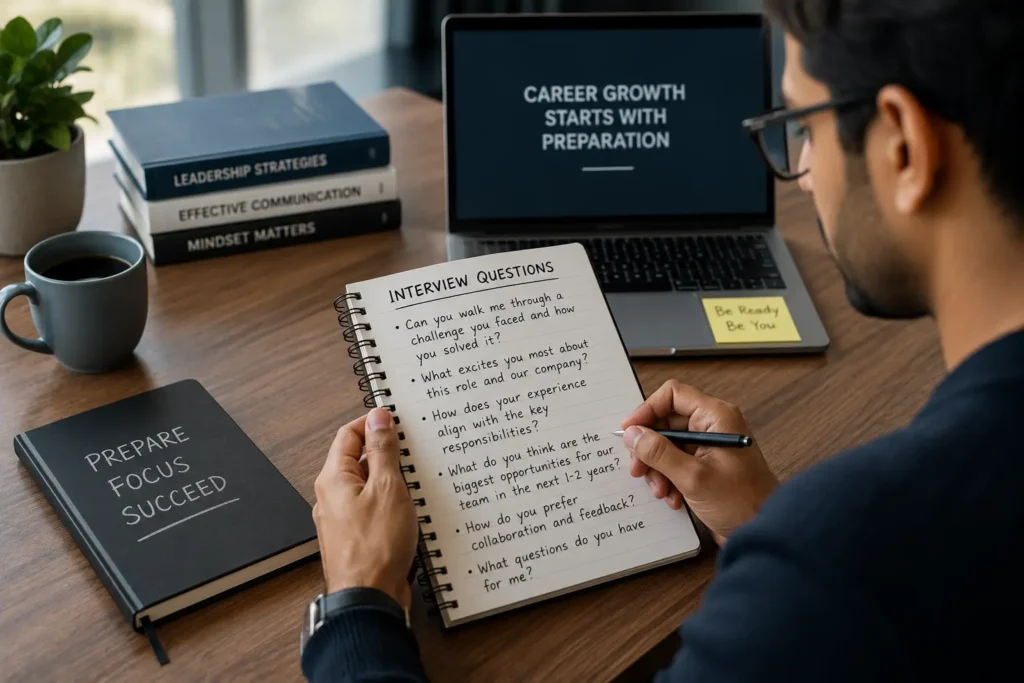
Why Interviewers Ask If You Have Questions
Many candidates believe this is simply a polite way to end the interview.
It isn’t.
Interviewers use this moment to evaluate:
- Curiosity
- Preparation
- Communication skills
- Long-term interest
- Critical thinking
According to insights from Harvard Business Review, thoughtful questions often demonstrate engagement and strategic thinking.
Therefore, your questions become part of the interview assessment.
Why “No Questions” Is Usually a Mistake
Sometimes candidates genuinely feel everything has been explained.
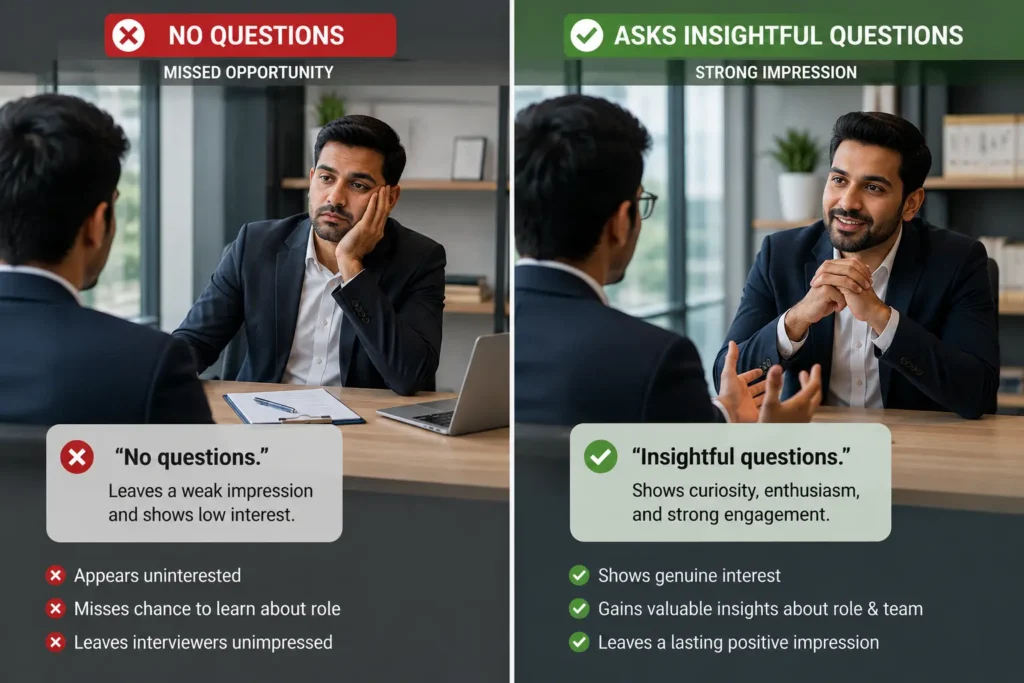
However, saying “no questions” can create unintended impressions.
Interviewers may wonder:
- Are you truly interested?
- Did you research the role?
- Are you evaluating the opportunity carefully?
Even one thoughtful question is usually better than none.
What Great Questions Reveal About You
Strong questions communicate several positive traits.
They Show That You Are:
- Interested in the role
- Thinking beyond salary
- Focused on success
- Evaluating long-term fit
- Serious about your career
These qualities matter to employers.
The Best Questions About the Role
These questions help you understand expectations.
Question 1
“What does success look like in this role during the first six months?”
Why it works:
- Shows ownership mindset
- Demonstrates commitment to results
Question 2
“What are the biggest challenges someone in this position typically faces?”
Why it works:
- Shows realism
- Demonstrates problem-solving mentality
Question 3
“What qualities have made previous employees successful in this role?”
Why it works:
- Provides valuable insight
- Shows willingness to learn
The Best Questions About the Team
Understanding the team is important.
Question 4
“How would you describe the team culture?”
Question 5
“How does the team typically collaborate on projects?”
Question 6
“What do top performers on this team do differently?”
These questions show genuine interest in working relationships and performance.
The Best Questions About Growth
Ambitious candidates think long term.
Question 7
“What opportunities for learning and development are available?”
Question 8
“How do employees typically grow within the organization?”
Question 9
“What skills would help someone advance in this role?”
These questions communicate career focus and growth mindset.
The Best Questions About Leadership
Understanding management style can prevent future surprises.
Question 10
“How would you describe your leadership style?”
Question 11
“How do you typically provide feedback to team members?”
These questions help you assess compatibility.
The Most Powerful Question to Ask
If you can ask only one question, choose this:
“Do you have any concerns about my qualifications or experience that I can address?”
Why it works:
- Demonstrates confidence
- Creates opportunity to clarify concerns
- Shows maturity
Many candidates avoid this question because it feels uncomfortable.
However, it often provides valuable insight.
Questions You Should Avoid
Not every question creates a positive impression.
Avoid asking:
Immediately About Vacation
Unless the topic arises naturally later.
Questions Easily Found Online
For example:
“What does your company do?”
This suggests poor preparation.
Salary Questions Too Early
Compensation discussions matter. However, timing matters too.
Questions With Obvious Answers
These rarely add value.
How Many Questions Should You Ask?
Most interviews allow:
- 2 to 4 thoughtful questions
Quality matters more than quantity.
Asking ten questions can feel excessive.
Meanwhile, asking none often feels disengaged.
Balance is important.
Tailoring Questions Based on Interview Stage
Early Interview Stages
Focus on:
- Role expectations
- Team structure
- Daily responsibilities
Later Interview Stages
Focus on:
- Performance expectations
- Growth opportunities
- Leadership style
Final Rounds
Focus on:
- Strategic priorities
- Long-term success
- Organizational goals
Tailored questions show awareness.
Read more articles on Career Guidance
Common Mistakes Candidates Make
Even strong candidates sometimes:
- Ask generic questions
- Ask too many questions
- Forget to prepare questions
- Focus only on benefits
- Skip questions entirely
Preparation prevents these mistakes.
A Simple End-of-Interview Question Framework
Prepare questions in three areas:
| Category | Example |
|---|---|
| Role | What does success look like? |
| Team | How does the team collaborate? |
| Growth | How can someone grow here? |
This framework works for almost every interview.
Conclusion
The interview does not end when the interviewer stops asking questions.
In many cases, the final few minutes become the most memorable.
Learning the best questions to ask at the end of an interview helps you demonstrate curiosity, professionalism, and long-term thinking. Moreover, it allows you to gather valuable information before making an important career decision.
Strong candidates answer questions well.
Exceptional candidates ask great questions too.
Frequently Asked Questions
1. What are the best questions to ask at the end of an interview?
Questions about success expectations, team culture, challenges, and growth opportunities are usually most effective.
2. Is it bad to have no questions?
Usually yes. It can suggest a lack of preparation or interest.
3. How many questions should I ask?
Typically 2–4 thoughtful questions are enough.
4. Should I ask about salary at the end of the first interview?
Usually no. Compensation discussions are often better handled later unless the interviewer raises the topic.
5. What is the strongest question I can ask?
“Do you have any concerns about my qualifications that I can address?” is often one of the most impactful questions.